The Secret Language of Reactions: How Emojis Shape Opinions Online

Jan 01,2026
Have you ever paused before hitting 'send' on a message, wondering if adding a little smiley face would soften your tone, or if a specific emoji might make your point land better? If so, you're not alone. In our increasingly digital world, where so much of our interaction happens through screens, emojis have evolved from playful decorations into a sophisticated, often subconscious, language that profoundly shapes how our opinions are perceived in online communities.
It's fascinating, really. A few years ago, we might have seen emojis as optional extras, a fun add-on to text. But today, they're integral. They act as vital emotional signposts, guiding our readers through the nuances of our digital voice. Without them, even the most carefully crafted words can fall flat, or worse, be completely misinterpreted.
The Subtle Power of a Single Icon
Imagine expressing a strong opinion without any facial expressions or vocal inflections to accompany your words. In face-to-face conversations, these non-verbal cues are essential for conveying sincerity, humor, or concern. Online, emojis step into this role. A critical comment followed by a crying-laughing face (😂) can instantly turn a potential confrontation into playful banter. Conversely, a seemingly innocuous statement can take on a passive-aggressive edge if paired with a certain eye-rolling emoji (🙄) or a stern, unsmiling face.
This isn't just about softening the blow; it's about framing the entire message. Emojis can signal whether you're being sarcastic, genuinely curious, playfully teasing, or deeply serious. They provide the much-needed emotional context that plain text often lacks, allowing us to project a richer, more human presence into our digital interactions. It's truly an unseen language, dramatically influencing how even short-form social content is understood and absorbed, as explored further in The Unseen Language: How Emojis Dramatically Influence Short-Form Social Content.
Navigating the Waters of Interpretation
The beauty and complexity of emojis lie in their power to influence audience interpretation. When you share an opinion online, you’re not just sharing words; you’re sharing a feeling, a perspective, an attitude. Emojis help package that entire sentiment. For instance, if you're offering constructive criticism, a thinking face (🤔) or a slightly smiling face (🙂) can signal that your intent is helpful, not malicious. Without it, your words might just come across as blunt or overly harsh.
Online communities thrive on shared understanding and emotional resonance. Emojis contribute significantly to this. They can help build camaraderie, indicate agreement, or even express sympathy, fostering a sense of connection that might otherwise be absent. This is particularly crucial in diverse online spaces where cultural backgrounds and communication styles can vary widely. Understanding how emojis function within these contexts is key to effective digital communication.
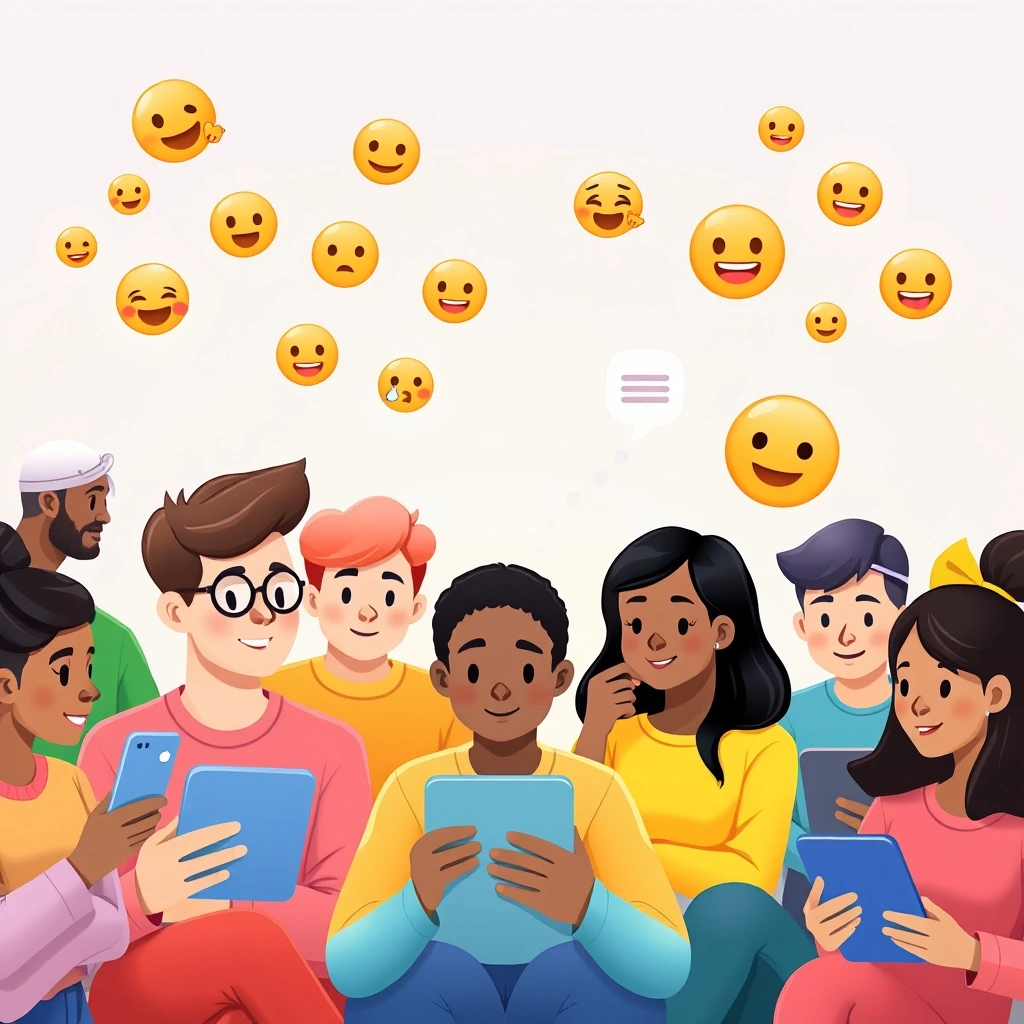
From Agreement to Disagreement: Emojis as Mood Setters
Consider a political discussion or a debate about a new policy. A simple "I disagree" can be seen as an outright rejection, but "I disagree 🤔" or "I disagree, but I understand your point of view 👀" adds layers of thoughtfulness and openness. Emojis don’t erase the disagreement, but they can set the mood for the conversation. They can transform a potentially hostile exchange into a more civil discourse, simply by signaling a willingness to engage respectfully rather than defensively.
Conversely, emojis can also escalate tensions. A provocative statement followed by a devil emoji (😈) or a skull (💀) can amplify its edgy nature, signaling that the user is perhaps not looking for a nuanced discussion but rather to stir the pot. This dynamic highlights the immense responsibility that comes with using these seemingly simple symbols. Each emoji carries a weight, a potential to either bridge gaps or widen them.
Building Bridges and Avoiding Misunderstandings
One of the most valuable aspects of emojis in digital communication is their ability to prevent misunderstandings. Sarcasm, irony, and subtle humor are notoriously difficult to convey through text alone. How many times have you read a message and wondered, "Are they serious, or joking?" A strategically placed winking face (😉) or a rolling on the floor laughing emoji (🤣) can instantly clarify your intent, saving both you and the recipient from awkward misinterpretations.
This clarity is vital for maintaining healthy online communities. When people feel understood, and when their emotional cues are acknowledged, they are more likely to participate positively. Emojis help foster an environment where intentions are clearer, leading to less friction and more productive interactions. For more insights into how these digital symbols are changing our online interactions, you might want to explore articles in our Emoji & Social Media category.
The Evolution of Digital Etiquette
As emojis become more embedded in our daily communication, a new form of digital etiquette is emerging. It's not just about what you say, but how you frame it with emojis. Using emojis appropriately can signal respect, empathy, and understanding. Overusing them, or using them inappropriately, can sometimes be perceived as unprofessional, childish, or even condescending, depending on the context and the community norms.
Learning to read the room, so to speak, in an online context increasingly involves understanding the unspoken rules of emoji usage. Different platforms, different groups, and even different age demographics might have varying expectations for emoji integration. Mastering this subtle art allows us to navigate complex social landscapes with greater finesse, ensuring our voices are not only heard but also accurately interpreted.
Ultimately, emojis are powerful tools in our digital toolkit. They allow us to inject personality, emotion, and crucial context into our text-based conversations. They shape perceptions, influence moods, and can either build bridges or inadvertently create divides within online communities. By understanding their impact and using them thoughtfully, we can become more effective, empathetic, and engaging communicators in the vast and vibrant digital world. So, the next time you're about to post, take a moment to consider the little icons you choose – they might just be saying more than you think.
📒 Related Blogs
More...Unlock Clarity: How Emojis Transform Quick Replies from Confusing to Crystal Clear!
The Quiet Comfort of Emoji Habits: How a Simple Icon Says 'I'm Here'
The Secret Language: How Emojis Unleash Powerful Reactions in Shared Social Posts
The Secret Ingredient to Playful Chats: How Emojis Turn Talk Into a Game
Emojis: The Secret Sauce for Friendly, Flowing Digital Conversations