The Emoji Takeover: How Tiny Icons Replaced Our Small Talk

Jan 07,2026
Remember a time when every text conversation, even with close friends, felt like it needed a preamble? A quick "Hey, how are you?" followed by "I'm good, you?" It was the digital equivalent of clearing your throat before speaking, a necessary but often repetitive step. Fast forward to today, and a lot of that has vanished, replaced by something far more colorful and expressive: emojis.
It's fascinating to observe, isn't it? We rarely stop to think about how much these tiny icons have subtly, yet powerfully, reshaped our daily communication habits. What was once a string of polite pleasantries has often been distilled into a single, perfectly chosen emoji. And honestly, it feels completely natural now.
The Silent Language of Daily Check-ins
Think about your daily texts. When a friend sends a message about their day, do you always type out "Oh wow, that sounds tough, hope you're okay"? Or do you often opt for a sympathy emoji, perhaps a 🥺 or a 🫂, followed by a more direct response if needed? That's small talk being elegantly sidestepped. The emoji does the heavy lifting of acknowledgement and empathy, allowing you to dive straight into the core of the conversation.
This isn't just about efficiency; it's about emotional shorthand. A simple 👍 can mean "Got it, thanks!" or "Sounds good to me." A quick 😂 can acknowledge a joke without needing "That's so funny, lol." It’s an immediate, intuitive response that everyone understands, cutting through the noise and getting straight to the point without feeling abrupt. It keeps the conversation flowing smoothly, adding a human touch without extra words. In many ways, emojis have become the silent language that helps keep our everyday conversations flowing smoothly, filling in those little gaps that words used to occupy.
Beyond the Basics: Nuance in a Tiny Icon
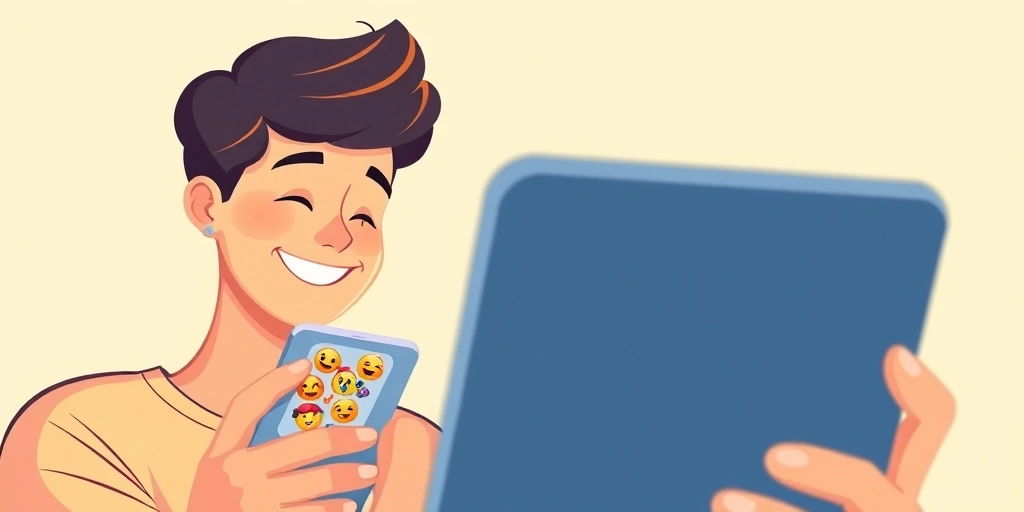
It's not just basic acknowledgements either. Emojis allow for incredible nuance. A single face can convey sarcasm, excitement, frustration, or even gentle teasing, often more effectively and quickly than a sentence could. Imagine trying to text "I'm feeling a bit overwhelmed but also determined and slightly amused by the absurdity of it all." With emojis, you might combine a 🫠 with a 💪 and a slight smirk 😏, and suddenly, you've painted a picture that words would struggle to capture concisely.
This subtle shift has made our digital interactions feel more personal, more immediate. It’s like we’ve developed a universal language of expressions that transcends written words, adding a layer of emotional intelligence to our texts. We’re not just sending information; we’re sharing feelings, intentions, and even our current mood, all through carefully selected pixels.
Acknowledging Without Over-Texting
One of the biggest areas where emojis have replaced traditional small talk is in acknowledgment. Someone sends a long message, an update on their life, or an interesting article. Do you always feel compelled to write "Thanks for sharing!" or "Got it, really appreciate you sending this"? Sometimes, a simple ❤️ or a thoughtful 🤔 emoji is all that's needed to show you've seen it, processed it, and acknowledge their effort. It respects their time and yours, fostering a relaxed communication style.
This understated acknowledgment is particularly common in group chats or professional settings where everyone is busy. You don't want to flood a chat with "okays" or "got its." A quick react or a single emoji does the job perfectly, maintaining a sense of presence without adding unnecessary clutter. It truly helps fill the gaps in our daily texts, making interaction more fluid.
The Comfort of Casualness
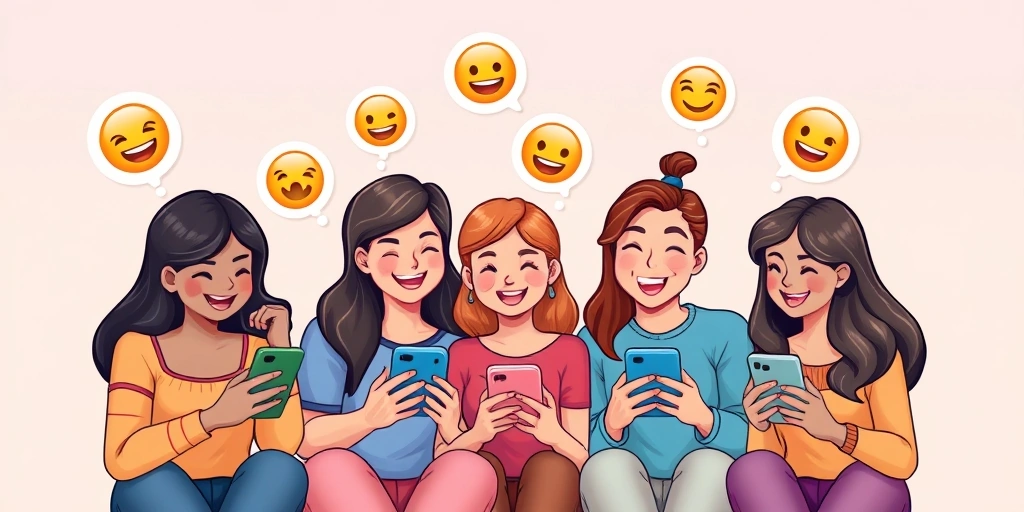
The rise of emoji-driven small talk also speaks to a broader cultural shift towards more casual, authentic communication. We're less bound by rigid etiquette in our personal messaging. There's a comfort in knowing that a friend understands your exasperated sigh represented by a 🤦♀️ or your joyous cheer with a 🎉, without needing a lengthy explanation.
This comfort extends to starting conversations too. Instead of a formal "Hello, how have you been?", a friend might just send a playful 👋 or a relevant emoji related to something you both share. It’s an invitation to connect that feels less demanding and more spontaneous, perfectly suited for our fast-paced digital lives. Emojis make it easier to reach out, to maintain connections, and to express ourselves even when words feel too heavy or too slow.
Are We Losing Our Words?
Some might worry that this reliance on emojis means we're losing our ability to articulate with words. And while it's a valid concern to ponder, I believe it's more about evolution than erosion. Language is constantly changing, adapting to new technologies and social norms. Emojis are simply another layer, another tool in our ever-expanding communication toolkit.
They complement words, they don't always replace them entirely. They add context, emotion, and tone that plain text often struggles with. Think of them as the vocal inflections and facial expressions we use in real-life conversations – impossible to convey purely through text without them. They bridge the gap between spoken word and written text, allowing for richer, more human digital interactions. This whole phenomenon is a fascinating aspect of how emojis integrate into our daily life.
The Future of Feeling
So, the next time you send a quick ❤️ to acknowledge a message, or a weary 😴 to signal a long day without typing out a paragraph, take a moment to appreciate the subtle power of that little icon. It’s doing more than just saving you keystrokes; it’s fostering connection, conveying emotion, and keeping our conversations light, personal, and profoundly human. Emojis have truly become the unspoken language of our modern digital interactions, making every text a little more vibrant and a lot more immediate.
📒 Related Blogs
More...The Secret Sauce: How Emojis Make Our Casual Chats Instantly More Fun!
How Emojis Are Reshaping Global Language & Culture: A Linguistic Deep Dive
More Than Just Fun: How Emojis Unravel the True Meaning in Busy Chats
Beyond Words: How Emojis Shape Our Online Personalities & Digital Identity
Beyond Just Words: How Emojis Supercharge Engagement in Online Communities
When Emojis Cause Confusion: How Group Chats Can Twist Your Intent