The Gentle Art of the Emoji: How a Simple Symbol Can Soften a Short Text

Feb 05,2026
Let's be honest, our daily chats are full of quick replies. 'OK.' 'Got it.' 'Thanks.' 'On my way.' They're efficient, they get the point across, but sometimes, they can land with a bit of a thud. In the absence of a voice, a facial expression, or body language, our shortest messages are the most vulnerable to being misunderstood. They can accidentally come off as cold, dismissive, or even annoyed.
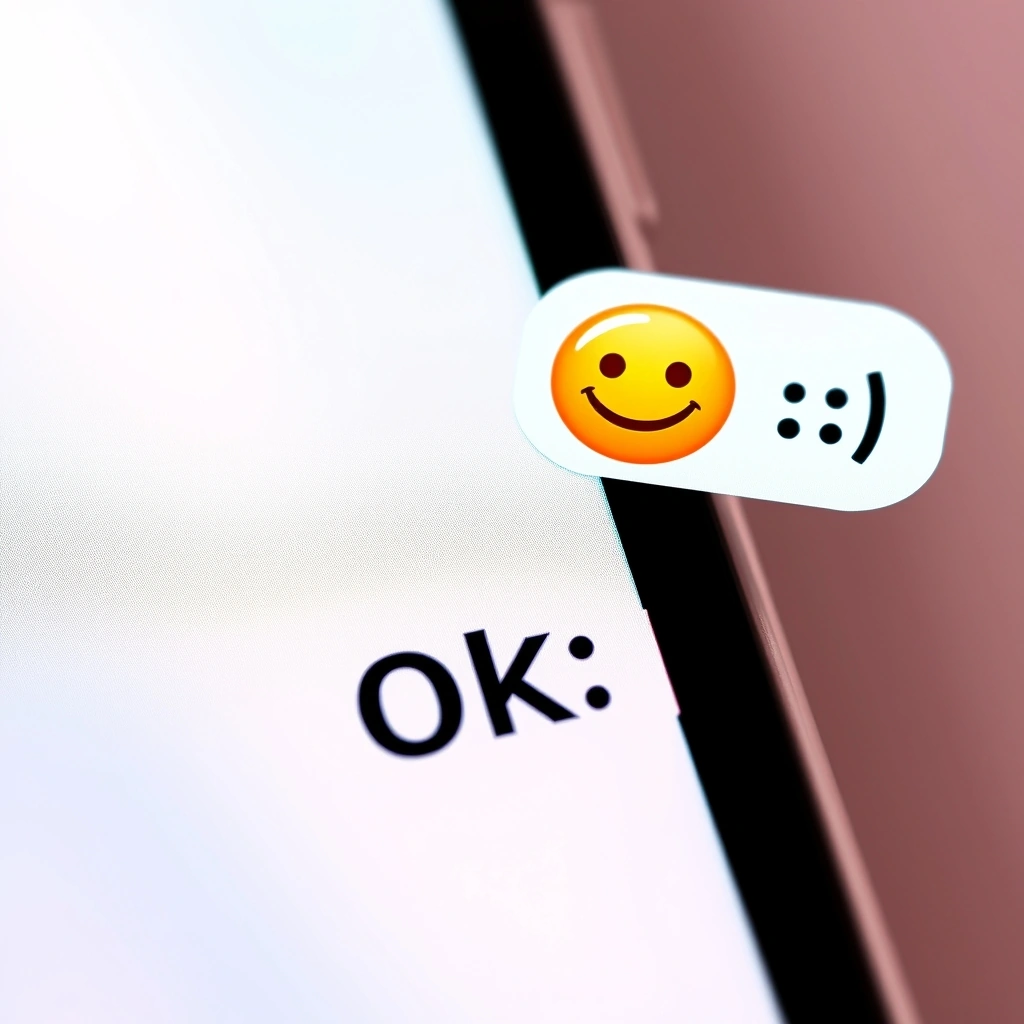
This is where the humble emoji performs its quiet magic. It's not about decorating every sentence or writing in hieroglyphics. It's about strategic, emotional punctuation. A single, well-chosen emoji attached to a brief response acts as a tone indicator, a digital nod or smile that softens the edges and provides crucial context.
Why Our Briefest Texts Need the Most Help
Think about the difference between getting a text that just says 'Fine' versus one that says 'Fine 🙂'. The first one might make you wonder if something is wrong. The second one clearly communicates acceptance or agreement. The emoji does the heavy lifting of conveying your attitude, saving you from having to type out a longer, more explanatory sentence like 'That's fine with me, no problem!'
This is especially important in professional or semi-professional settings, like with colleagues or acquaintances. A 'Thanks!' can feel transactional. A 'Thanks! 😊' feels appreciative and personable. You're not changing the core message; you're just ensuring it's received with the spirit in which you sent it. For more on how emojis help the overall flow of conversation, check out this piece on the secret language of emojis.
The Power of a Single Character
You don't need a string of emojis to be effective. Often, one is perfect. Replying to a plan with a thumbs-up (👍) is universally understood as affirmative and positive. A heart (❤️) in response to a kind message amplifies the sentiment. A grimacing face (😬) paired with a 'Sorry I'm late!' instantly communicates regret and a bit of self-deprecating humor.
These small additions prevent the dreaded 'text tone' anxiety—that moment when you re-read your own message and worry how it will be perceived. They bridge the gap between the efficiency we need and the human connection we crave in our digital interactions.
Choosing the Right Softener
Context is everything. The emoji that softens a message to a close friend might not be suitable for a boss. A grinning face (😁) might be perfect for 'See you then!' with a friend, while a simple smiley (🙂) or even no emoji might be better for a calendar invite confirmation at work.
The goal is clarity, not confusion. A winking face (😉) can soften a teasing comment but could seem inappropriate or confusing on a straightforward answer. Stick to the most universally understood, positive emojis for softening brief responses: the classic smiley, the thumbs-up, the heart for closer relationships, the party popper (🎉) for congratulations, or the check mark (✅) for confirmed tasks.
It's a skill that becomes intuitive. You start to feel when a message needs that extra emotional cushion. For more ideas on keeping your casual chats light, you might find this guide on the magic of emojis helpful.
More Than Just Being Nice
This isn't just about being polite. It's about effective communication. In a fast-paced world, we rely on shorthand. Emojis have become a vital part of that shorthand, a non-verbal layer we've integrated into our written language. They reduce ambiguity. They prevent unnecessary follow-up messages like 'Are you mad?' or 'Was that okay?'. They keep conversations flowing smoothly by confirming the emotional subtext instantly.
So the next time you go to hit send on a two-word reply, pause for a half-second. Could this be read the wrong way? Would a single emoji make my intention crystal clear? That tiny icon is more than a decoration; it's a tool for clarity, a sprinkle of warmth, and a guard against misunderstanding in our brief, beautiful, and sometimes brittle digital conversations.
What's your go-to emoji for softening a quick message? Is there one you find yourself using again and again, or has a particular emoji ever completely changed the tone of a text you received?
📒 Related Blogs
More...The Hidden Power of Emojis in Your Private Chats
How Emojis Became Our Secret Weapon Against Workplace Misunderstandings
More Than Just Fun: How Emojis Unravel the True Meaning in Busy Chats
The Secret Language of Two: How Emoji Pairs Reshape Group Chat Understanding
The Power of Emojis: Shaping Online Identity and Self-Expression
How Emojis Are Revolutionizing Branding & Marketing: A Modern Guide