The Hidden Power of Emojis in Your Private Chats

Jan 26,2026
Think about your last text conversation. Maybe it was with a friend, a family member, or someone you're getting to know. Now, picture that conversation without any emojis. It feels different, doesn't it? Colder, more ambiguous, harder to read. That's because in our one-on-one digital chats, emojis have quietly become the architects of meaning. They don't just sit beside our words; they actively shape how those words are interpreted.
We've all been there. You send a message that's meant to be light and joking, but without the right visual cue, it lands with a thud of seriousness. Or you receive a simple "okay" that feels curt and cold, leaving you wondering if you've done something wrong. The difference between an "okay" and an "okay 😊" is the difference between acceptance and warmth, between mere acknowledgment and genuine reassurance.
Beyond Decoration: Emojis as Tone-Setters
In face-to-face conversation, we rely on a symphony of non-verbal cues: a smile, a raised eyebrow, a shrug, the tone of our voice. These elements convey sarcasm, sincerity, hesitation, or excitement. In a text message, all of that rich context is stripped away. Emojis rush in to fill that void. They are the punctuation of emotion, the digital body language that tells the person on the other end how to hear your words.
A winking face 😉 can instantly signal a joke or playful teasing, transforming a potentially risky comment into shared humor. A thinking face 🤔 shows you're pondering a question seriously, not ignoring it. A single red heart ❤️ can carry the weight of affection, gratitude, or solidarity that might feel too heavy to spell out. This isn't about being lazy with words; it's about being efficient and precise with emotion. For more on how these visual cues create social expectations, you might find this exploration of emoji etiquette really interesting.
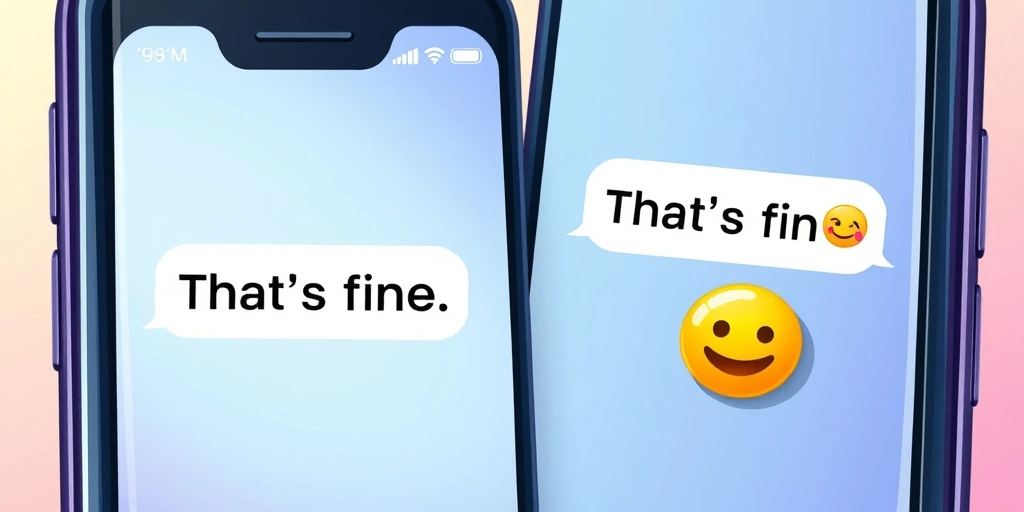
This tonal guidance is especially crucial in newer or more sensitive relationships. When you're still learning someone's communication style, emojis provide a safety net. They help prevent the classic "text fight" that starts with a simple misunderstanding of tone. They act as little emotional signposts, guiding the recipient toward the correct emotional lane.
The Delicate Dance of Intent and Interpretation
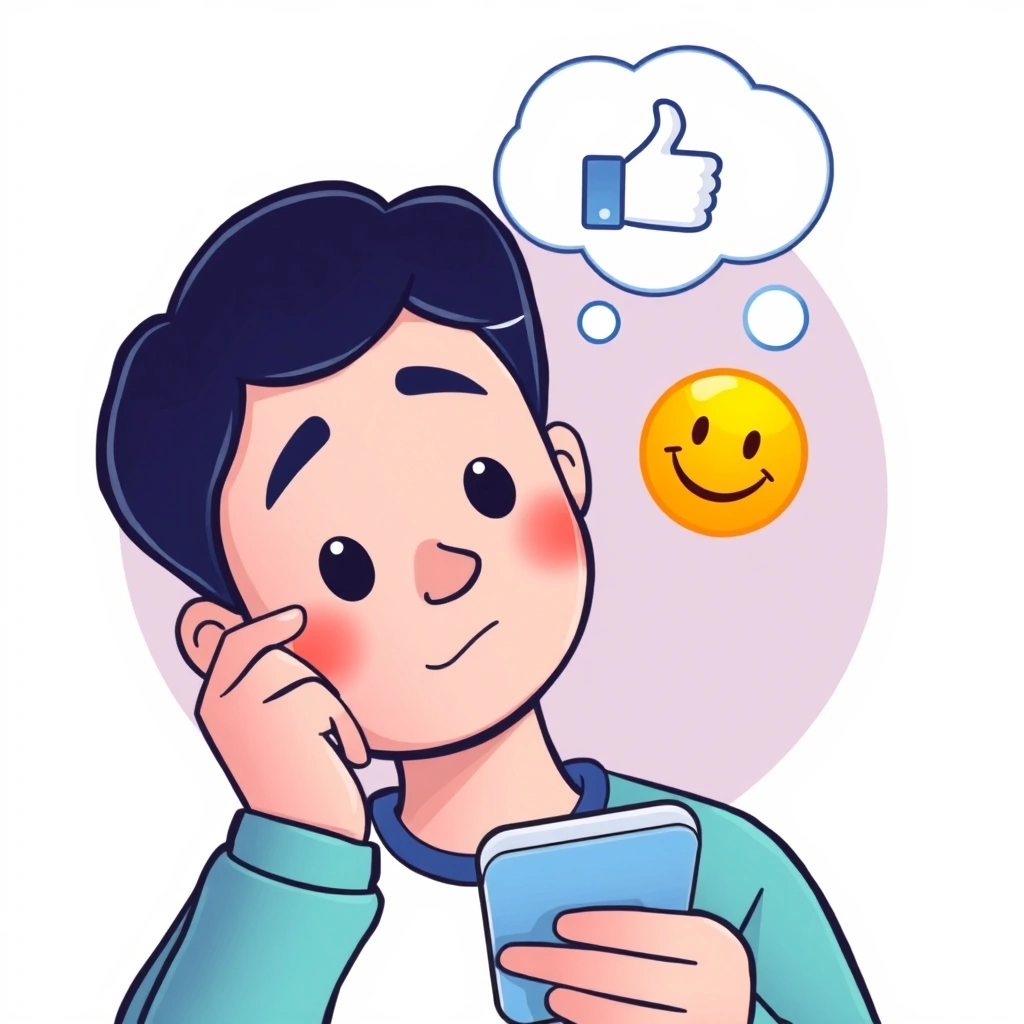
Of course, this power comes with responsibility. Because emojis shape interpretation, choosing the wrong one can send a message spiraling in an unintended direction. The difference between a grinning face 😀 and a grinning face with sweat 😅 is subtle but significant—one is pure joy, the other is nervous or awkward relief. Using a skull 💀 to say something is "hilarious" might be clear to your close friends but confusing to a coworker.
This is where the social pattern of emoji use gets fascinating. We develop shared, often unspoken, dictionaries with different people. The peach 🍑 might mean just a peach to your grandma, but something entirely different in a chat with your best friend. The fire 🔥 you use to compliment a colleague's presentation is not the same "fire" you use to describe a wild party. The meaning is co-created within the context of each specific relationship. This dance between intent and interpretation is a constant, low-key negotiation in our private chats.
Building Bridges and Avoiding Pitfalls
So, how does this play out day-to-day? Positively, emojis are incredible tools for building rapport and connection. They soften requests ("Could you send me that file when you get a chance? 🙏"), amplify congratulations ("That's amazing news! 🎉"), and offer silent support ("Thinking of you today 💙"). They can turn a transactional exchange into a moment of human connection.
But the potential for misalignment is real. Generational gaps can lead to confusion (is the crying laughing face 😂 still cool, or is it a millennial relic?). Cultural differences in emoji meaning are well-documented. And sometimes, the sheer absence of an emoji where one is expected can be loaded with meaning—a period at the end of a sentence instead of a heart can feel intentionally distant.
The key is awareness. Recognizing that every emoji (or lack thereof) is a conscious or subconscious choice that influences the conversation. It's about developing a kind of emoji literacy, not just in knowing what the symbols are, but in understanding their social weight within your specific relationships. For a broader look at this dynamic, check out more thoughts on emoji and communication.
In the end, our one-on-one chats are the most intimate digital spaces we have. They're where friendships deepen, romances blossom, and family bonds are maintained across distances. In these spaces, emojis have evolved from fun add-ons to essential components of our emotional vocabulary. They help us be clearer, kinder, and more connected, proving that sometimes, a tiny picture is worth a thousand words.
📒 Related Blogs
More...The Secret Language of Emojis: How They Soothe Our Digital Jitters
Beyond Reaction Buttons: How Emojis Drive Social Impact and Global Change
The Instant Feeling: How Emojis Spark Our Quickest Emotional Reactions
The Unspoken Stop Sign: How Emojis Mark the End of a Chat
The Global Language of Emojis: Cultural Interpretations & Usage
The Unspoken Language: How Emojis Shape Your Online Conversations and Perceptions