The Unspoken Rules: How Emojis Reveal Social Expectations in Your Private Chats

Jan 23,2026
Think about your last one-on-one text conversation. Maybe it was with a close friend, a family member, or a colleague. Chances are, emojis played a role. But beyond adding a splash of color or a hint of fun, these tiny icons often act as subtle social signals. They don't just convey emotion; they hint at expectations.
In a private chat, every message exists in a vacuum of context. Without body language or tone of voice, we lean on symbols to fill the gaps. A message ending with a period can feel final, even cold. Swap that period for a smiling face 😊, and the entire expectation shifts. The sender isn't just sharing information; they're inviting a warmer, more engaged response.
This is where the social contract of the chat begins to form. When someone uses a laughing-crying emoji 😂 in response to your story, they're doing more than expressing amusement. They're signaling that they found your share valuable and enjoyable. This often creates an expectation for similar, light-hearted engagement in return. It sets a 'tone precedent' for the conversation. You can read more about how emojis shape tone in our article on unlocking tone in messages.
The Expectation of Reciprocity
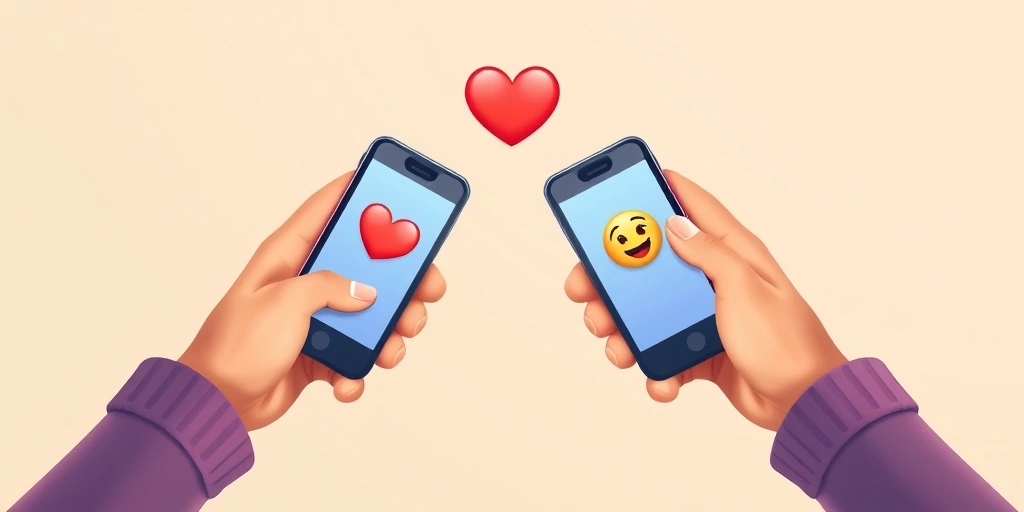
One of the most powerful social expectations emojis create is reciprocity. If you send a heart ❤️, you might subtly hope for a heart (or at least a positive emoji) back. A thumbs up 👍 can imply an expectation of agreement or acknowledgment. When these expectations aren't met—when a heart is met with a simple "ok"—it can create a tiny ripple of social dissonance. Was the sentiment not reciprocated? Was the emoji too strong?
This dance is especially delicate in newer or more formal relationships. Using a winking face 😉 with an acquaintance carries a different weight and expectation than using it with a best friend. With the friend, it might signal an inside joke. With the acquaintance, it might be perceived as overly familiar or even flirtatious, creating an expectation for a level of closeness that isn't yet there.
Pacing and the 'Appropriate' Response Time
Emojis also hint at expectations about the pace and rhythm of a conversation. A single, thoughtful message might end with a pensive face 🤔, implying the sender is pondering and doesn't necessarily expect an immediate reply. Conversely, a string of excited messages capped with party poppers 🎉 creates an expectation of shared, immediate enthusiasm.
Consider the 'double text.' Sending a follow-up message with just a question mark ❓ or an eyes emoji 👀 applies gentle pressure. It explicitly creates an expectation for a response, breaking the unspoken rule of waiting. It says, "I've noticed your silence, and I'm expecting you to fill it." The flow of our chats is deeply guided by these visual cues, a topic we explore in the unspoken rhythm of online chats.
Navigating the Unwritten Rules
So, how do we navigate this landscape of hinted expectations? Awareness is the first step. Recognizing that your choice of emoji sends a signal about how you hope the other person will engage allows for more intentional communication.
It's also helpful to remember that these expectations are fluid and personal. Your best friend's expectation for emoji use will differ from your boss's. The key is to read the room—or in this case, read the chat history. Mirroring the emoji style and level of enthusiasm of the person you're talking to is a safe way to meet their implicit social expectations.
Ultimately, emojis in one-on-one chats are a tool for co-creating a shared social space. They help us negotiate closeness, set the emotional temperature, and manage the turn-taking of digital conversation. They are the punctuation marks of modern relationship-building, each one quietly suggesting how the next line should be written. By understanding the expectations they hint at, we can use them not just to communicate, but to connect more effectively.
For more insights into the fascinating world of emojis and how they shape our interactions, explore our other articles on emoji and communication.
📒 Related Blogs
More...Express Yourself: How Emojis Boost Mental Wellness and Connection
From Emoticons to Icons: The Fascinating Evolution of Emojis and Digital Expression
Emoji Accessibility: Ensuring Inclusive Digital Communication for All
Unearthing Hidden Gems: Discovering Niche and Underused Emojis for Unique Expression
Decode the Digital Silence: How Emojis Revolutionize Online Communication Clarity
How Emojis Save the Day: Bringing Clarity and Warmth to Your Work Emails