The Instant Feeling: How Emojis Spark Our Quickest Emotional Reactions

Jan 23,2026
Think about the last time you got a text. Before you even finished reading the words, you probably had a feeling about it. Was it good news? A sarcastic dig? A genuine question? More often than not, that instant, gut-level judgment comes down to one tiny element: the emoji (or the lack of one).
We are hardwired to scan for emotional cues. In face-to-face conversation, we rely on tone of voice, facial expressions, and body language. In the flat, text-based world of our phones, emojis have stepped in to fill that void. They aren't just decorative; they're functional. They provide the emotional context our brains crave to make sense of the words.
When you see a message ending with a simple smiley face 🙂, your brain doesn't process it as "picture of a yellow circle." It processes it as "friendly," "positive," or "this is safe." Conversely, a message that feels blunt or harsh might just be missing that visual softener. This isn't about being overly sensitive; it's about how our cognitive machinery works. We're pattern-recognition machines, and emojis are a high-speed pattern for emotion.
Why Our Brains Love the Shortcut
The speed of this judgment is what's fascinating. Research in cognitive psychology shows we make first impressions in milliseconds. An emoji acts as a cognitive shortcut—a heuristic. It allows us to bypass slower, more analytical thinking and immediately categorize the sender's intent. A heart emoji ❤️ signals affection or agreement. A crying-laughing face 😂 signals humor. A thinking face 🤔 signals contemplation or skepticism.
This efficiency is perfect for the fast-paced world of messaging, but it has a flip side. Because the judgment is so quick, it can also be shallow and prone to error. The same emoji can mean different things to different people, or in different contexts. A winky face 😉 can be playful flirtation or ironic sarcasm, completely changing the message's perceived meaning. Our quick emotional judgment locks in based on *our* interpretation, which may not be what the sender intended.
This is part of the secret language of emojis we all navigate daily. We're constantly sending and decoding these micro-signals, often without even realizing it.
The Power (and Peril) of the Single Emoji
Sometimes, the emoji *is* the entire message. A thumbs up 👍, a red heart ❤️, or a fire 🔥 can convey agreement, love, or excellence without a single word. These are some of our most potent emotional triggers because they're so concentrated. They demand very little cognitive effort to understand, making the emotional transfer incredibly efficient.
But this potency means a "wrong" emoji can derail a conversation instantly. Replying to serious news with a seemingly casual emoji, or using an emoji with an ambiguous tone, can create confusion and hurt. That quick emotional judgment turns to doubt or offense. We've all had that moment of staring at a message, wondering, "What did they *mean* by that eggplant? 🍆" (It's almost never about the vegetable).
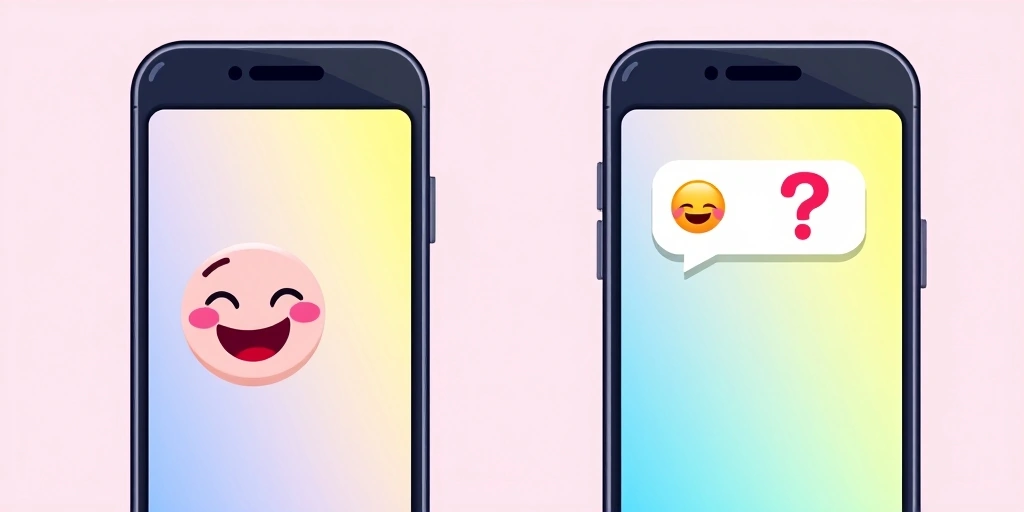
Navigating the Emotional Landscape
So, how do we communicate better, knowing how powerful these tiny icons are? Awareness is the first step. Recognizing that you and the person you're texting are both making these lightning-fast emotional snapshots can create more grace and clarity.
It's worth considering the recipient. Does your best friend understand your ironic use of the skull emoji 💀 to mean "this is hilarious," or will your mom interpret it as you being in distress? When tone is critical, sometimes a few extra words are the best companion to your emoji.
Ultimately, emojis are a tool for emotional efficiency. They help us bridge the gap that pure text leaves open. They color our conversations with feeling, making our digital interactions more human. By understanding that they trigger our most immediate judgments, we can use them more thoughtfully to connect, rather than confuse. The psychology behind it is complex, but the daily practice is simple: choose with a little care, and read with a little grace. The conversation around how emojis shape meaning is always evolving, just like our use of them.
Next time you go to hit send, take that extra half-second. That emoji isn't just a sticker; it's the emotional headline for your entire message. Make sure it's telling the story you want to tell.
📒 Related Blogs
More...The Friendly Nudge: How Emojis Keep Professional Messaging Human
The Quiet Language of Care: How Emojis Help Us Navigate Sensitive Conversations
Beat Deadline Stress: How Emojis Smooth Out Professional Chats Under Pressure
The Unsung Heroes of Work Chat: How Emojis Make Your Slack Messages Land Perfectly
How a Simple Emoji Can Save Your Next Project Update
The Quiet Power of Emojis: Boosting Confidence in Subtle Conversations