The Unsung Heroes of Work Chat: How Emojis Make Your Slack Messages Land Perfectly

Jan 23,2026
Let's be honest, work chat can be a minefield. You type a quick message, hit send, and then… silence. Or worse, a confused reply. Was my suggestion taken as criticism? Did my joke fall flat? In the text-only world of Slack, Microsoft Teams, or Google Chat, tone is everything and yet it's the first thing to get lost.
This is where our tiny, colorful friends come in. Emojis aren't just for texting your best friend. In the professional sphere, they've become the secret sauce for making our digital conversations feel more human, more clear, and infinitely smoother.
Why Plain Text Falls Short
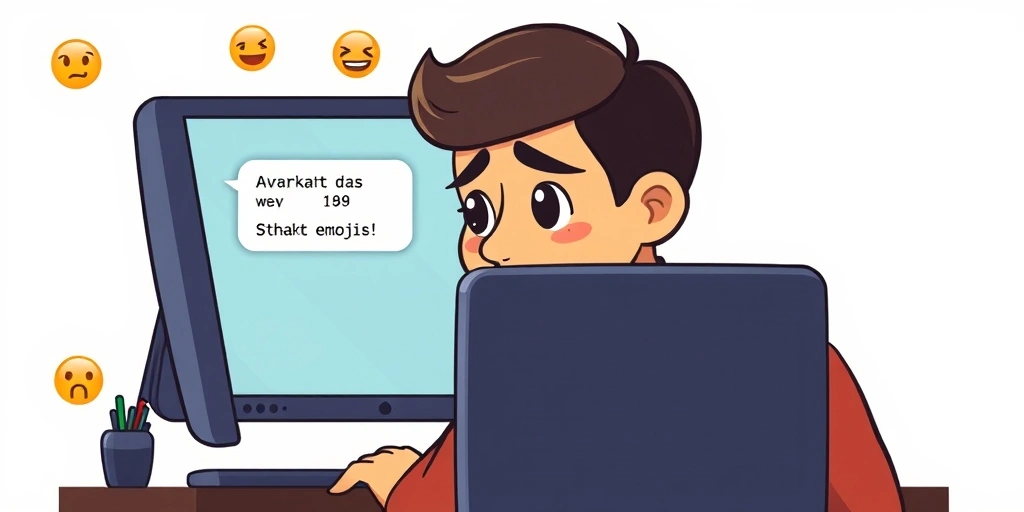
Think about the last time you read a message like "We need to talk about the report." Your heart probably did a little flip. Is it bad? What's wrong? Now, imagine that same message with a slight tweak: "We need to talk about the report 😊" or "We need to talk about the report 📈". Suddenly, the emotional context shifts entirely. The first suggests a friendly, collaborative chat. The second hints at a data-driven, positive discussion about growth.
Without the visual cue of a face or a gesture, our brains fill in the blanks, and often, we default to stress or negativity. A simple emoji acts as a tone indicator, guiding the reader to the correct emotional interpretation.
The Practical Magic of Emojis in Daily Chats
So how does this play out in your everyday work? Let's break it down.
1. Replacing the Office Nod or Smile
In a physical office, you'd give a quick nod or a smile to acknowledge a message in a meeting. In chat, that's a 👍 or a 😀. It signals "I'm here," "I agree," or "I've seen this" without needing to type a full sentence. It keeps the conversation flowing without clutter.
2. Softening Requests and Feedback
"Can you get this to me by EOD?" feels like a demand. "Can you get this to me by EOD? 🙏" feels like a collaborative request. Adding a ❤️ to a "great job!" or a 🎉 to a team win amplifies the positive sentiment in a way words sometimes can't. For more on giving feedback with kindness, check out our thoughts on The Art of the Project Update.
3. Preventing the "Wait, Are You Mad?" Follow-up
Sarcasm and dry humor are famously difficult to convey in text. What you mean as a light-hearted joke can be read as a sharp critique. A 😉 or a 🤣 can be the difference between a laugh and an awkward HR conversation. It's the digital equivalent of a playful elbow nudge.
Building a Warmer Team Culture
Beyond clarity, emojis build culture. They inject personality into the digital workspace. A team that regularly uses a 🧠 for smart ideas, a 🔥 for excellent work, or a custom emoji for inside jokes feels more connected. It creates a shared language and reminds everyone that there are real, multifaceted people behind the screens.
This is especially crucial in remote or hybrid settings, where watercooler moments are rare. A well-placed emoji can be that moment of shared understanding.
A Few Words of Caution (Because It's Still Work)
Of course, context is king. While a 💯 might be perfect for your close-knit project team, a series of heart-eyes emojis might not be the best fit for a formal message to a new client or senior leadership. The key is to mirror the communication style of your team and organization. Start small—a simple checkmark or thumbs-up—and see how it feels.
Ultimately, using emojis at work isn't about being unprofessional. It's about being an effective communicator. It's about ensuring your intent matches your impact. In the high-speed, often ambiguous world of work chat, these little symbols are powerful tools for reducing cognitive load, fostering goodwill, and making sure your message doesn't just get sent, but gets felt the right way.
So next time you're about to send a plain text message, pause for a second. Could an emoji help it land more smoothly? The answer is probably yes.
📒 Related Blogs
More...The Secret Life of Emojis: How Our Digital Heartbeats Mirror a Changing World
The Polite Power of Emojis in Remote Work Messages
The Future of Emojis: How They're Evolving Our Digital Conversations
The Pause Before the Emoji: How a Tiny Symbol Can Hold Space in a Difficult Conversation
The Instant Pulse: How Emojis Light Up Viral Trends and Platform Moments
The Psychology Behind Emojis: Why We Love to Tap and Send Them