The Secret Life of Emojis: How Our Digital Heartbeats Mirror a Changing World

Jan 29,2026
Think about the last text you sent. Chances are, it contained an emoji. That tiny digital icon did more than just punctuate your sentence; it carried tone, nuance, and a piece of the shared cultural moment we're all living in. Emojis have become the heartbeat of our online conversations, but their pulse isn't constant. It quickens, slows, and changes rhythm, perfectly in sync with the trends, jokes, and anxieties of the digital age.
In practice, emojis are a living language. And like any living language, they don't exist in a dictionary vacuum. They thrive on repetition and adoption. When a new phrase, meme, or cultural feeling emerges, we don't just talk about it—we find ways to emoji-fy it. This process of collective adoption is how emojis stop being mere illustrations and start being meaningful reflections of our time.
The Cycle of a Trend, Told in Tiny Pictures
Let's take a trip down recent memory lane. Remember the sheer, unadulterated drama of the 💀 (skull) emoji? A few years ago, it was strictly for horror or literal mentions of death. Then, almost overnight, it became the universal symbol for "I'm laughing so hard I'm dead." This shift didn't happen because a committee decided it. It happened organically, through millions of repetitions on platforms like Twitter and TikTok. The skull was adopted, molded, and given a new, ironic life by the internet's collective sense of humor.
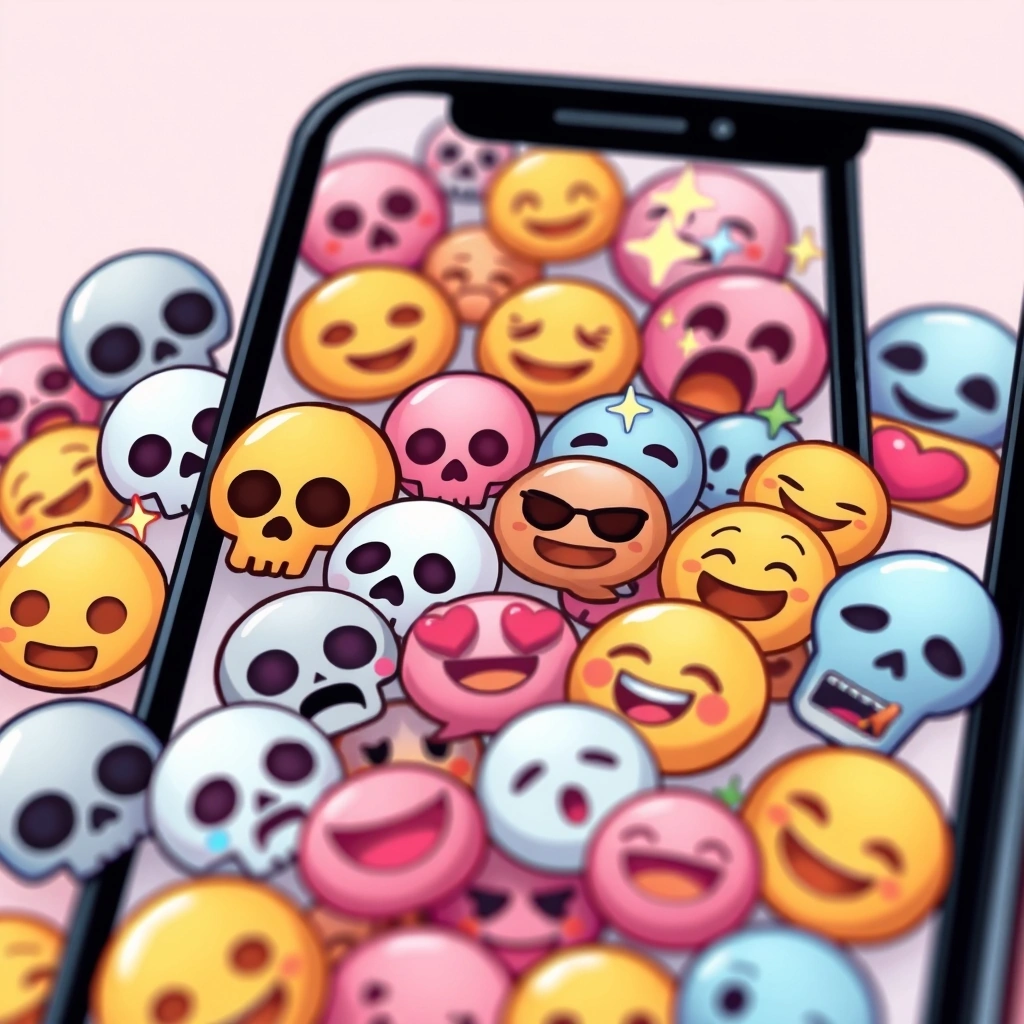
But trends have lifespans. As the ironic "dead" laughter became mainstream, the early adopters moved on. The 💀 started to feel a bit passé, a tell-tale sign your cousin was trying too hard. In its place, subtler, more specific reactions emerged. The 😭 (loudly crying face), once for genuine sadness, was fully claimed for tears of joy. The ✨ (sparkles) became less about magic and more about adding a vibe of positivity or aesthetic emphasis to absolutely anything. This constant churn is the key. Emojis reflect changing online culture because the culture itself is a river, always moving. You can read more about how these meanings get rewritten in our piece on how digital trends rewrite the meaning of your favorite emojis.
Adoption is Everything
This brings us to the most crucial element: adoption. An emoji's power comes from shared understanding. The 🧑💻 (technologist) emoji might be officially for coders, but if a niche online community starts using it to mean "deep in a research rabbit hole," that new meaning only sticks if others pick it up. This is how subcultures create their own visual shorthand. A meme page, a fandom, a professional group—each can subtly bend an emoji to their will through consistent, repeated use.
The 📈 (chart increasing) emoji is a perfect example. In finance, it's literal. In influencer culture, it might mean "my life is improving" or "this trend is popping off." The context and the community give it its specific flavor. This fluidity is a feature, not a bug. It allows our digital language to be incredibly responsive and nuanced.
From Novelty to Norm to Nostalgia
We can map the lifecycle of online eras through their signature emojis. The early 2010s were the age of the 😂 (face with tears of joy)—earnest, loud, and ubiquitous. It was the king of Facebook. Then came the era of irony and ~aesthetics~, bringing us the minimalist 🥺 (pleading face) and the versatile 🤪 (zany face). Today, we see a mix: hyper-specific reaction emojis sitting alongside a resurgence of retro, earnest ones used sincerely (or are they? The layers of irony are deep).
This evolution isn't random. It mirrors our changing relationship with the internet itself. As our online lives became more curated, performative, and then exhausted by that performance, our emoji use reflected that journey. We moved from broad, universal expressions to more niche, insider-coded signals, and now often back to simpler icons that feel genuine. Emojis become a kind of emotional archaeology. Seeing a string of 😊🙌✨ in an old post can instantly transport you back to the optimistic, slightly cringey vibe of a specific year.
This is how emojis become our shared internet language. They are the common ground where billions of people, across languages and borders, negotiate meaning in real-time. They are the tools we use to soften a critique (😅), show solidarity (✊), or express a feeling words can't quite capture (🤷♀️💖).
The Mirror Never Lies
So, the next time you scroll through your messages or a social media feed, don't just read the words. Look at the emojis. That mosaic of tiny pictures is a real-time, crowd-sourced map of what we're collectively feeling, joking about, and prioritizing. The rise of the 🍃 (leaf fluttering in wind) to signal a chill mood, the use of 🫠 (melting face) for overwhelmed embarrassment, the specific niche of the 🧚 (fairy) in certain communities—each is a data point in the story of now.
They reflect our desire for connection, our need for tone in a text-heavy world, and our incredible creativity in building culture together. As long as our online world keeps changing, our emojis will be right there, changing with it—one tiny, perfect, emotional pixel at a time. For more insights into this ever-evolving world, explore our broader thoughts on emoji culture and trends.
📒 Related Blogs
More...The Unspoken Stop Sign: How Emojis Mark the End of a Chat
The Little Smiles That Make a Big Difference: Emojis and Casual Fun
The Secret Sauce of Smiles: How Emojis Effortlessly Elevate Playful Chats
Unpacking Global Emojis: Regional Differences in Digital Communication
The Invisible Hand: How Emojis Steer Understanding in Online Communities
The Quiet Power of Emojis: How They Build Confidence in Private Chats