The Quiet Sigh: How Emojis Express Disappointment When Words Feel Too Risky

Feb 06,2026
You stare at your phone screen, the message just delivered. It’s not a big fight, not a dramatic betrayal. It’s smaller, quieter. A friend cancels last minute, again. A partner forgets to do that one small thing you asked. A colleague takes credit for your quiet contribution in a group chat. The feeling arrives first—a dull ache of disappointment, a pang of being let down. But your fingers hover over the keyboard. What do you type? 'It’s fine,' feels like a lie. Expressing the hurt directly feels too heavy, too risky for such a small moment. So, you do something else. You send an emoji.
It’s not the cheerful one. It’s not the angry one. It’s the one that sits in the middle—the slightly frowning face 😔, the weary face 😩, the pleading face 🥺. In that tiny digital glyph, you’ve just built a bridge between your internal feeling and the external world, without having to construct the whole sentence.
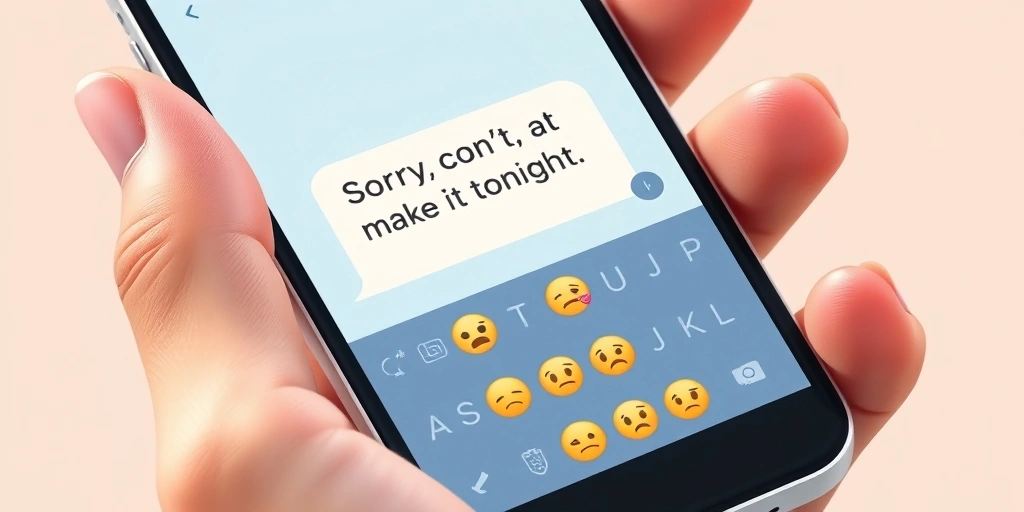
These small interactions are the fabric of our digital relationships. We navigate a thousand tiny emotional exchanges a day, and not all of them warrant—or can safely hold—a full verbal unpacking. The risk isn't always about conflict; sometimes it's about vulnerability. To say 'I'm disappointed' is to admit you had an expectation, that you cared enough to be let down. It opens you up. An emoji, however, lets you point to the feeling without fully stepping into its spotlight. It’s a signal. A quiet sigh in pictorial form.
Think of it as emotional shorthand. The words 'I'm a bit sad about that' carry a weight. They demand acknowledgment, a response. A 🥺 emoji after a canceled plan does something different. It communicates the subtext: 'I was looking forward to this, and now I'm bummed,' while leaving the door open for the other person to either acknowledge it ('I know, I'm sorry! Next week?') or gently move past it. It lowers the stakes. This is why we often use them in moments when words feel heavy; they are pressure-release valves for low-grade emotional steam.
The Safety of Symbolism
What makes an emoji so safe? Its ambiguity is its superpower. A real sentence can be dissected, quoted, and used against you. An emoji is interpretative. It’s a feeling, not a fact. You can always fall back on, 'Oh, I didn't mean it *that* seriously,' if the reaction isn't what you hoped for. This plausible deniability is crucial in maintaining harmony in our constant, low-stakes communications.
It also allows the receiver to meet you at their own comfort level. They can respond with a hug emoji 🤗, a matching sad face, or simply a heart ❤️. The emoji-led exchange becomes a delicate dance of mutual recognition without a full confrontation. It says, 'I see your feeling, and I'm offering mine in return.' This builds a unique kind of quiet confidence in our private chats.
When the Face Says It All
Consider the classic 'thumbs up' 👍 in response to disappointing news. On the surface, it's agreement or acknowledgment. But in context, it can be the ultimate signal of resigned disappointment. 'The meeting is moved to 7 AM.' '👍.' There's no anger there, but the flatness of the response, the lack of any enthusiastic emoji, speaks volumes. It’s the digital equivalent of a slow nod and a deep breath.
Or the single tear 😢. It doesn't scream devastation; it whispers 'this stung a little.' It’s perfect for when a friend forgets your birthday or when you see a photo of a gathering you weren't invited to. It conveys a specific shade of sadness—one that is real but manageable, worthy of note but not a meltdown.
This signaling system is how we maintain emotional hygiene in a hyper-connected world. We are constantly processing micro-feelings, and emojis give us a tool to acknowledge them, to put them outside of ourselves, without letting them dominate the conversation or the relationship. It’s a way of saying, 'This is here, between us, and we can both see it,' which is often all that's needed for the feeling to dissipate.
Of course, this language has its limits. A stream of angry faces 😠😤 can escalate a situation. Overuse of the disappointed face can seem passive-aggressive. The key, as with all nonverbal cues, is in the shared understanding and the context of the relationship.
But in those small, everyday moments of letdown, where the emotion is clear but the words are tangled, the humble emoji is more than a cute picture. It’s a lifeline. It’s a way to be honest about our hurt without making it a whole production. It lets us say, 'Ouch,' in a way that can be heard, and then allows everyone to move forward, a little more seen, and a little less alone. For more on how we navigate these subtle emotional landscapes, explore our thoughts on emoji and emotion.
So the next time you feel that small sink in your stomach after reading a text, and your mind races for the 'right' thing to say, remember the power of the quiet symbol. Sometimes, the most truthful response isn't a paragraph. It's a single, perfect, sighing face.
📒 Related Blogs
More...Beyond Words: How Emojis Shape Our Online Personalities & Digital Identity
The Emoji Effect: How Online Trends Supercharge Our Digital Language
Emojis in Marketing: How Brands Boost Engagement and Connect Visually
The Quiet Magic of Emojis in Everyday Check-Ins
The Future of Emojis: What New Icons & Features Can We Expect?
The Secret Life of Emojis: Decoding Their Hidden Meanings & Cultural Impact