The Silent Tempo: How Emojis Are Reshaping the Rhythm of Professional Chat

Mar 16,2026
Think about your last work chat. Maybe it was a quick question on Slack, a project update in Teams, or a confirmation email. The words were likely clear and professional. But if an emoji was involved—a simple thumbs-up, a thoughtful 😊, or a celebratory 🎉—something shifted. It wasn't just the message that changed; it was the entire rhythm of the conversation.
In text-based professional spaces, we've lost the natural tempo-makers of face-to-face talk: the nod, the smile, the pause, the shift in posture. Emojis have quietly stepped in to fill that void. They don't just decorate our sentences; they conduct them.
The Pause Button and the Accelerator
Consider the period at the end of a short message. In many digital contexts, it can feel oddly final, even stern. "Got it." feels different from "Got it" or "Got it 👍". That emoji acts like a soft pause—it acknowledges receipt, adds a layer of affirmation, and leaves the conversational door slightly ajar. It says, "Message received, and we're good," without the abrupt stop a bare period can imply.
Conversely, a string of quick-fire, text-only questions can feel like an interrogation. It puts pressure on the receiver to match that brisk, clinical pace. Dropping in a friendly emoji can be like tapping the brakes just enough to introduce a moment of warmth. "Any updates on the report? 😊" changes the rhythm from a demand to a collaborative check-in. It inserts a micro-moment of humanity into the exchange, slowing the perceived tempo to something more conversational.
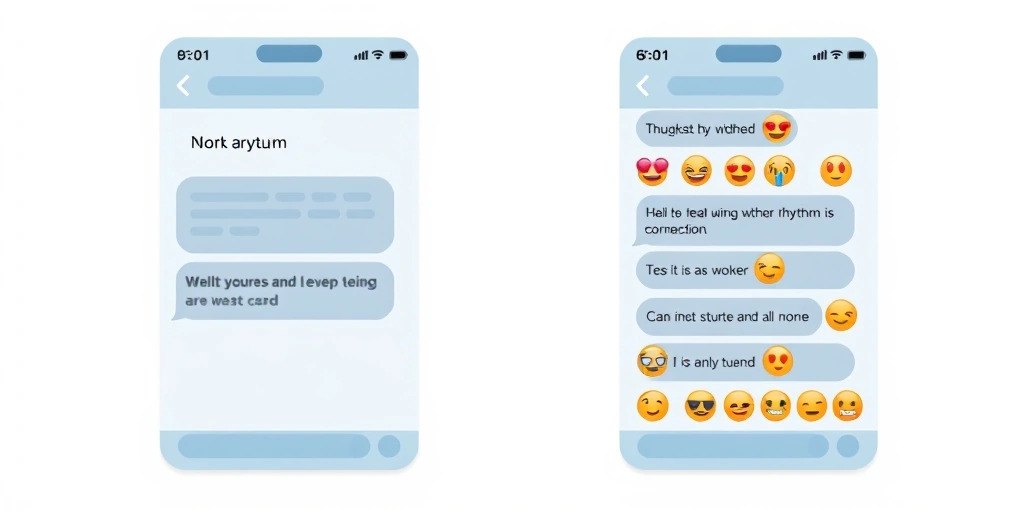
This rhythmic function is crucial in asynchronous communication, where pauses are extended and intentions are murky. An emoji can bridge the gap between messages, maintaining a sense of connection and flow even when hours pass between replies. It keeps the beat going.
Setting the Emotional Time Signature
Every conversation has an emotional time signature. Is it a brisk 4/4 march of pure data exchange? Or a more relaxed, syncopated groove of brainstorming? Emojis are masterful at suggesting which one we're in.
A team celebrating a milestone might flood a channel with 🎉, 🚀, and 🥳. This creates a rapid, upbeat, staccato rhythm of shared joy—a virtual round of applause. It encourages others to join in, accelerating the positive feedback loop. On the other hand, a single 🧠 or 💡 in response to a complex idea acts as a sustained note. It says, "I'm thinking deeply about this," setting a slower, more contemplative pace for the discussion that follows.
Even the humble ❤️ (in appropriate, culture-permitting contexts) or 👏 can dramatically alter the rhythm. They transform a standard "Great job" from a managerial note into a moment of genuine appreciation, adding a sustained, resonant beat of recognition that lingers.
For more on how emojis shape the emotional core of our messages, you might find this exploration on unlocking emotions with emojis really insightful.
The Risks of a Rhythm Gone Wrong
Of course, any conductor can make a mistake. Misjudging the rhythm can lead to awkward silences or cacophony. The overuse of emojis, especially in a serious, sequential discussion, can make a conversation feel frantic and unserious, like trying to have a deep talk over dance music. It fragments the flow.
Similarly, using a sarcastic or mismatched emoji (like a 😂 in response to a minor setback) doesn't just convey the wrong emotion—it introduces a jarring, off-beat rhythm that can confuse or even offend. It breaks the established tempo of the chat.
The key is attunement. It's about reading the existing rhythm of the channel or thread and choosing an emoji that complements or gently guides it, rather than disrupting it entirely. Understanding these unspoken rules of emoji use in groups is a big part of digital fluency.
Finding Your Team's Groove
There's no universal sheet music for this. The rhythm emojis create is deeply cultural—specific to your company, your team, and even your individual relationships with colleagues. The best way to learn is to listen. Observe how the most effective communicators in your digital workspace use them. Notice when an emoji makes a thread feel more productive and connected, and when it falls flat.
Start small. Try replacing a standalone "Thanks" with a "Thanks! 😊" and see how it feels. Use a 🎯 to focus a rambling thread. Use a 👀 to build gentle anticipation for a shared document. Pay attention to the new rhythm you create.
In the end, professional communication isn't just about transmitting information accurately. It's about coordinating human energy and attention. Emojis, in their tiny, colorful way, have become essential tools for that coordination. They are the metronome, the rest, and the accent mark in the symphony of our daily work chat, helping us find a rhythm that is not only efficient but human.
📒 Related Blogs
More...The Unsung Heroes of Texting: How Emojis Keep Our Digital Chats Flowing
The Secret to Lighter Chats: How Emojis Make Fast-Paced Conversations Effortless
The Secret Weapon: How Emojis Balance Directness & Warmth in Work Task Coordination
Emojis in Marketing: Boosting Brand Engagement with Digital Icons
Decoding the Digital Heartbeat: How Emojis Capture Our Ever-Changing Cultural Moods
The Magic of Emojis: How a Tiny Icon Can Turn a Simple Text into a Smile