The Tiny Gesture That Makes Work Chats Feel Human

Feb 17,2026
Let's be honest, most of our workday communication happens in bursts. A flurry of messages in Slack, Teams, or email. "Can you send that report?" "Meeting moved to 3 PM." "Got it." It's efficient, but it can also feel... transactional. A little cold. Like we're just cogs passing data back and forth.
But there's a secret weapon many of us have already adopted, almost without thinking. It's the humble emoji. And in the context of coordinating tasks, its power isn't about being funny or casual—it's about being considerate.
The Space Between Efficiency and Empathy
When you're deep in work, a ping for a task can feel like an interruption. A plain "Done" or "Sent" closes the loop, sure. But adding a simple 👍 or ✅ does something more. It adds a layer of acknowledgment. It says, "I received your request, I've acted on it, and I'm signaling back to you in a way that feels complete." It turns a basic data transfer into a mini social transaction.
Think about it. Your colleague asks, "Hey, did you get a chance to review the draft?" A reply of "Yes" is fine. But "Yes ✅" or "Yep, all good! 👌" carries a subtly different energy. The first is a fact. The second is a fact delivered with a tone of reassurance. It closes the loop not just logistically, but emotionally.
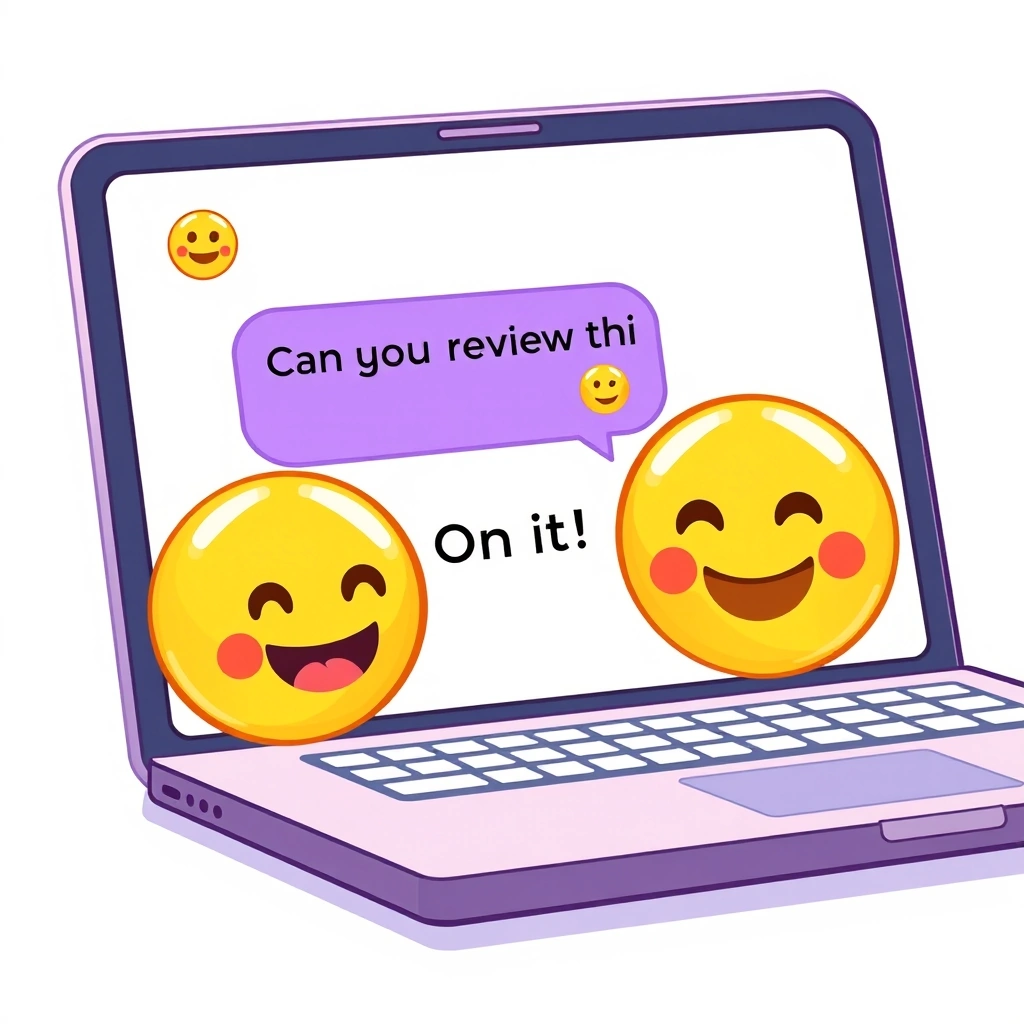
This is especially crucial in remote or hybrid settings. We lack the body language, the quick smile across the desk, the nod of understanding. Emojis step into that void. They become the digital equivalent of a thumbs-up gesture or a nod. They provide the social glue that keeps purely text-based coordination from feeling robotic.
Transforming Brief Replies into Moments of Connection
The magic often happens in the briefest of replies. The ones we might worry are too short.
- "Thanks!" vs. "Thanks! 🙏" The folded hands emoji adds a touch of genuine gratitude.
- "On it." vs. "On it! 💪" The flexed bicep injects a bit of can-do energy and commitment.
- "No problem." vs. "No problem! 😊" The smiling face assures the asker they haven't been a burden.
These aren't about being unprofessional. They're about being a human professional. They soften the edges of direct communication without diluting the message. For more on this balance, explore our thoughts on how emojis balance directness and warmth.
It signals that you're not just a task-completion bot, but a collaborator who is engaged and aware of the other person on the screen. That tiny bit of extra consideration can dramatically improve the feel of team dynamics over time.
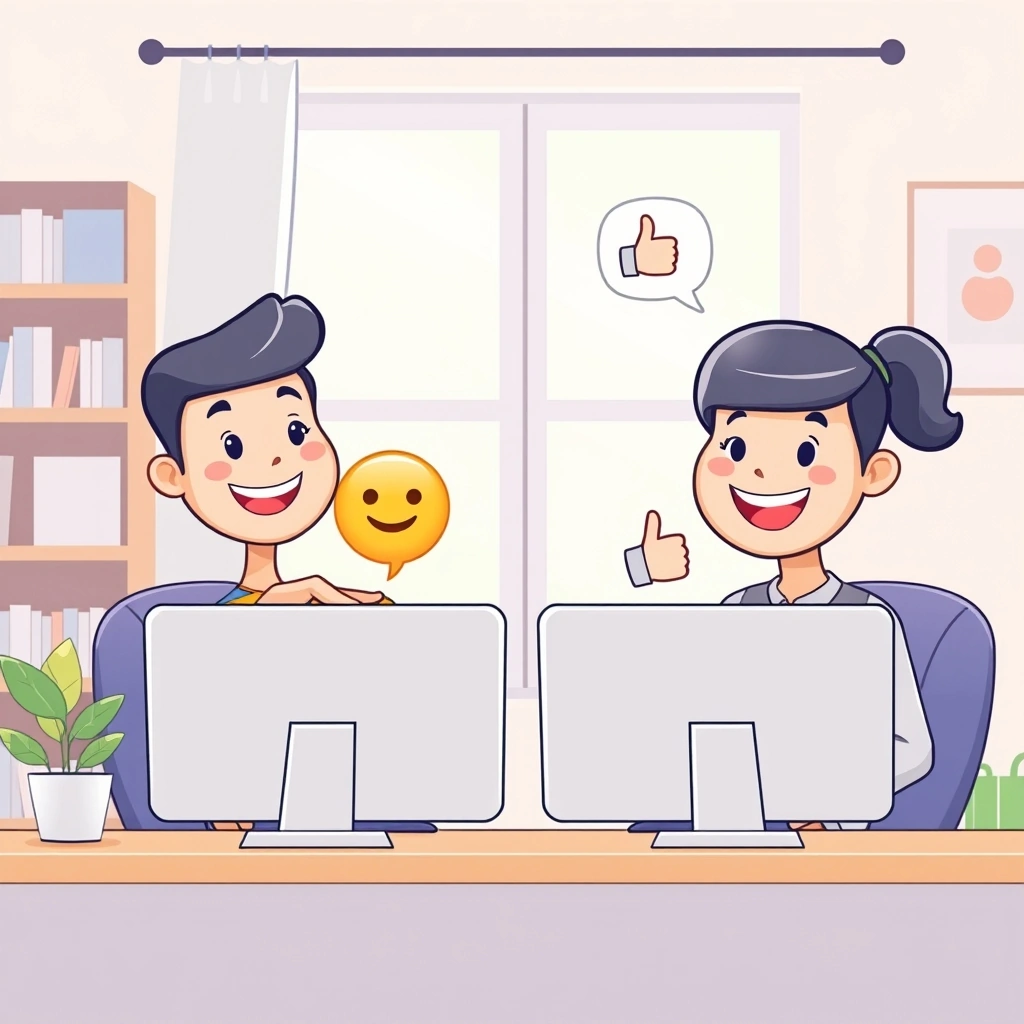
The Unspoken Rules of Considerate Emoji Use
Of course, context is everything. The goal is consideration, not distraction. A well-placed checkmark in a fast-moving project channel is perfect. A string of celebratory balloons might be better saved for when a major milestone is actually hit.
The key is intent. Are you using the emoji to enhance clarity and tone, or just to decorate? The former builds connection; the latter can sometimes create noise. It's about reading the room, even if the room is digital.
Start noticing it in your own chats. When someone replies to your request with a "Will do!" and a quick rocket 🚀, how does it make you feel? Probably more confident that it's handled than a plain "ok" would. That's the power at play.
Our digital workspaces are here to stay. The tools we use to coordinate within them are constantly evolving. By consciously choosing to use emojis as tools for consideration, we're not just getting tasks done—we're building a more cohesive, human-friendly work environment, one brief message at a time. For more insights into using emojis professionally, check out our broader collection of articles on emojis at work.
So next time you go to hit send on that two-word reply, pause for a half-second. Could one small symbol make your colleague on the other end feel just a little more seen, a little more supported? Often, the answer is a resounding yes. 😊
📒 Related Blogs
More...The Secret Language: How Emojis Make Our Digital Chats Flow Effortlessly
Beyond Words: How Emojis Shape Our Online Personalities & Digital Identity
The Magic of a Single Tap: How Emojis Make Quick Chats Feel Truly Connected
More Than Just Faces: How Emojis Reveal Our Generational Digital Fingerprint
How Emojis Are Revolutionizing Branding & Marketing: A Modern Guide
Emoji Power-Ups: Boost Your Brand with Strategic Emoji Use for Marketing