Unlock Your Brain: How Emojis Instantly Streamline Your Digital Thoughts!

Jan 05,2026
We use them every day, almost without thinking. A quick thumbs-up, a laughing face, a slightly furrowed brow – emojis have become an integral part of our digital conversations. But beyond simply adding color or personality to our texts, these tiny icons play a much deeper, more subtle role in how we communicate: they act as powerful cognitive shortcuts, streamlining our interactions and helping our brains process information with remarkable efficiency.
The Brain's Visual Preference
Our brains are wired for visuals. Long before written language, humans communicated through gestures, facial expressions, and symbols. This innate preference means that images are processed significantly faster than text. When you see a word, your brain has to decode letters into sounds, then into meaning. When you see an emoji, the recognition is almost instantaneous. It’s a direct visual cue that bypasses some of the linguistic processing, allowing for quicker comprehension.
Think about scrolling through a busy feed or a rapid-fire group chat. A block of text might require a moment to absorb, but a well-placed emoji can convey an entire sentiment in a fraction of a second. This isn't just about speed; it’s about reducing the cognitive load on our brains. Instead of having to piece together the tone or intent from written words alone, an emoji offers an immediate, salient clue.
Decoding Emotions at a Glance
One of the most profound ways emojis serve as cognitive shortcuts is in expressing and interpreting emotion. Text, by its very nature, can be ambiguous. Sarcasm, irony, genuine enthusiasm, or mild annoyance can all be lost in translation without the non-verbal cues we rely on in face-to-face communication. This is where emojis step in.
A simple :) can instantly clarify that a statement is lighthearted, while a 😠 signals frustration. These universal symbols provide an emotional anchor, helping us to quickly grasp the sender's state of mind. They minimize the guesswork, preventing misunderstandings and fostering clearer, more empathetic exchanges. In essence, emojis act as digital facial expressions, conveying complex emotional data without needing lengthy explanations.
For more on how these small icons bridge the gap, explore The Secret Language of Smiles: How Emojis Instantly Reveal Emotions Online.
Simplifying Complex Messages
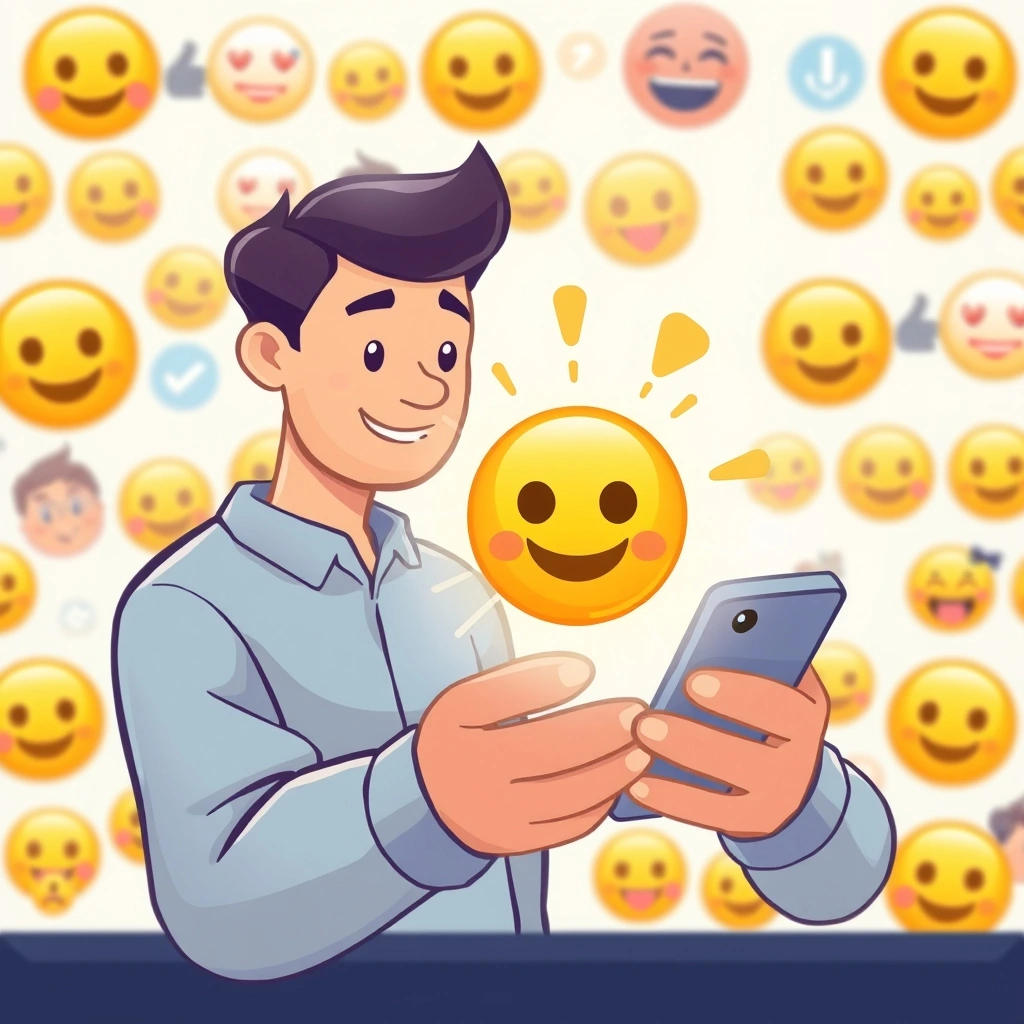
Beyond emotions, emojis can summarize entire concepts or actions. A ✈️ can represent travel plans, a 🗓️ an upcoming event, or a 🍕 suggesting dinner. These are not just decorative additions; they are compact packets of information. Instead of typing "I'm going to the airport tomorrow for my trip," a simple "Tomorrow ✈️" gets the message across efficiently.
This efficiency is particularly valuable in fast-paced communication environments. Our brains are constantly seeking patterns and shortcuts to process information more effectively. Emojis cater directly to this by offering readily recognizable symbols that link directly to common concepts, making our messages more concise and easier to digest.
Enhancing Recall and Memory
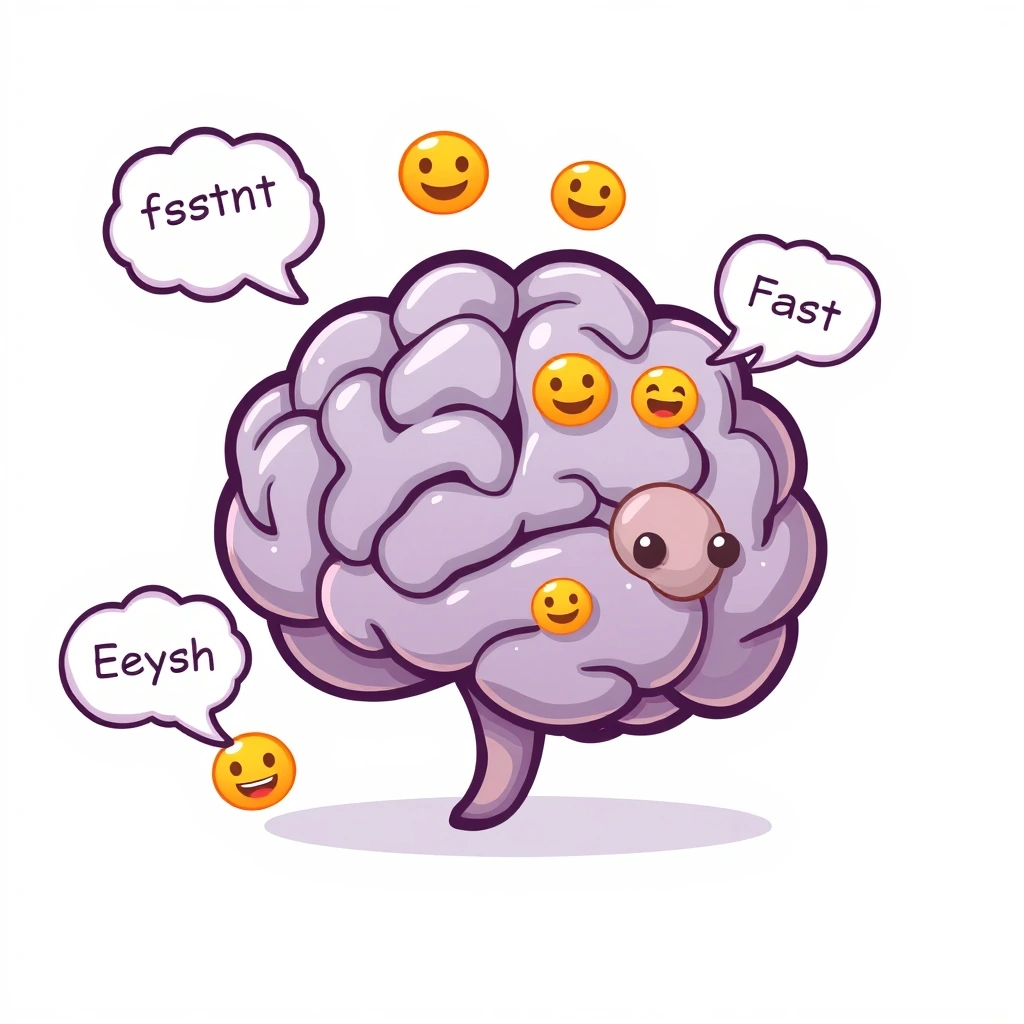
The visual nature of emojis also contributes to better memory retention. Research suggests that visual information is more easily recalled than purely textual information. When an emoji is paired with a message, it creates a visual anchor that can help cement the message in our minds. Imagine remembering a conversation about a new job. Seeing a 🎉 emoji alongside the text "Got the job!" might make that memory more vivid and easier to retrieve later compared to just reading the words.
This isn't just about remembering the specific emoji, but how it helps to encapsulate the entire context and emotional valence of the message. The emoji acts as a tiny mnemonic device, making digital conversations more memorable and impactful.
Fostering a Sense of Connection
While the focus here is on cognitive aspects, it's worth noting how these shortcuts also contribute to social bonding. By quickly conveying empathy or shared understanding, emojis help us feel more connected to the person on the other end. This feeling of connection, in turn, makes communication smoother and reduces psychological distance, further enhancing the efficiency of our interactions.
When you instantly understand someone's joke because of a 😂, or feel their concern with a worrying face emoji, it builds a micro-moment of rapport. These aren't just cognitive processes; they're social ones, too, built on the foundation of rapid, shared understanding facilitated by these little symbols. For a deeper dive into how emojis forge stronger bonds, see Emoji Power: How They Erase Digital Doubt & Build Stronger Bonds Online.
Beyond the Surface: Interpretation and Nuance
Of course, interpretation is not always perfectly universal. While many emojis have broadly accepted meanings, cultural context and personal interpretation can introduce slight variations. However, even with these nuances, the fundamental principle holds: an emoji still provides a shortcut. Instead of a complete lack of emotional or contextual information, it offers a starting point, a visual prompt that guides our understanding, even if that understanding requires a moment of calibration.
Our brains quickly learn to adapt to these nuances, integrating them into our communication patterns. The rapid feedback loop of digital messaging allows us to refine our emoji usage and interpretation over time, making these shortcuts even more effective within our specific social circles.
The Psychology of Everyday Usage
From work emails that need a friendly tone (👍) to family updates (🏡) and friend banter (😂), emojis are subtly shaping the way we think and react online. They're not just accessories; they're an integral part of the cognitive framework of modern digital communication. They help us filter, prioritize, and understand information in a way that plain text often struggles to achieve. It’s a testament to their powerful, albeit often overlooked, psychological impact.
To learn more about the psychological impact of emojis, you can visit Emoji Psychology.
In conclusion, the next time you drop an emoji into a message, take a moment to appreciate its silent power. These small icons are doing far more than adding charm; they are sophisticated tools that our brains leverage for faster processing, clearer emotional understanding, and more efficient communication. They are, in every sense, cognitive shortcuts, making our digital lives smoother, quicker, and a little more human.
📒 Related Blogs
More...The Secret Sauce: How Emojis Make Your Short Group Chat Messages Feel Truly Intentional
The Art of Intentionality: How Emojis Transform Casual Digital Chats
Clarity in Every Chat: How Emojis Prevent Misinterpretations in Professional Messaging
The Quiet Comfort of Emojis: How a Simple Icon Says 'I'm Here'
The Silent Peacemakers: How Emojis Diffuse Tension in Your Private Chats
Beyond Likes: How Emojis Revolutionize Social Media Engagement & Marketing