Emoji Power: How They Erase Digital Doubt & Build Stronger Bonds Online

Jan 02,2026
We’ve all been there, right? Staring at a text message or an email, trying to decipher the true meaning behind the words. Is that person genuinely happy, or are they being sarcastic? Are they serious, or just kidding? In the vast, often ambiguous landscape of digital communication, where tone of voice, facial expressions, and body language are utterly absent, it’s incredibly easy for misunderstandings to crop up. This is precisely where our little digital heroes – emojis – step in, transforming vague messages into crystal-clear conversations.
The Silent Struggle of Plain Text
Think about it. When we talk face-to-face, our expressions, gestures, and the inflection in our voice carry so much of the message. A simple "Okay" can mean anything from "I understand" to "I'm annoyed" depending on how it's said. But strip away all that non-verbal context, and you're left with just "Okay." It's a communication vacuum, ripe for misinterpretation. This vacuum often leads to anxiety, overthinking, and sometimes, entirely unnecessary conflicts. It’s like trying to navigate a dark room without a flashlight – you know there’s furniture, but you’re bound to bump into something.
For a deeper dive into how our digital expressions are perceived, check out Beyond Words: How Emojis Secretly Shape What Others Think of You. It really highlights the subtle power these tiny icons hold.
Emojis: Your Digital Tone of Voice
This is where emojis shine their brightest. They act as a powerful form of digital body language, injecting much-needed emotional cues and intent into our written words. They don’t just add a splash of color; they provide context, mitigate potential misunderstandings, and bridge emotional gaps that plain text simply can’t. A sarcastic comment followed by a 😂 suddenly becomes humorous, not hurtful. A quick question ending with a 🤔 makes it clear you're pondering, not demanding.
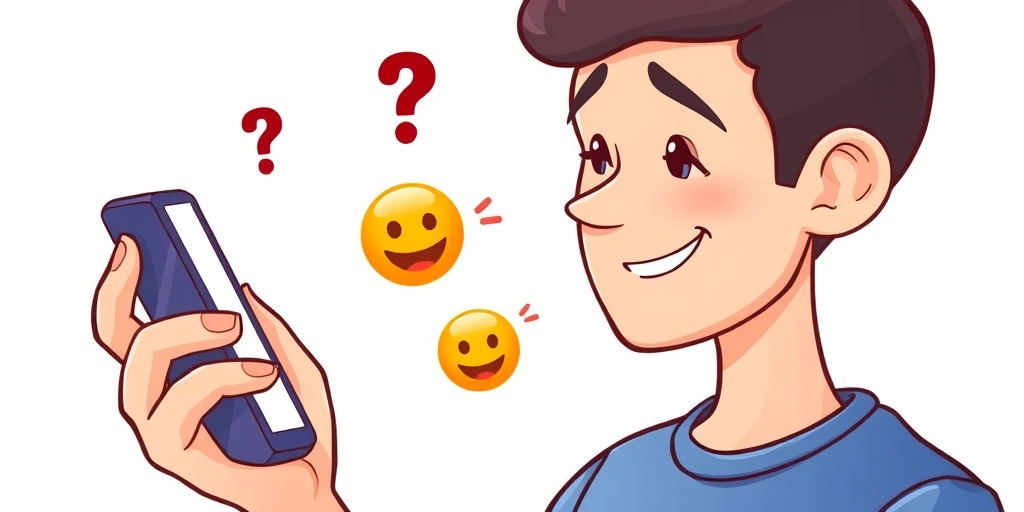
From Ambiguity to Clarity: Real-World Examples
Let's play a quick game. Imagine someone texts you, "Great job." What's the feeling? It could be genuine praise, or it could be dripping with sarcasm depending on your relationship and previous context. Now, add an emoji: "Great job! 🙌" or "Great job. 😉" Instantly, the uncertainty vanishes. The first feels like genuine congratulations, full of enthusiasm. The second suggests a playful, perhaps slightly cheeky, compliment. These tiny additions don't just decorate; they redefine the message.
Another classic is the simple request. "Can you do this by Friday?" might feel like a strict deadline. But "Can you do this by Friday? 🙏" softens it, adding a sense of polite urgency or even a plea, making the recipient feel more acknowledged rather than just ordered around. Emojis turn potential friction points into smoother interactions, making the exchange feel more human, more personal.
Building Bonds and Expressing Empathy
Beyond clarifying intent, emojis are fantastic for fostering connection and expressing empathy. A sad face 😔 after sharing bad news, or a comforting hug emoji 🤗 when someone needs support, conveys warmth and understanding that words alone might struggle to capture quickly. They help us share our emotional state and acknowledge others', creating a shared space of feeling even across distances.
They’re also brilliant for lightening the mood. A tough conversation can be eased with a well-placed 😅 to show you're taking it in stride, or a 🥰 to express affection, even when discussing difficult topics. It’s about adding that human touch, that understanding nod, that little squeeze of the hand, all in a digital format.
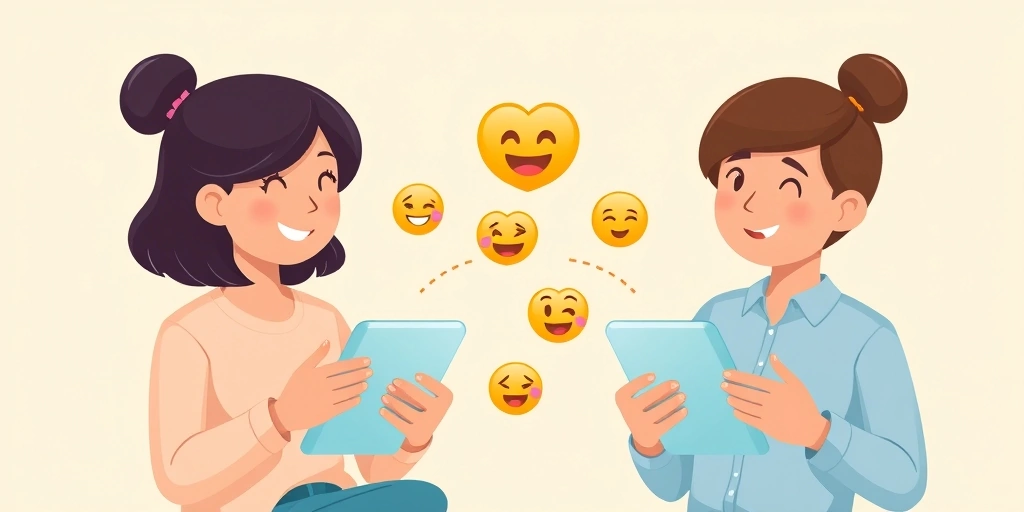
Navigating Professional and Casual Chats with Ease
While often associated with casual chats, emojis are subtly making their way into professional communication too, albeit with a bit more discretion. A simple 👍 or ✅ can signal agreement or completion without requiring a full sentence. In internal team chats, a celebration emoji 🎉 for a success or a thoughtful emoji 🤔 for a new idea can foster a more engaging and collaborative environment. They help create a sense of camaraderie, turning sterile corporate talk into something a little more relatable and approachable.
It's fascinating how these small symbols have become so integral to how we communicate, whether it's with friends, family, or colleagues. For more insights into how emojis strengthen bonds, explore Emoji Magic: How They Erase Doubt, Build Stronger Bonds in Every Chat.
The Art of Emotive Communication
Of course, like any powerful tool, emojis require a little finesse. Overuse can make a message feel juvenile or cluttered, and misinterpreting an emoji can still lead to a comical (or awkward) misunderstanding. But when used thoughtfully, they become an invaluable asset in our digital toolkit. They allow us to express a spectrum of emotions and intentions with unparalleled efficiency, making our online interactions richer, more nuanced, and significantly less stressful.
They truly are a testament to our ongoing human need for clear, heartfelt communication, even when technology places barriers between us. They've evolved from simple graphical elements to sophisticated signals that inform, connect, and prevent those all-too-common digital communication blunders. It’s about making sure your message isn't just read, but truly felt and understood, just as you intended.
Understanding the deeper psychology behind their use can really elevate your online presence and relationships. Dive into more topics on this fascinating subject at Emoji & Psychology.
So, the next time you're crafting a message, consider adding that perfect emoji. It might just be the little spark that prevents a big misunderstanding, clarifies your intent, and brings a little more joy and connection into your digital world. They're not just fun little pictures; they're essential tools for clearer, kinder, and more human online interactions. They really do make a difference!
📒 Related Blogs
More...The Unseen Language: How Emojis Dramatically Influence Short-Form Social Content
How Emojis Became Our Secret Weapon Against Workplace Misunderstandings
Emoji Fails: Hilarious Misinterpretations & Communication Blunders
The Emoji Filter: How a Simple Icon Can Change Your Entire Argument
The Unspoken Language: How Emojis Casually Shape Our Daily Chats
Emoji Etiquette: Mastering the Unwritten Rules of Digital Communication