Emoji as Emotional Buffers: Navigating Uncertainty with a Single Tap

Dec 28,2025
The message landed in my inbox like a lead weight. My heart did that familiar lurch, the kind where your stomach drops out, and your mind races through a million possibilities before settling on any coherent thought. It wasn't explicitly bad news, but it wasn't good either. It was... ambiguous. And in that ambiguity, a storm of unnamed feelings began to brew – anxiety, confusion, a touch of irritation, and a profound sense of "what now?"
I stared at the screen, fingers hovering over the keyboard. What do you even say? "Okay"? "Understood"? None of it felt right. Each potential word felt too definitive, too simple, or just plain wrong for the swirl of emotions churning inside me. This is that familiar space many of us find ourselves in: a moment of emotional uncertainty where our feelings arrive faster than our ability to articulate them. It’s a silent panic, a scramble for the right response when the internal landscape is still a blurry mess.
When Words Fail, Emojis Step In
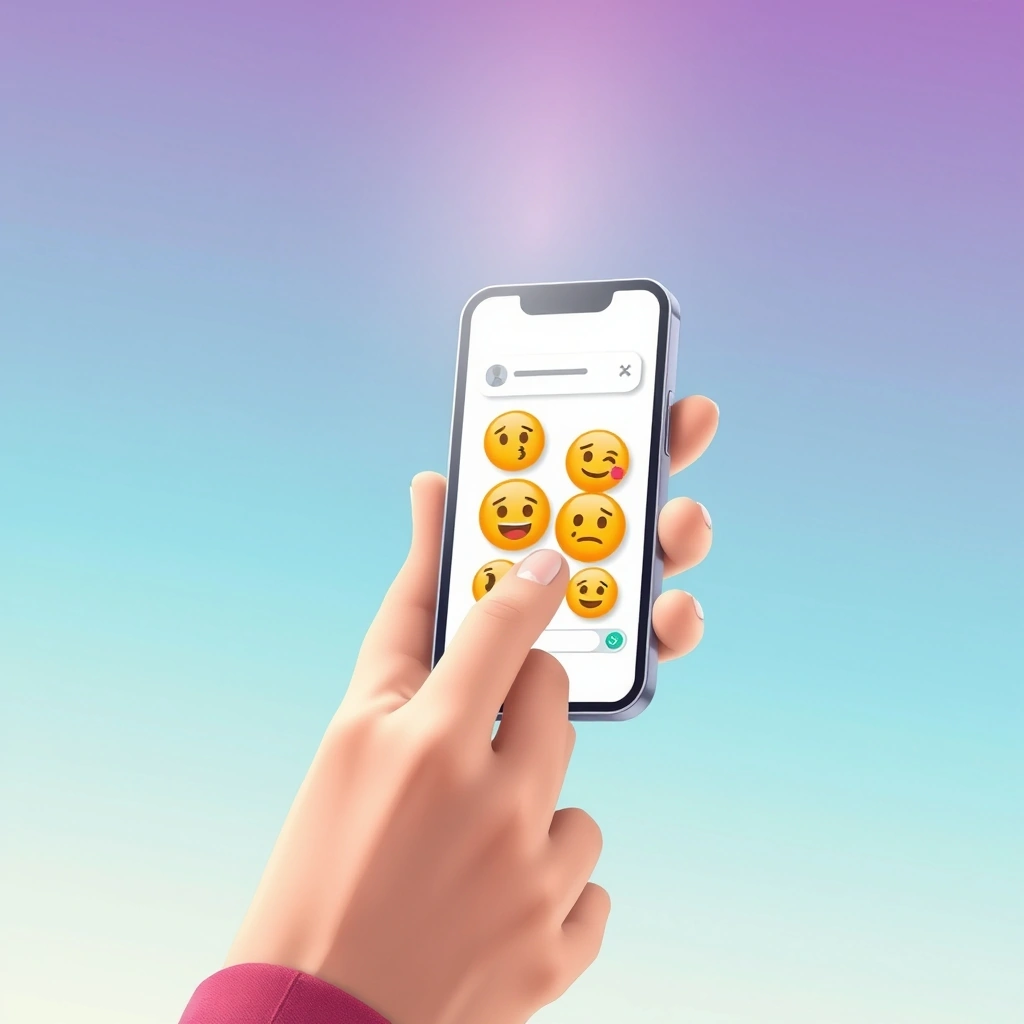
In these precise moments, something fascinating happens in our digital lives. We often reach for an emoji. Not a fully formed sentence, not a well-reasoned paragraph, but a tiny, expressive icon. Maybe it's a slightly furrowed brow 😟, a thoughtful face 🤔, or even a simple 🙏. It’s an almost unconscious reflex, a digital shrug or a silent nod that says, "I've received this, and I'm processing it."
— and this is where their true power lies — emojis in these contexts aren't just illustrating our words; they're absorbing our emotional stress. They act as a buffer, a digital pause button that allows us to acknowledge receipt, convey a general sentiment, and buy ourselves precious time to actually understand what we're feeling and how we want to respond. They prevent the awkward silence of an unanswered message, or worse, a hastily typed response that might misrepresent our true state.
The Silent Language of Emotional Acknowledgment
Think about it. When you're hit with unexpected news – good, bad, or utterly baffling – your brain often goes into overdrive. There's a primal scramble to categorize the feeling, to find a response. But sometimes, the response isn't immediately clear. It's a jumble. By sending a simple 😬 (grimacing face) or a 😳 (flushed face), we're not necessarily expressing a single, defined emotion. Instead, we're communicating the state of being in that moment: "I'm feeling something significant, and it's a bit overwhelming."
This subtle, yet profound, act of sending an emoji helps to bridge the communication gap without demanding immediate emotional clarity from ourselves. It’s a gentle way to say, "I'm here, I'm processing, and I care enough to respond, even if I don't have all the answers yet." This ability to soften difficult or uncertain digital interactions is truly remarkable. If you're interested in how emojis help us navigate these tricky online situations, you might find our article on navigating emotional landmines particularly insightful.
Why We Reach for the Icons
So, why are emojis so effective at this particular job? Part of it is their universality. A grimace or a confused face carries a similar meaning across cultures, often more so than specific words. They’re quick, requiring minimal effort when our mental energy is already taxed. And crucially, they’re non-committal in their specificity. A "Sorry" might imply fault; an "I'm confused" might demand an explanation we're not ready for. But a simple 🤷♀️ (shrug) or 😐 (neutral face) provides a level of ambiguity that can be incredibly comforting.
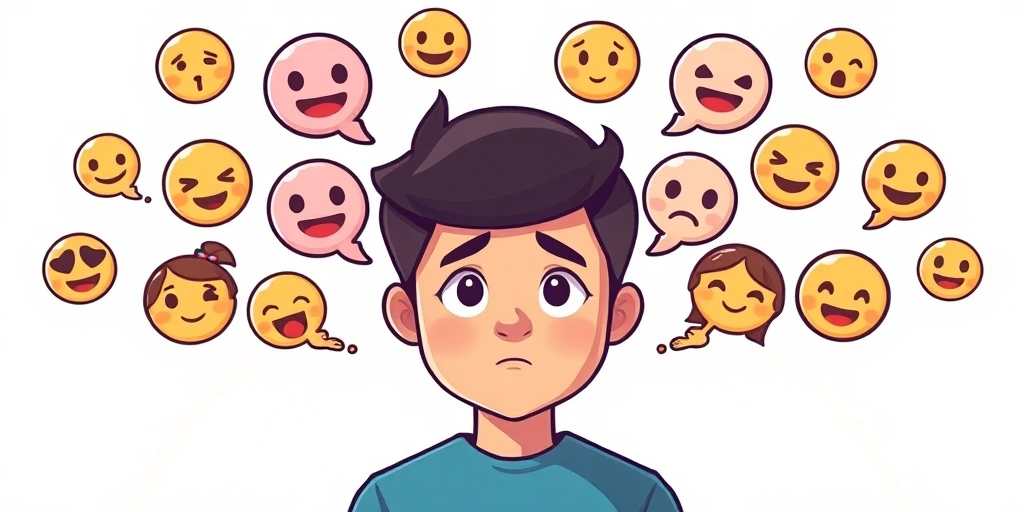
They allow us to express a nascent emotion without fully committing to its label. It’s a signal that an emotional response is happening, even if the user themselves isn’t quite sure what that response is yet. This makes them powerful tools for emotional regulation in real-time digital conversations, preventing a conversation from stalling or escalating unnecessarily.
More Than Just Reactions: Placeholders for Deeper Feelings
It's tempting to think of emojis as simple reactions, mere additions to our text. But in these moments of emotional uncertainty, they elevate themselves beyond that. They become placeholders. Imagine a painter who outlines a figure before filling in the colors; an emoji can serve as that initial sketch of an emotion, a marker that signifies "something important goes here." As we process, the colors – the specific words, the detailed explanations – can then be filled in, often resulting in a more thoughtful and authentic response.
This phenomenon highlights the deep connection between emojis and our emotional lives, underscoring how these small icons have become integral to how we express, manage, and even understand our feelings in the digital age. For more on the profound relationship between these tiny symbols and our inner worlds, explore our Emoji & Emotion category.
The Power of a Simple Tap
The act of choosing even a "simple" emoji in a moment of emotional flux is an act of communication, a desire to connect and acknowledge, even when clarity is absent. It's a testament to our inherent need to be understood, and to understand, especially when the path forward isn't immediately clear. Emojis, in their unassuming way, empower us to navigate these internal and external landscapes with a little more grace and a little less immediate pressure.
So, the next time you find yourself staring at a message, your mind a whirlwind of unarticulated feelings, consider the humble emoji. It might just be the silent, stress-absorbing hero you didn't know you needed, helping you bridge that uncertain gap until your words finally catch up with your heart.
📒 Related Blogs
More...The Invisible Hand: How Emojis Steer Understanding in Online Communities
Decoding Emojis: Surprising Hidden Meanings You Never Knew
Why Emoji Combinations Are the Ultimate Conversation Hack in Casual Chats
How Emojis Tell the Story of Our Changing Digital World
Unlocking Tone: How Emojis Reshape Professional Message Interpretation
Emoji Etiquette: Mastering the Unspoken Rules of Digital Communication