Emojis: The Universal Language Breaking Down Communication Barriers

Dec 10,2025
In a world buzzing with digital conversations, where text often falls short of conveying true emotion, a tiny revolution has taken place: the rise of emojis. These colorful, expressive icons have transcended mere digital decoration to become a powerful, universal language that bridges gaps across cultures and languages. Far beyond simple punctuation, emojis have reshaped how we communicate, adding depth, humor, and nuance to our daily interactions.
The Rise of Pictorial Communication
Remember the early days of emoticons, those simple character combinations like :) and :( that hinted at emotion? Emojis have evolved light-years beyond that. From their humble beginnings in Japan, they’ve exploded onto the global stage, offering an expansive vocabulary of faces, objects, animals, and symbols. They fill a crucial void in text-based communication, providing the non-verbal cues that are naturally present in face-to-face conversations. When you’re trying to express sarcasm, joy, or even slight hesitation, words alone can sometimes feel flat. That's where emojis step in, instantly clarifying intent and enriching the message. For a vast emoji collection, look no further than emojilar.
Expressing Emotion Effortlessly
One of the most profound impacts of emojis is their ability to convey a spectrum of emotions with remarkable ease. A simple 😂 (Face with Tears of Joy) can instantly communicate overwhelming amusement, while a ❤️ (Red Heart) speaks volumes about affection or appreciation. They allow us to add warmth, empathy, or a playful tone to our messages, often without typing a single extra word. This efficiency makes communication faster and more expressive, particularly in fast-paced digital environments. 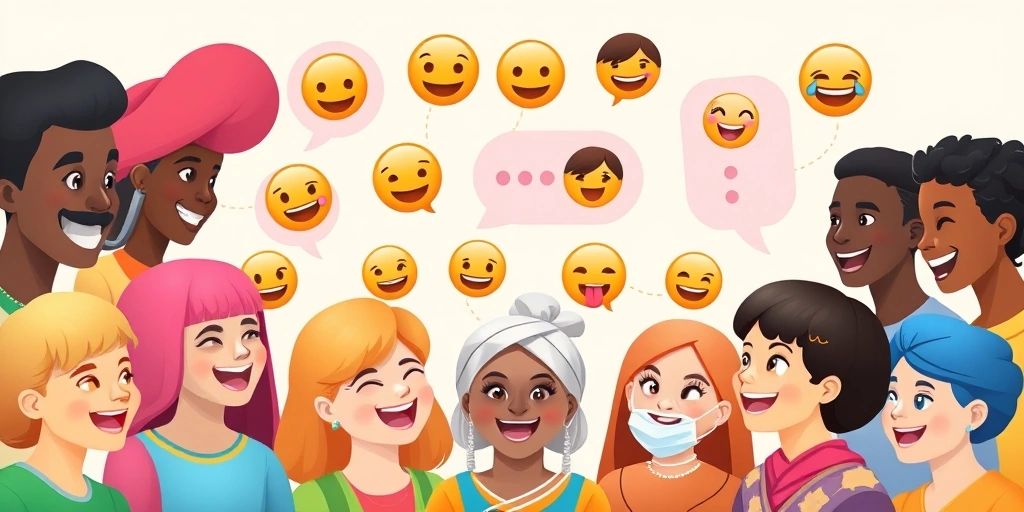
Bridging Cultural and Linguistic Divides
Perhaps the most fascinating aspect of emojis is their potential as a truly universal language. While spoken and written languages often create barriers, many emojis carry widely understood meanings that transcend national borders. A smiling face is generally understood as happiness, a thumbs-up as approval, almost anywhere in the world. This makes them an invaluable tool for global communication, allowing people from different linguistic backgrounds to connect and understand each other’s sentiments more easily. Imagine trying to explain a complex emotion without a common language; an emoji can often cut through the confusion. If you need to copy emoji for international chats, emojilar makes it simple.
Emojis in Everyday Digital Life
From casual chats with friends to more formal professional communications, emojis have permeated every corner of our digital lives. They’re used to react to social media posts, confirm understanding in team messages, and even inject personality into brand communications. The subtle nod of a 👍 (Thumbs Up) or the playful wink can transform a mundane message into something more engaging and human. They're not just for young people; professionals are increasingly using them to soften messages, express enthusiasm, and build rapport in a remote-first world. 
Ultimately, emojis are far more than just trendy icons. They represent an evolving form of non-verbal communication that reflects our increasingly global and digital society. By providing a bridge for emotions and intentions, they empower us to communicate more richly, efficiently, and universally. They are, in essence, the emotional shorthand of the digital age, continually expanding the ways we connect with one another across the globe. Ready to explore more? Visit emojilar for a vast array of options to express yourself.
📒 Related Blogs
More...Mastering Emoji Etiquette: What NOT to Do in Digital Communication
Oops! Did Your Emoji Just Say Something You Didn't Mean?
The Subtle Power of Emojis: Bridging Uncomfortable Silences in Our Digital Chats
How Viral Moments Shape Our Emoji Language
The Unspoken Wait: How Emojis Whisper Our Anticipation
Brighten Your Day: How Emojis Make Routine Check-ins Feel Effortless and Heartfelt