Mastering Emoji Etiquette: What NOT to Do in Digital Communication

Dec 16,2025
Emojis have become an integral part of our digital conversations, adding emotion, tone, and sometimes even humor to our messages. From a quick text to a professional email, these tiny icons can convey a lot. But just like spoken language, emojis come with their own set of unspoken rules – a kind of social etiquette that, if ignored, can lead to misunderstandings, awkwardness, or even come across as unprofessional. It's time to master emoji etiquette and learn what not to do when you copy emoji. 
Overusing Emojis: Less is More
While emojis can enhance your message, a string of them can quickly become overwhelming and difficult to read. Imagine a message like "OMG this is so funny 😂😂😂😂😂😂😂😂😂😂😂." It loses its impact. A single, well-placed emoji is often more effective than a dozen. Too many emojis can also make your message appear less serious, which might not be ideal in certain contexts. Think of emojis as seasoning for your text – a little goes a long way to enhance the flavor, but too much spoils the dish. Always consider your audience and the message's purpose before turning your text into an emoji parade.
Misinterpreting Emojis: Context is Key
One of the biggest pitfalls of emoji communication is misinterpretation. An emoji that means one thing to you might mean something entirely different to someone else, or take on a new context depending on the conversation. For example, the upside-down face 🙃 can convey sarcasm, silliness, or even resignation. The skull 💀 emoji might mean 'I'm dead from laughing' to one person, and literal death to another. Before sending, take a moment to consider if your chosen emoji could be misinterpreted. When in doubt, it’s often best to stick to more straightforward options or use your words to clarify. 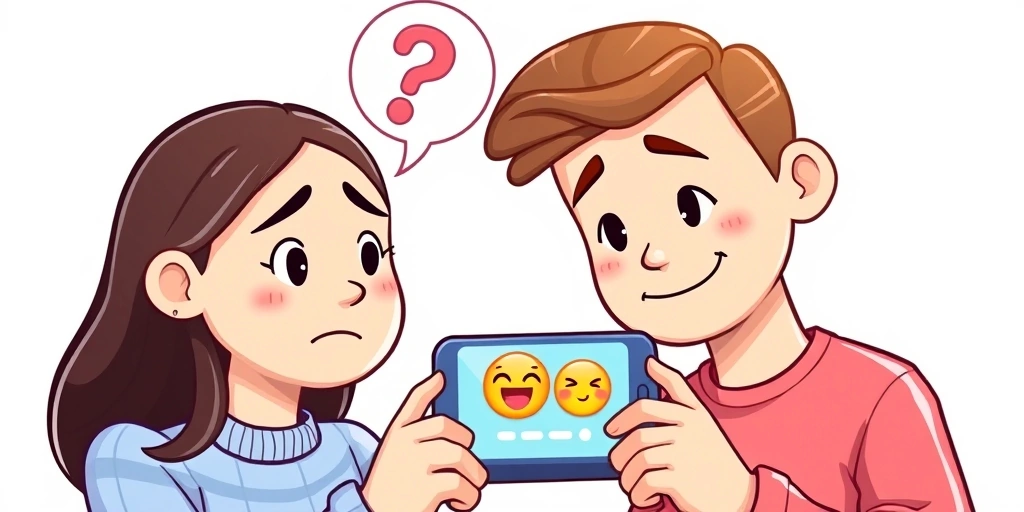
Inappropriate Emoji Usage: Know Your Audience
Just because an emoji exists doesn't mean it's suitable for every situation or every person. Using suggestive emojis, like the eggplant 🍆 or peach 🍑, in professional or formal settings is a definite no-go. Similarly, overly casual emojis might undermine your credibility in a work email. Always tailor your emoji use to the recipient and the formality of the conversation. What's perfectly fine with friends might be highly inappropriate with your boss or a client. Remember, the goal is to communicate effectively and respectfully, and sometimes that means holding back on the more playful options available on emojilar.
Avoiding Ambiguous Emojis: Clarity Wins
Some emojis are inherently more ambiguous than others. The folded hands 🙏 emoji, for instance, is widely used to mean 'thank you' or 'please' in Western cultures, but in Japan, it often signifies 'please' or 'namaste'. The classic thumbs up 👍 can be seen as positive encouragement in many places, but in some cultures, it's considered rude. If you're communicating across cultures or with people whose emoji habits you don't know well, it's safer to opt for emojis that have universally accepted meanings or simply use descriptive language. Clarity should always be your priority.
Navigating the world of emojis doesn't have to be a minefield. By being mindful of overuse, potential misinterpretations, audience appropriateness, and ambiguity, you can ensure your digital communications are not only effective but also considerate. Emojis are powerful tools for expression; use them wisely to enhance your messages, not complicate them. Happy emoji-ing!
📒 Related Blogs
More...The Quiet Power of Emojis: Boosting Confidence in Subtle Conversations
Beyond Words: How Emojis Shape Our Online Identity and Communication
The Secret Language in Your Texts: How Emoji Pairs Shape Every Conversation
The Hidden Impact of Emojis on Your Mental Health & Digital Well-being
The Unseen Language: How Emojis Dramatically Influence Short-Form Social Content
The Secret Language of Emojis: When Your Icons Get Lost in Translation