The Secret Language of Emojis: When Your Icons Get Lost in Translation

Jan 06,2026
Emojis are an indispensable part of our digital lives, aren't they? They add a splash of color, a dash of emotion, and often, a layer of nuance that plain text just can't quite capture. We use them for everything from quick laughs with friends to softening slightly awkward work messages. But for all their brilliance, there's a sneaky side to emojis: they can, and often do, get misread. It’s like a secret language where everyone thinks they know the rules, but secretly, we're all playing by slightly different dictionaries.
The Digital Rosetta Stone: Decoding Emoji Nuances
Think about it. You send a laughing face, intending to convey a lighthearted chuckle. Your friend, however, might interpret it as you mocking them or being sarcastic. Or that innocent thumbs-up? While generally positive, in some contexts, or even among certain age groups, it can come across as dismissive or passive-aggressive. It’s a fascinating, sometimes frustrating, reality that the same little icon can hold vastly different meanings for different people, leading to unexpected bumps in our digital conversations.Sometimes, these misinterpretations are small, easily brushed off with a quick clarification. Other times, they can snowball into genuine misunderstandings, hurt feelings, or even professional awkwardness. We pour our intent into these tiny digital pictograms, hoping they’ll carry our message perfectly, only to find they’ve taken an unexpected detour.
When a Wink Isn't Just a Wink: Common Misreadings
The classic example has to be the subtle differences in emotional emojis. A slightly smiling face, for instance, might be intended as polite agreement, but could be seen as sarcastic or even disappointed by a recipient who's already feeling a bit sensitive. The grimacing face? Is it nervous laughter, genuine discomfort, or just a silly expression? The beauty and the beast of emojis is this inherent ambiguity. What one person uses as a casual shrug, another might see as an intense dismissal.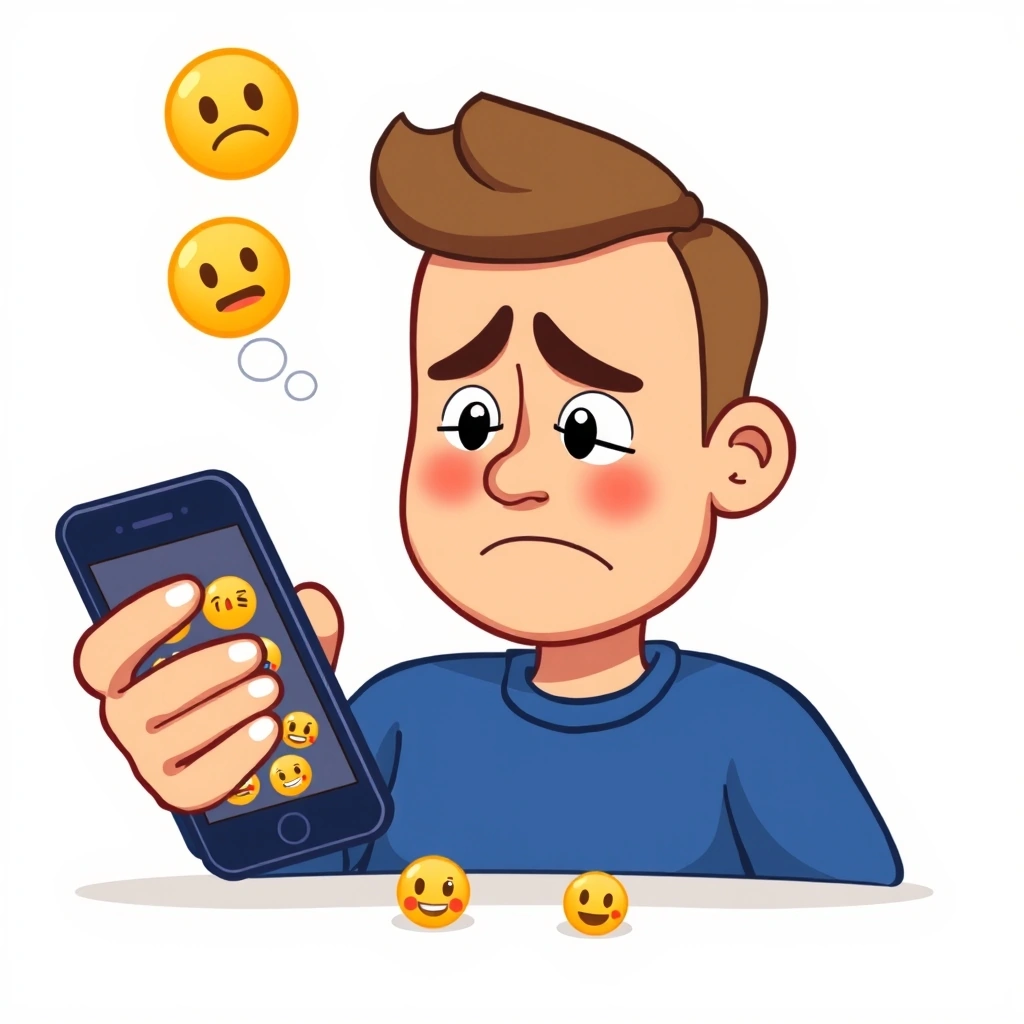 These little pictorial slips can truly make you question your entire digital communication strategy. Have you ever felt that icy chill when a perfectly innocent emoji sent with good intentions was met with a frosty reply? It’s a common experience, and it highlights how precarious our non-verbal cues become when translated into digital form. For more on navigating these tricky situations, you might want to explore articles like Emoji SOS: Why Those Little Icons Lead to Big Misunderstandings in Sensitive Conversations.
Context is King: Why Surrounding Words Matter
One of the biggest factors in emoji interpretation is the surrounding text. A red heart after "I love this idea!" is clearly positive. But a red heart after "Okay." could be anything from genuine affection to passive-aggressive annoyance, depending on the prior conversation and your relationship with the sender. Without the full context, emojis are like wild cards. They either enhance the message beautifully or completely derail it. This is especially true in professional settings, where even a seemingly harmless emoji can be viewed as unprofessional or misunderstood, causing ripples in team communication.Think about group chats, where conversations move quickly. A misplaced emoji, or one misinterpreted due to speed, can send a completely different signal than intended. It's not just about the emoji itself, but the entire mosaic of words, timing, and relationship dynamics that shapes its meaning.
Bridging the Gaps: Age, Culture, and Emoji Evolution
It’s not just individual quirks that lead to misread emojis; broader societal factors play a huge role too. Different age groups often have distinct emoji lexicons. What's cool and ironic for a teenager might be utterly baffling or even offensive to an older generation. My niece’s use of the skull emoji as a stand-in for "I’m dead laughing" initially sent me into a brief panic, thinking something terrible had happened! It’s a constant learning curve.[[emojilar_img2]]Cultural differences also add another layer of complexity. An emoji that is perfectly innocent or positive in one culture might carry vastly different, or even negative, connotations in another. This is why cross-cultural digital communication can be an absolute minefield, and something we should always be mindful of. For a deeper dive into the common pitfalls and how to avoid them, checking out our category on Emoji Mistakes & Misuse can be incredibly helpful.
From Friendly Banter to Awkward Silence: Real-World Scenarios
We’ve all probably experienced it. That moment when a lighthearted message, punctuated by what you thought was a perfectly clear emoji, lands with a thud. Maybe you used the slightly smiling face to show you're taking something in stride, but the recipient thought you were being dismissive. Or perhaps a crying laughing face was meant to convey extreme amusement, but came across as insensitivity during a serious discussion. These are the moments that make us pause and reconsider our emoji choices.It's a delicate dance, isn't it? Trying to inject personality and emotion into text without causing unintended collateral damage. We learn quickly that what works with one person might spectacularly backfire with another. And when these miscommunications happen in public forums, the stakes can feel even higher. It reminds me of those times when your public replies get misinterpreted, a topic well covered in Emoji Fails: When Your Public Reply Gets Lost in Translation.
Navigating the Emoji Minefield: Tips for Clearer Communication
So, how do we navigate this complex world of emoji communication?
Firstly, know your audience. The emoji etiquette you use with your best friend is probably not the same you should use with your boss. Tailor your emoji use to the recipient and the context of the conversation.
Secondly, when in doubt, spell it out. If an emoji feels ambiguous or carries the risk of being misread in a sensitive conversation, sometimes it’s better to use words to express your sentiment clearly. A quick "I'm just teasing!" or "I mean this playfully!" can save a lot of heartache.
Thirdly, pay attention to responses. If you notice a shift in tone after sending an emoji, it might be a subtle sign that your intended meaning didn't quite land. Be open to clarifying.
And finally, embrace clarification. If you're on the receiving end and an emoji feels unclear or rubs you the wrong way, a polite "What did you mean by that emoji?" can open the door to understanding rather than letting a misunderstanding fester.
The Upside: Learning and Adapting
Despite the occasional missteps, emojis remain a vibrant and essential part of how we connect. The challenges they present aren't necessarily a bad thing. They push us to be more mindful communicators, to consider the diverse interpretations our words and symbols can carry. It's a continuous, evolving lesson in empathy and digital literacy. We learn, we adapt, and we get better at expressing ourselves in this ever-expanding digital landscape.In the end, while emojis can sometimes lead to unexpected detours in understanding, their value in enriching our conversations is undeniable. The key is to approach them with a blend of enthusiasm and caution, always ready to clarify and always open to learning how others interpret these wonderful little icons. They are, after all, a reflection of us – complex, expressive, and occasionally, a little bit misunderstood.
📒 Related Blogs
More...Mastering Emoji Etiquette: Use Emojis Effectively in Digital Communication
The Secret Language of Two: How Emoji Pairs Reshape Group Chat Understanding
Emojis in Marketing: How Brands Boost Engagement and Connect Visually
The Mind's Shortcut: How Emojis Speed Up Our Digital Conversations
The Tiny Emoji Trick That Makes Your Short Texts Feel Warmer
The Unspoken Language: How Emojis Gently Guide Conversations Through Sensitive Topics