The Mind's Shortcut: How Emojis Speed Up Our Digital Conversations

Jan 26,2026
Think about the last time you sent a text. Maybe you typed out a sentence, read it back, and felt a pang of uncertainty. "Does this sound too harsh?" "Will they think I'm joking?" Then, you added an emoji. A simple smiley, a laughing face, a heart. Instantly, the message felt complete. The tension melted away. That's not just a feeling—it's your brain taking a shortcut.
From a psychological perspective, emojis are fascinating little tools. In the fast-paced world of digital chat, where we're stripped of body language, tone of voice, and facial expressions, our brains are left to do a lot of guesswork. We have to actively interpret plain text, which can be mentally taxing and prone to error. This is where emojis come in. They act as cognitive shortcuts, providing our brains with instant, pre-processed emotional and contextual information.
Instead of parsing a sentence word-by-word for hidden meaning, our brain sees the emoji and gets the gist immediately. A thumbs-up signals agreement. A red heart conveys love or deep appreciation. A face with tears of joy tells us something is hilarious. This rapid processing frees up mental energy and reduces what psychologists call "cognitive load." We spend less time decoding and more time simply understanding and connecting.
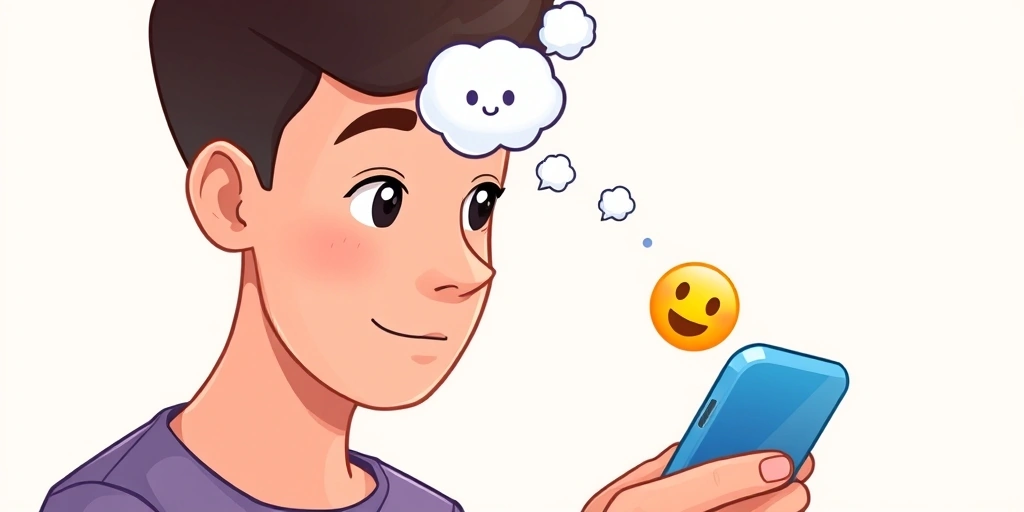
Bridging the Emotional Gap in Text
Written language is brilliant for conveying facts, but it's notoriously bad at conveying emotion on its own. Sarcasm, sincerity, playfulness—these nuances are easily lost. When we talk face-to-face, we rely on a symphony of nonverbal cues. In digital spaces, emojis have become the stand-ins for those cues. They fill the emotional void left by plain text.
This isn't just about being cute or trendy. It's a fundamental adaptation to a new mode of communication. By attaching a visual symbol to our words, we're essentially tagging our message with an emotional label. This helps the receiver's brain categorize the intent quickly and accurately, preventing misunderstandings that can lead to conflict or hurt feelings. It's a tiny act that builds a huge bridge of understanding. For more on how these tiny symbols shape perception, you might find this article on the secret language of emojis interesting.
Think of it like road signs. The words "curve ahead" require you to read and process. A simple curved arrow icon communicates the same danger instantly and universally. Emojis work the same way in our conversational landscape.
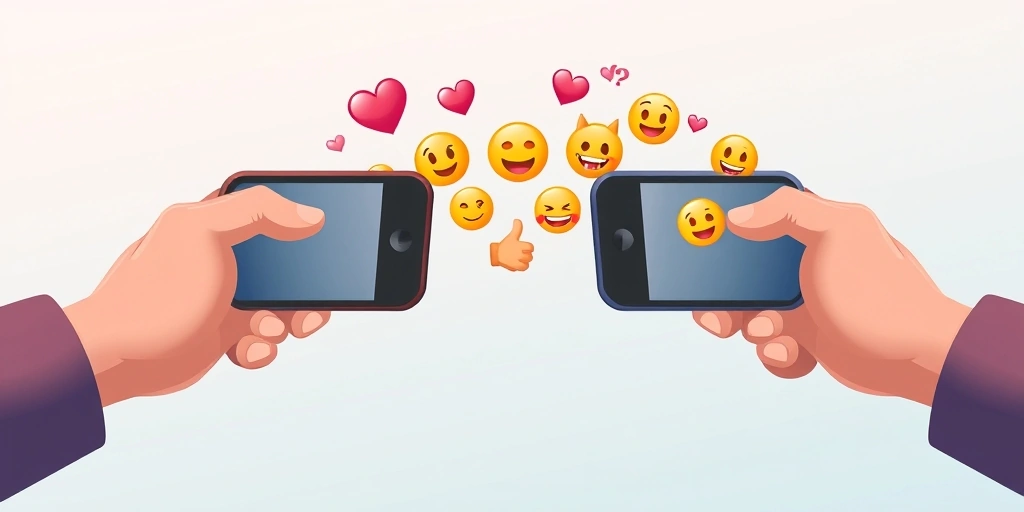
More Than Decoration: The Social Glue of Pixels
The power of emojis goes beyond individual comprehension. They also serve as powerful social glue. Using emojis that are common within your friend group, family, or culture creates a sense of shared understanding and belonging. It's a way of saying, "We're on the same page."
This shared visual language can strengthen bonds and make digital interactions feel warmer and more personal. A well-placed emoji can soften feedback, show support without lengthy prose, or share in a friend's excitement from miles away. It turns transactional text exchanges into richer, more relational conversations. The psychological impact of this shouldn't be underestimated—feeling understood and connected is a core human need, even (and especially) online.
If you're curious about how this plays out in how others see you, our piece on how emojis shape perception dives deeper into the social psychology aspect.
The Flip Side: When Shortcuts Get Fuzzy
Of course, no system is perfect. The very thing that makes emojis great—their simplicity and speed—can also be a drawback. Interpretation can vary slightly between people, generations, and cultures. A grinning face might read as genuine joy to one person and as smugness or sarcasm to another. The peach and eggplant emojis are classic examples of meanings that have diverged wildly from their original intent.
This means that while emojis are excellent cognitive shortcuts, they aren't foolproof. They work best within established relationships where you have a shared history of communication. They complement our words; they don't always replace the need for clear, explicit language when the stakes are high. It's a balancing act between efficiency and clarity.
For a broader look at the intersection of emojis and human behavior, explore more in our emoji psychology category.
A Natural Evolution of Language
Looking at emojis through this psychological lens reveals something profound. They aren't a fad or a degradation of language. They are a natural, human-led evolution of communication to suit a new, text-dominant environment. Our brains are wired for efficiency and social connection. Emojis elegantly serve both purposes.
They help us manage the cognitive load of constant digital interaction and inject much-needed emotional resonance into our screens. The next time you tap that heart or fire emoji, remember—you're not just decorating your message. You're engaging in a sophisticated psychological dance, giving your friend's brain a helpful, heartfelt shortcut to exactly what you mean. And in a world that often feels too fast and too fragmented, that tiny act of cognitive kindness is something truly special.
It makes you wonder, as this visual language continues to evolve, what new forms of understanding and misunderstanding will bloom in the spaces between our words.
📒 Related Blogs
More...The Hidden Meaning: Understanding the Psychology Behind Your Favorite Emojis
The Unspoken Rules: How Emojis Quietly Manage Our Online Conversations
The Unspoken Rhythm: How Emojis Guide the Flow of Our Online Chats
The Fascinating History of Emojis: From Kaomoji to Global Phenomenon
Unlocking the Code: How Emoji Pairs Secretly Reshape Your Social Media Comments!
Beyond Reaction Buttons: How Emojis Drive Social Impact and Global Change