The Unspoken Rules: How Emojis Quietly Manage Our Online Conversations

Jan 21,2026
Think about your last few text conversations. Chances are, you didn't just use words. You probably sprinkled in a few emojis—maybe a thumbs-up, a crying-laughing face, or a simple red heart. We often talk about emojis as tools for showing emotion, and they are. But if you look closer, they're doing something else, something more structural. They're acting like the punctuation, the body language, and the subtle nods that manage the flow of a conversation itself.
In face-to-face chats, we have countless ways to signal we're done talking, that we're listening, or that we're about to change the subject. A glance away, a shift in posture, a certain tone. Online, stripped of those physical cues, we've turned to emojis to fill the gap. They've become our digital body language, and one of their most crucial jobs is marking conversational boundaries.
The Period, But Friendlier
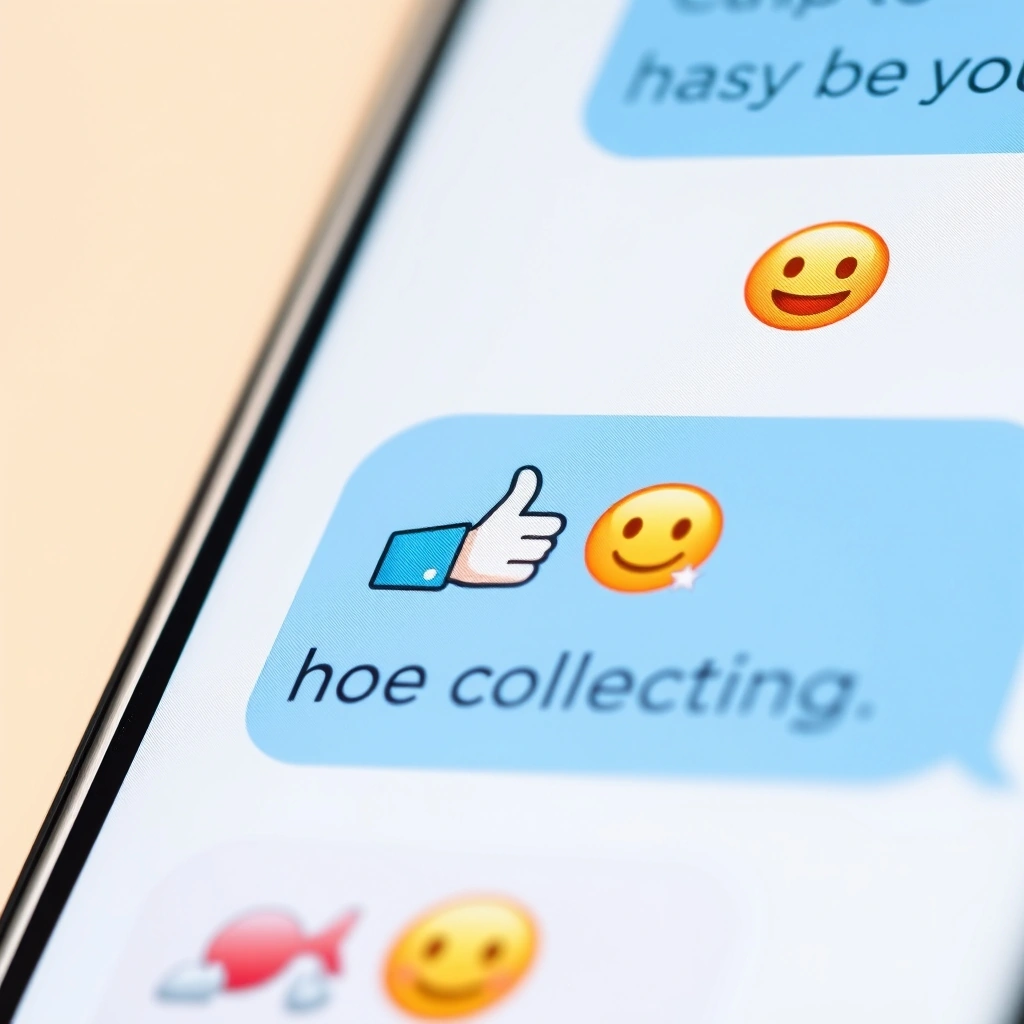
Let's start with the most basic boundary: ending a thought. In formal writing, a period does the job. In texting, a lone period can feel cold, final, or even passive-aggressive. So what do we use instead? Often, an emoji.
A simple 👍 or 👌 after agreeing on plans doesn't just mean "okay." It means "message received, I agree, and this thread of conversation can now be closed." It's a soft, positive full stop. A series of heart emojis ❤️❤️❤️ at the end of a sweet message does the same thing—it provides a warm, definitive sense of closure for that emotional exchange. It says, "That's all I need to say on this for now."
This function is a key part of how emojis operate as communication tools, shaping the architecture of our chats more than we realize.
Signaling a Pause or a Topic Shift
Not all boundaries are endings. Some are pauses or turning points. Imagine a friend is venting about a stressful day. You offer support and then send a 🥺 or 💗. That emoji acts as a boundary marker. It says, "I've heard you, I empathize, and I'm now putting a gentle cap on this heavy topic." It allows the conversation to naturally pivot without an awkward "So... anyway..."
Similarly, the 😅 or 😂 after a self-deprecating joke creates a boundary between the slight vulnerability of the joke and the rest of the chat. It signals, "That was a joke, don't take it too seriously, we can move on."
Managing Tone and Preventing Missteps
This boundary-setting is deeply tied to tone management, which is another superpower of emojis. A blunt statement can land harshly. Adding a 🙏 or a 😊 creates a buffer—a tonal boundary that separates the direct content of the message from a potentially negative interpretation. It frames the words within a context of politeness or kindness.
Think of a message like "You need to see this!" It could read as demanding. But "You need to see this! 😍" instantly redraws the boundary. Now it's framed within excitement and recommendation, not an order. The emoji defines the space in which the words should be understood.
The "No Reply Needed" Signal
One of the clearest examples of emoji-as-boundary is the "no reply necessary" cue. You send an article link with a 🤯. You share a funny meme with a 💀. You send a sunset photo with a 🌅. In many contexts, these aren't invitations to start a deep discussion. They are gifts dropped into the stream of the conversation. The emoji signals the intent: "I am sharing this emotion/experience with you, but you don't need to formulate a substantive response back." It lowers the social pressure to keep the conversational ball volleying perfectly.
This is especially important in private chats between close friends or partners, where the constant expectation to respond can be draining. An emoji can gracefully lighten that load.
When Boundaries Get Blurry
Of course, this system isn't perfect. Because emoji meaning is cultural and personal, boundaries can be misread. Is a single ❤️ a warm closure, or is it dismissive compared to three hearts? Does a 😊 smile seem genuine or like a masked grimace? We constantly navigate these subtleties.
The overuse of certain emojis can also weaken their boundary-setting power. If someone ends every single message with 😂, it stops marking a special moment of humor and loses its function as a distinct conversational marker.
Ultimately, using emojis this way is a skill we're all developing in real-time. It's about learning the silent grammar of our digital interactions. We're not just decorating our texts; we're using these small, colorful symbols to build invisible fences and gates, guiding each other through the landscape of our conversations. They help us say, "Start here," "Stop here," "Proceed with caution," or "This is a safe zone," making the vast, text-heavy world of online chat feel a little more manageable, and a lot more human.
To dive deeper into how these symbols shape perception, you might find it interesting to explore how emojis transform how your messages are received. It's fascinating to see the full scope of their influence, far beyond simple smiles and winks.
📒 Related Blogs
More...The Secret to Lighter Chats: How Emojis Make Fast-Paced Conversations Effortless
When Words Feel Heavy: How Emojis Quietly Ease Our Nervous Moments
Lost in Translation? The Surprising Ways Emojis Stir Up Mixed Reactions Online
The Secret Language: How Emojis Unleash Powerful Reactions in Shared Social Posts
The Emoji Chameleon: How Digital Trends Secretly Reshape What Your Favorite Emojis Really Mean
Decode Emojis: Uncover Hidden Meanings & Secret Emoji Language