The Art of the Brief Reply: How a Simple Emoji Transforms Professional Messaging

Feb 04,2026
We've all been there. You're deep in a project, and a notification pops up. It's a colleague asking if you received their document. You have, and you're on it. The most efficient reply is a simple "Got it." You type it, hit send, and immediately a tiny wave of doubt washes over you. Did that sound too blunt? Too cold? In the absence of a face, a tone of voice, or body language, our briefest messages can land with a thud we never intended.
This is the daily reality of professional messaging. We strive for efficiency, but we also crave connection and clarity. The paradox is that the faster we need to communicate, the more room there is for emotional misinterpretation. A quick "okay" can be read as enthusiastic agreement, passive acceptance, or even simmering annoyance, depending on the reader's mood and the context of the day.
This is where the humble emoji performs its quiet magic. It's not about turning your Slack channel into a cartoon or being unprofessional. It's about precision. It's about taking that micro-moment to ensure your efficient reply also carries the correct emotional weight.
The 'Okay' That Actually Means Okay
Let's walk through a common scenario. Your manager messages: "Can you have the draft to me by 3 PM?" The task is straightforward and in your plan. You reply "Okay."
Now, read that "Okay" in your head. How does it sound? It could sound resigned, like a sigh. It could sound neutral and robotic. It could even sound slightly sarcastic. Your manager, now left with just that text, has to guess.
Now, try the same reply with a slight tweak: "Okay 👍"
Suddenly, the entire meaning shifts. The thumbs-up emoji acts as a visual nod. It conveys acknowledgment, agreement, and a positive "I'm on it" attitude. The message is still brief—blink-and-you-miss-it brief—but it feels closed, confident, and considerate. You've confirmed the task and implicitly reassured the sender that all is well. You can read more about how emojis prevent these daily misinterpretations in our article on clarity in professional chats.
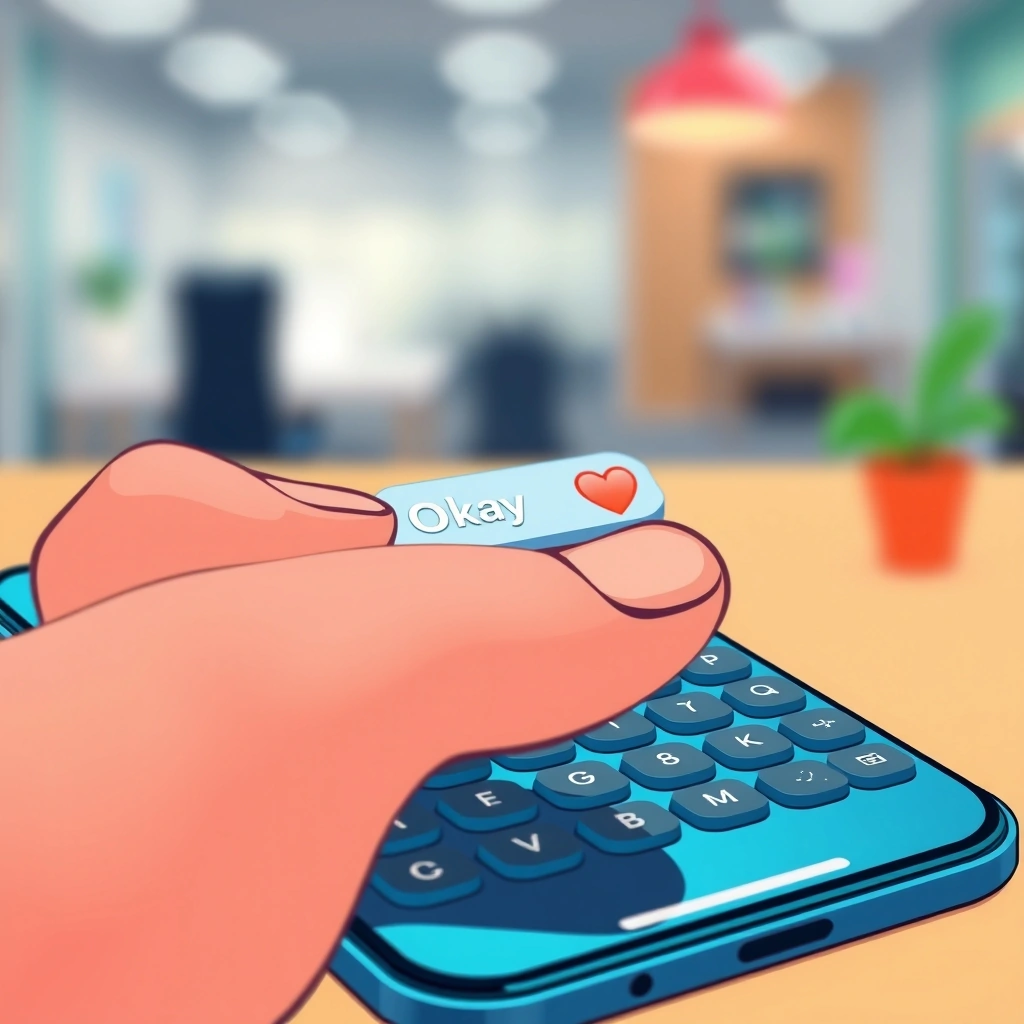
This practice transforms other potentially terse exchanges. "Thanks" becomes "Thanks! 😊"—infusing gratitude with genuine warmth. "No problem" becomes "No problem! 👌"—turning a casual phrase into a solid, reassuring confirmation. The emoji doesn't add fluff; it adds emotional clarity. It completes the sentence your words alone couldn't finish.
Building Bridges in Asynchronous Work
In remote or hybrid environments, these small signals become even more critical. When you can't pop your head over a cubicle wall to smile after sending a message, an emoji becomes that smile. It maintains the human thread in conversations that are purely textual and often asynchronous.
Think of the last time someone answered your question with just "Yes." Now, think of a time someone answered with "Yes! ✅" That checkmark does more than affirm; it provides a sense of completion and reliability. It tells you the matter is handled, not just acknowledged. This subtle difference reduces the invisible cognitive load of wondering, "Are we good?"
It’s a form of digital emotional labor that pays huge dividends in team cohesion. For more on keeping the human element alive in digital workspaces, explore our thoughts on the friendly nudge of emojis.

Choosing the Right Tool for the Job
Of course, the key is intentionality. This isn't about peppering every message with random symbols. It's about choosing one that accurately reflects your intent. A simple smiley 😊 for warmth, a thumbs-up 👍 for agreement, a checkmark ✅ for completion, a lightbulb 💡 for a good idea, a waving hand 👋 to greet or sign off.
Avoid emojis that are overly casual (😝), ambiguous (😏), or emotionally extreme (😭) for most professional brief replies. The goal is to soften edges, not create new confusion. The best professional emoji is often the most straightforward one.
By adopting this tiny habit, you stop leaving your colleagues to read between the lines. You fill in the blanks for them. You transform your brief, efficient replies from potential sources of anxiety into little pillars of considerate communication. In a world of endless pings and notifications, that consideration is a gift. It says, "I see you, I hear you, and we're good." And sometimes, that's exactly what a busy team needs to keep moving forward, smoothly and connectedly.
For more insights on navigating the intersection of emojis and professional life, check out our full collection of articles in the Emoji & Work category.
📒 Related Blogs
More...The Psychology Behind Emojis: Expressing Emotion in a Digital Age
The Unspoken Stop Sign: How Emojis Mark the End of a Chat
Beyond 'Okay': What the Thumbs Up Emoji Means Globally
The Tiny Emoji Trick That Makes Your Short Texts Feel Warmer
Emoji Etiquette: Mastering the Unwritten Rules of Digital Communication
Emoji Etiquette Guide: Mastering the Unspoken Rules of Digital Communication