The Digital Cushion: How Emojis Soften Our Toughest Online Conversations

Feb 26,2026
Scroll through any popular post on social media, and you’ll find a battlefield of opinions. Politics, sports, celebrity news—the topics that get people talking are often the same ones that get people arguing. In these public spaces, text alone can feel cold, sharp, and easily misunderstood. A statement meant as a playful jab can be read as a vicious attack. This is where our tiny, colorful friends step in to save the day.
Emojis have become the unsung heroes of digital diplomacy. They act as a cushion, softening the edges of our statements and adding a layer of emotional context that plain text desperately lacks. Think about the last time you typed a potentially contentious opinion. Did you add a wink 😉 or a thinking face 🤔 at the end? Chances are, you did. That wasn’t an accident; it was a conscious (or subconscious) effort to prevent a flame war.
The Tone Translator
Written language is notoriously bad at conveying tone. Sarcasm, in particular, is a minefield. The sentence "Great job" can mean polar opposite things depending on the context and the reader's mood. Add a crying-laughing emoji 😂, and it’s clearly a joke. Add a thumbs up 👍, and it’s genuine praise. The emoji doesn’t just accompany the message; it translates it.
This translation is crucial in comment sections, where people from vastly different backgrounds and perspectives converge. A shared laugh or a virtual hug can bridge gaps that words alone cannot. It’s a form of social glue. For more on how these small symbols manage large communities, you might find this exploration of emojis as moderators really interesting.
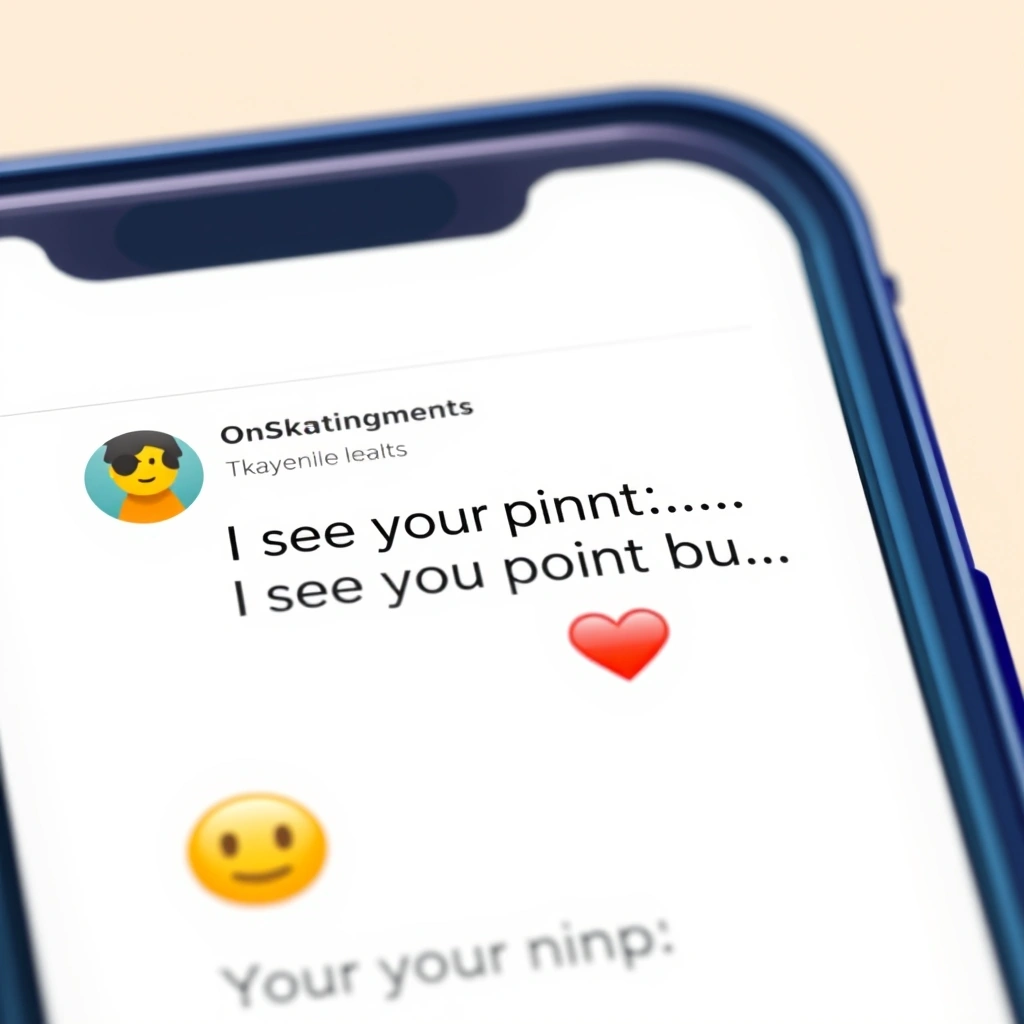
Consider a simple statement like "I disagree." On its own, it can feel like a wall—a blunt, conversation-ending declaration. Now, look at "I disagree, but I see your point 🙂" or "I disagree 🤔... can you explain more?" The core message is the same, but the emotional delivery is completely different. The first version, with the smile, acknowledges the other person’s humanity. The second, with the thinking face, invites further dialogue. The emoji transforms a potential conflict into an opportunity for connection.
Beyond the Thumbs Up
While the classic smiley and thumbs-up are the workhorses of softening, the emoji lexicon offers incredible nuance. A face with a single tear 🥹 can express touched sentimentality, softening a heartfelt compliment. The pleading face 🥺 can turn a request from demanding to endearing. Even the simple period at the end of a sentence can feel aggressive in a chat; replacing it with an emoji changes the entire rhythm of the exchange.
This isn't just about being nice. It’s about effective communication. In a space devoid of body language, facial expressions, and vocal inflection, we have to build those cues into our text. Emojis are the fastest, most universal shorthand we have for doing that. They are the body language of the digital age.
The impact of this goes beyond individual interactions. The collective use of softening emojis in a comment section can set the entire tone for a discussion. When a few early comments use warm, open emojis, it often creates a norm. Others follow suit, leading to a more constructive and less hostile thread. Conversely, a thread that starts with angry or mocking emojis can spiral downward quickly. The symbols we choose are contagious; they shape the ecosystem of the conversation.
It’s fascinating to think that these small, often-silly pictures are performing such heavy social lifting. They are conflict de-escalators, tone clarifiers, and empathy generators, all rolled into one. They help messages spread not through controversy, but through connection. The next time you’re about to post a comment, take a second to think about the tone. Could an emoji help deliver your message the way you truly intend it? The science behind how these choices affect what we see is deeper than you might think, as discussed in this look at the hidden science of emojis.
In the end, emojis remind us that there’s a person on the other side of the screen. They are a small, powerful tool for injecting warmth, clarity, and a bit of grace into our shared digital spaces. And in today’s online world, that’s not just useful—it’s essential.
📒 Related Blogs
More...The Secret Weapon: How Emojis Balance Directness & Warmth in Work Task Coordination
The Secret Language of Emojis: How Tiny Icons Capture Our Collective Mood
The Secret Power of Emojis: How a Tiny Icon Can Change Your Message's Meaning
How Emojis Create the Unspoken Rhythm of Our Digital Chats
The Tiny Emoji Trick That Makes Your Short Texts Feel Warmer
Emoji Etiquette: Navigating the Unwritten Rules of Digital Communication