The Emoji Awkwardness: When a Smiley Face Just Doesn't Feel Right

Jan 29,2026
You’re typing a reply to your manager. The message is straightforward, a simple acknowledgment. Your finger hovers over the send button, and on impulse, you add a smiling face emoji. It feels friendly, supportive. But a second later, a wave of doubt crashes over you. Was that too informal? Did it undermine your professionalism? You consider deleting it, but they’ve probably already seen the “…” typing indicator. The awkwardness settles in.
This tiny moment of digital hesitation is more common than we admit. Emojis, for all their expressive power, come with an invisible set of social rules. What feels perfectly natural with a close friend can land with a thud in a different context. The gap between our intent and how an emoji is received is where the real social complexity of digital life plays out.
The Audience is Everything
Think about the last group chat you were in. Maybe it was with family, celebrating a birthday. A stream of cake, balloon, and party popper emojis feels celebratory and united. Now, picture a different group chat—one with colleagues discussing a project deadline. Dropping that same party popper emoji into that conversation could unintentionally signal you’re not taking the pressure seriously. The icon hasn’t changed, but the audience completely alters its meaning.
This is the core of the issue. We often use emojis as a universal shorthand for emotion, forgetting that context acts as a translator. A winking face sent to a romantic partner implies playful secrecy. The same winking face sent to a client after a contractual agreement can seem unprofessional or even suspicious. The emoji is a vessel, and the audience fills it with meaning.
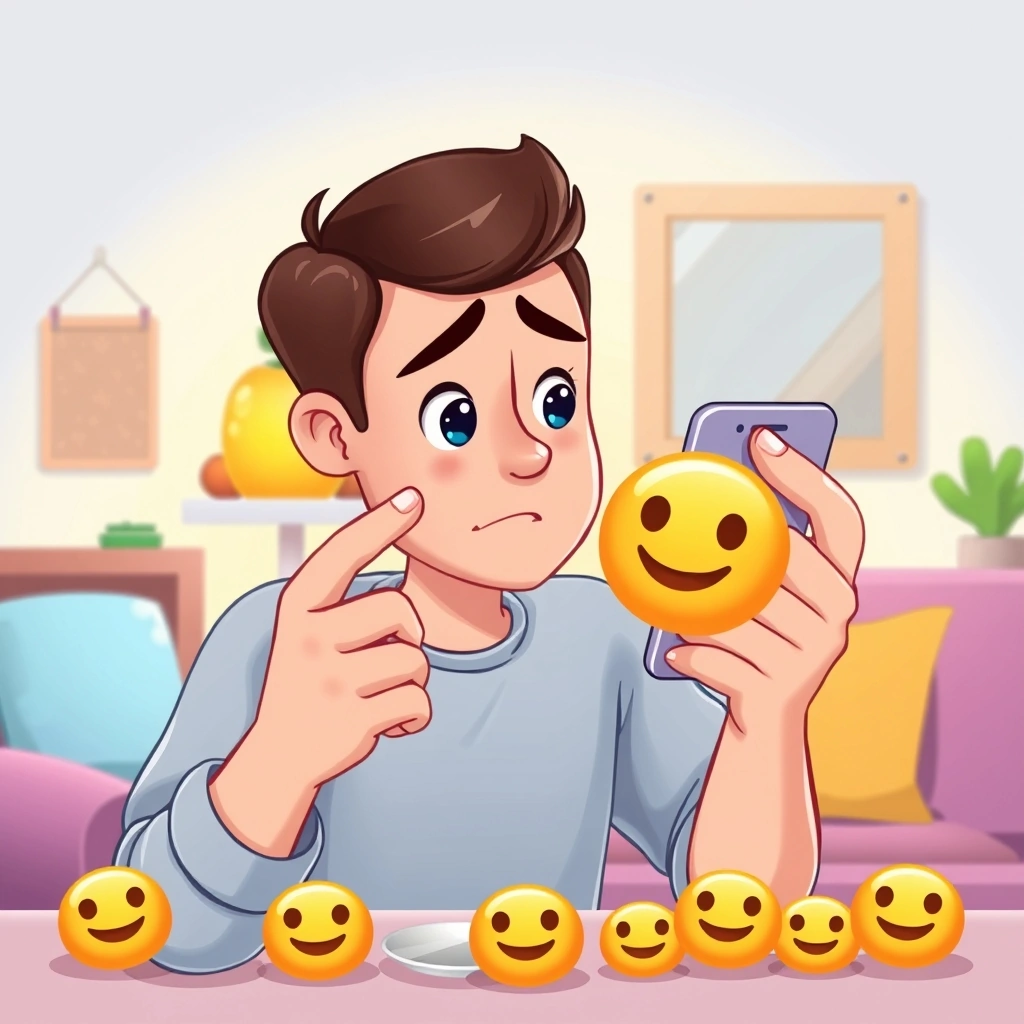
Generational differences add another layer. While a thumbs-up might be a simple “okay” or “got it” to many, some interpret it as dismissive or even passive-aggressive. A red heart from a grandparent is a pure symbol of love; from a new acquaintance, it might feel overly familiar. There’s no official guidebook for this. We’re all navigating by feel, and sometimes we miss the mark. For more on how these tiny icons can create big confusion, our piece on when emojis miss the mark dives deeper into the crosswires of digital conversation.
The Professional Tightrope
Nowhere is the emoji tightrope walked more carefully than in professional communication. The shift to remote work and tools like Slack has blurred the lines. A simple smiley in a team channel can foster camaraderie, but in an email to senior leadership or a new external partner, it might be perceived as lacking gravitas.
The risk isn’t just about seeming unprofessional—it’s about clarity. In a detailed project update, a misplaced “fire” emoji could ambiguously refer to either “great work” or “this is a disaster.” Relying on emojis to soften bad news or critical feedback can also backfire, making the message seem insincere or like you’re not fully engaging with the seriousness of the situation. It’s a lesson many learn the hard way, part of the broader category of emoji mistakes and misuse we all navigate.
When Tone is Hard to Gauge
Sometimes, the awkwardness isn’t about the audience being wrong, but the situation being too emotionally charged or ambiguous for a pictograph. Consider sending condolences. A heart or praying hands emoji might feel like a supportive gesture to you, but to someone in grief, it could come across as impersonal—a quick graphic replacing words that feel necessary. The emoji doesn’t necessarily offend; it just feels insufficient, leaving a gap where human connection was needed.
Similarly, in complex or tense discussions where nuance is key, emojis can act as unintentional simplifiers. A frown in the middle of a nuanced debate might make you seem dismissive of the entire argument, rather than concerned about one specific point. The lack of verbal cushion around the symbol amplifies its bluntness.
Finding Your Balance
So, do we abandon emojis in these gray areas? Not at all. The goal isn’t to live in fear of the send button, but to develop a little more digital empathy. It often comes down to a quick, conscious pause. Ask yourself: “What is my relationship with this person or group?” and “What is the emotional temperature of this conversation?”
When in doubt, words are your safest bet. “That’s fantastic news!” carries more genuine weight than a clapping hands emoji ever could. “I’m so sorry to hear that” holds a space for sadness that a single tear emoji cannot fill. Use emojis to complement your words, not replace them, especially when the stakes of misunderstanding are higher.
We’ve all had our own emoji fail moments—the public reply that took on a life of its own, the joke that fell flat with a single icon. These moments aren’t failures; they’re data points. They teach us about the incredible, nuanced, and sometimes frustratingly subjective language we’ve all adopted. The awkwardness we feel is just a sign that we care about connecting clearly. And in a world of rapid-fire messages, that care is what keeps our digital conversations truly human.
📒 Related Blogs
More...The Future of Emojis: Anticipating New Icons and Digital Expressions
The Joy of Play: How Emojis Turn Everyday Chats into a Playground
The Fascinating Evolution of Emojis: From Kaomoji to Global Unicode Standards
The Quiet Comfort of Emojis: How a Simple Icon Says 'I'm Here'
The Silent 'I'm Here': How Emojis Become Our Everyday Digital Nods
Emoji Etiquette: Mastering the Unwritten Rules of Digital Communication