When Emojis Miss the Mark: How Our Favorite Icons Can Confuse Online Chats

Jan 27,2026
It happens to all of us. You type out a message, add what you think is the perfect emoji for emphasis, and hit send. A few minutes later, you get a reply that feels… off. The tone is defensive, or the person seems hurt, or they’ve completely missed your joke. That sinking feeling hits: your emoji blurred your intent instead of clarifying it.
We reach for emojis to do a heavy lift. In a world of text without voice or body language, they’re our stand-ins for sarcasm, sincerity, excitement, and apology. But they’re not a universal language. What feels like a playful wink to you might read as passive-aggressive to someone else. That single tear-of-joy face you use for everything funny can make a serious comment seem flippant.
The core of the problem is context breakdown. The context you have in your head when you send a message is never fully transmitted. The recipient brings their own mood, their history with you, and their personal emoji dictionary to the conversation.
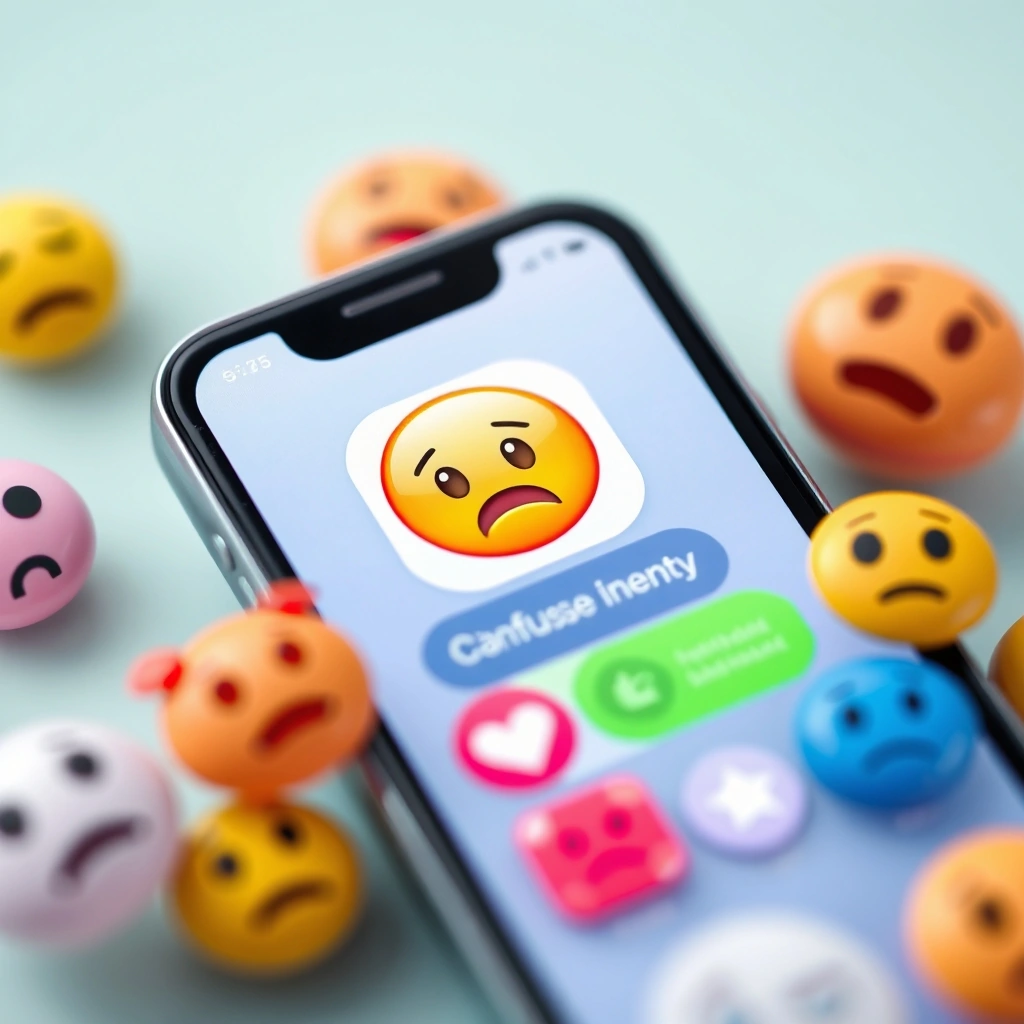
Think about the simple smiley face. For some, it’s warm and genuine. For others, especially in certain generations or workplace chats, it can feel formal, dismissive, or even subtly annoyed. Without the shared context of a voice saying "I'm smiling as I type this," the icon is left to be interpreted through a personal filter.
This gets even trickier in group chats. You might use a skull emoji to say something is hilariously funny, but another member of the group might see it and think you’re expressing secondhand embarrassment or even anger. Suddenly, the conversation splits into two parallel understandings, and someone is left feeling confused or isolated. For more on the unique perils of group dynamics, our piece on emoji misunderstandings in group chats dives deeper.
It’s not just about different interpretations of the same emoji. Sometimes, the emoji itself is clear, but its relationship to the text creates a blur. Sending "Great job 😒" turns a compliment into a sarcastic jab. Writing "I’m so sorry to hear that 😂" can come across as horrifically insensitive, even if the laughing emoji was meant to soften your own awkwardness in the face of bad news.

We often use emojis as emotional bandaids. When we’re unsure how a message will land, we tack on a smiley to make it "safe." But this can dilute our genuine message. A clear "I disagree with that point" becomes "I disagree with that point 🙂", which can feel more patronizing than polite. The emoji acts as a buffer, but it often buffers the wrong thing—clarity.
So, what can we do? The goal isn't to stop using emojis. They’re a wonderful, colorful part of how we connect. The goal is to become more mindful translators. Before you send, take a second to put yourself in the recipient's shoes. Could that fire emoji on a critique be seen as aggressive? Could that single red heart on a logistical text be read as overly intimate?
When in doubt, words are your best friend. A quick "haha, just kidding!" or "saying this with a smile" does what an emoji tries to do, but with far less room for misinterpretation. It’s okay to let a sincere statement stand without an icon. Authenticity often cuts through the digital noise better than any symbol.
Navigating this awkwardness is part of modern communication. If you've ever felt the sting of an emoji gone wrong, you're not alone. We explore that specific cringe in another article, when a smiley face feels all wrong.
At the end of the day, emojis are tools, not telepathy. They add spice, but they can't replace the main ingredient: clear intention. By paying a little more attention to the gap between our sent meaning and their received meaning, we can use these tiny pictures to connect more deeply, not confuse more thoroughly. The next time you reach for that emoji keyboard, it might be worth a brief pause—your message might be clearer without it.
📒 Related Blogs
More...The Secret Sauce of Smiles: How Emojis Effortlessly Elevate Playful Chats
The Unspoken Comfort: How Emojis Bridge Emotional Gaps in Silence
The Instant Pulse: How Emojis Light Up Viral Trends and Platform Moments
How a Simple Emoji Can Save Your Busy Workday
Decode Emojis: Uncover Hidden Meanings & Secret Emoji Language
The Secret Language of Generations: How Emojis Shape Our Digital Conversations