The Silent Scream: Why Your Emojis Are Being Misunderstood in Group Chats

Dec 28,2025
We’ve all been there. You hit send on a message, confident you’ve perfectly captured your tone with just the right emoji, only to find the conversation taking an unexpected turn. It’s a peculiar modern dilemma: emojis, designed to add color and emotion to our digital dialogue, can sometimes become silent saboteurs, twisting our intended meaning into something entirely different. This is especially true in the dynamic, often fast-paced world of group conversations.
Emojis are like a universal language, but like any language, they're subject to regional dialects, slang, and personal interpretations. What feels like an obvious wink or a clear expression of exasperation to you might land completely differently with your friends, family, or colleagues. Over time, these subtle shifts in understanding can lead to recurring miscommunications, leaving everyone scratching their heads.
The Nuance Trap: When a Smile Isn't Just a Smile
One of the biggest culprits behind emoji misunderstandings is nuance. A seemingly innocent 😊 might be genuinely warm for one person, passive-aggressive for another, or even a dismissive signal in certain professional contexts. Think about the 👍 emoji. Is it a simple "got it," an enthusiastic "great job," or a curt "okay, whatever"? The meaning often hinges on the history of the conversation, the relationship with the sender, and even the platform being used. It's a prime example of how emojis can complicate casual conversations.
These interpretations aren’t fixed; they evolve. What was once a universally understood symbol can gain new, ironic, or even contradictory meanings as trends shift and online cultures develop. Keeping up can feel like a full-time job, especially when you're trying to navigate multiple group chats with different social dynamics.
Context Is King: Why Timing and Audience Matter
In group chats, context reigns supreme. The same emoji used in a casual family chat about dinner plans will likely be perceived differently in a work group discussing project deadlines. Without the benefit of facial expressions, tone of voice, or body language, emojis are left to carry a heavy load of emotional communication. When that context is missing or misinterpreted, friction can quickly arise.
Imagine a friend sends a 😂 (face with tears of joy) emoji after you share a slightly embarrassing anecdote. Most likely, they're genuinely amused. But if you’re already feeling sensitive, it might feel like they're laughing at you, not with you. These tiny icons have an outsized power to confirm or deny our emotional state in digital interactions.
Generational Gaps: A Bridge Too Far for Emojis?
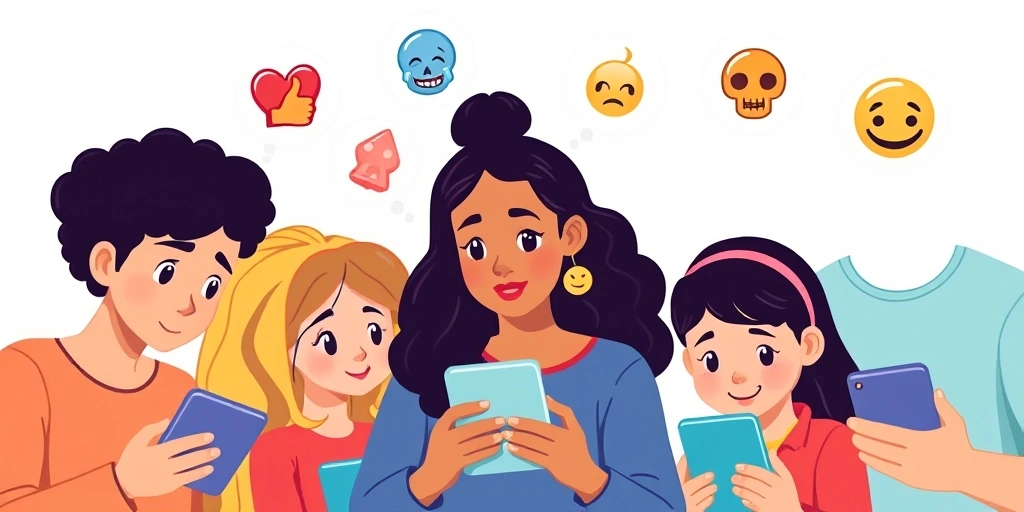
Another fascinating aspect of emoji misunderstanding is the generational divide. Younger users often adopt new emojis or assign new meanings to existing ones at a rapid pace, sometimes to the bewilderment of older generations. The 💀 emoji, for example, is often used by Gen Z to signify "dying of laughter" or extreme humor, while an older user might literally interpret it as death or something morbid. Similarly, the innocent 😭 (crying face) can denote intense joy or laughter for some, not just sadness. These discrepancies highlight the fluid nature of digital slang and how quickly meanings can shift.
It’s not just about age, though. Even within similar age groups, different social circles can develop their own internal emoji language, creating a kind of private code that can exclude or confuse outsiders in a larger group setting. This adds another layer of complexity to the already intricate world of digital communication.
The Elusive Sarcasm: Emojis and Tone
Sarcasm is notoriously difficult to convey through text, and emojis often don't help as much as we hope. A 😉 or 😏 might be intended to signal playful sarcasm, but without the vocal inflection, it can easily be missed or, worse, taken literally as genuine flirtation or smugness. This is where the emoji enigma truly causes confusion. What was meant as a lighthearted jab can be interpreted as a genuine slight, leading to awkward follow-up messages or, even worse, unspoken resentments.
The absence of an emoji can also be telling. Leaving a message without any emotional markers might be seen as neutral by the sender, but the recipient could perceive it as cold, angry, or uninterested. This demonstrates the constant tightrope walk we perform when trying to communicate effectively online.
When Familiarity Breeds Misunderstanding
You’d think that with close friends or family, emoji misinterpretations would be less frequent. After all, you know each other well! But paradoxically, familiarity can sometimes lead to assumptions. We might assume our closest contacts will always understand our shorthand or our specific emoji quirks. However, even the longest-standing relationships can hit a snag when a seemingly innocent emoji is read the wrong way, often because we drop our guard and become less explicit in our digital expressions.
In these group settings, a small misunderstanding with one person can sometimes snowball, especially if others chime in with their own interpretations or reactions. Before you know it, a minor miscue has become a central point of confusion, overshadowing the original message entirely.
Navigating the Emoji Minefield: Tips for Clarity
So, how do we navigate this complex landscape? While there’s no foolproof method, a few strategies can help mitigate misunderstandings:
- Add a Word: If an emoji could be interpreted in multiple ways, a quick clarifying word or phrase can go a long way. Instead of just 👍, try "Sounds good! 👍"
- Know Your Audience: Be mindful of who is in the group chat. What might be acceptable and understood among your close friends might not fly with a mixed group of colleagues and acquaintances.
- Observe and Adapt: Pay attention to how others in the group use emojis. This can give you clues about the prevailing 'dialect' of that specific chat.
- Err on the Side of Caution: When in doubt, it’s often safer to use more explicit language or stick to universally understood emojis rather than highly nuanced or trending ones.
Ultimately, emojis are a powerful tool, adding depth, humor, and emotion to our digital exchanges. However, their very flexibility and evolving nature mean that misinterpretations are an inherent part of the game. Recognizing this, and being a little more mindful of how our chosen icons might land, can help us communicate more effectively and keep those group conversations flowing smoothly, rather than stumbling into silent misunderstandings.
Exploring common pitfalls like these is crucial for anyone looking to master their digital communication. You can dive deeper into various aspects of digital communication and emoji mistakes and misuse to enhance your understanding.
📒 Related Blogs
More...The Unseen Power: How Emojis Secretly Shape What Others Think of You
The Unsung Hero of Project Updates: How Emojis Make Work Chats Smoother
The Fascinating Evolution of Emojis: From ASCII Art to Global Communication
The Hidden Power of Emojis: How a Simple 😊 Shapes How Others See You Online
When Emojis Muddle Your Message: The Unseen Cost of Digital Tone
Decoding New Emojis: A Guide to the Latest Additions & Their Meanings