The Fascinating Evolution of Emojis: From ASCII Art to Global Communication

Dec 11,2025
In the vast landscape of digital communication, few innovations have had as profound an impact as emojis. What started as simple text characters has blossomed into a vibrant, global language, transcending linguistic barriers and adding a crucial layer of emotion and nuance to our online interactions.
The Humble Beginnings: Emoticons and ASCII Art
Before the colorful icons we know today, digital conversations were often cold and devoid of emotional context. Users began to improvise, creating "emoticons" using standard keyboard characters to convey feelings. A sideways smiley :) or a winking face ;) became commonplace, offering a quick way to express mood. Around the same time, elaborate ASCII art emerged, transforming simple text into intricate images. These early forms were the pioneering steps towards visual communication in the digital realm.
From Japan to the World: The Birth of Emojis
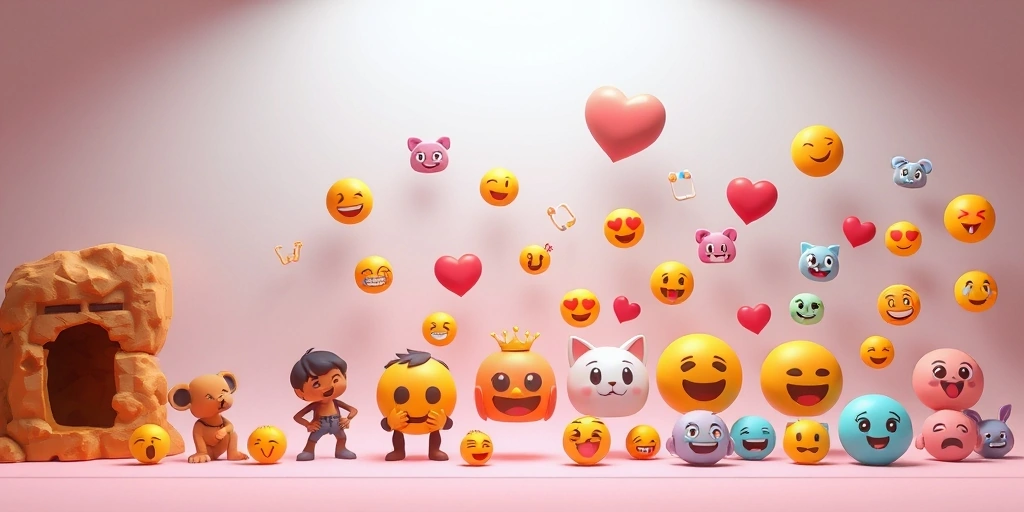
The true genesis of what we now call 'emoji' (a Japanese word meaning 'picture character') can be traced back to Japan in the late 1990s. Shigetaka Kurita, working for NTT DOCOMO, developed the first set of 176 12x12 pixel emojis for mobile phones. These simple images, including a heart ❤️, a car 🚗, and weather icons, were designed to make mobile communication more expressive and convenient. This innovative Emoji collection quickly gained popularity in Japan, setting the stage for a global phenomenon.
Unicode Standardization: The Key to Universal Adoption
For emojis to truly become a global language, they needed standardization. This came with their integration into the Unicode Standard, a universal character encoding system. The adoption of emojis by Unicode in the early 2010s was a watershed moment. It meant that a Grinning Face sent from an iPhone would look consistent on an Android device, fostering true cross-platform compatibility. This standardization paved the way for tech giants like Apple, Google, and Microsoft to incorporate robust emoji keyboards into their operating systems, making them accessible to billions.
The Impact: More Than Just Pictures
Today, emojis are an indispensable part of our daily digital lives. They convey sarcasm, joy, frustration, and love with a single tap, often more effectively than words alone. They’ve given rise to new forms of expression, influenced advertising, and even become subjects of academic study. From confirming plans with a simple thumbs-up 👍 to celebrating with a Sparkling Heart, emojis bridge cultural gaps and add warmth to otherwise cold digital text. The continuous expansion of the emoji library, with new additions reflecting diverse cultures, professions, and identities, underscores their role as a living, evolving language.
The Future of Emoji Communication
The journey of emojis is far from over. We're seeing advancements in animated emojis, customizable avatars, and even predictions for how AI might generate emojis on the fly to match emotional tones. As technology evolves, so too will our methods of visual communication. Whether you're using emojilar to find the perfect icon or just casually texting a friend, it's clear that these little characters have cemented their place in the lexicon of modern interaction. They continue to evolve, reflecting and shaping the way we express ourselves in an increasingly interconnected world.
From rudimentary text art to a sophisticated global language, emojis have come a long way. They offer a testament to human creativity and our innate desire to communicate more richly and expressively, proving that sometimes, a picture truly is worth a thousand words.
📒 Related Blogs
More...The Secret Power of Emojis: How Tiny Icons Shape How We See Each Other Online
Emoji Evolution: The Secret Life of New Emojis and Their Approval Process
The Secret Language of Emojis: Unlocking Hidden Meanings & Popular Interpretations
The Secret Language in Your Texts: How Emoji Pairs Shape Every Conversation
The Secret Language of Emojis: How They Instantly Decode Our Feelings
The Unspoken Rules: How Emojis Quietly Manage Our Online Conversations