The Secret Power of Emojis: How Tiny Icons Shape How We See Each Other Online

Feb 07,2026
Think about the last text you sent. Did you add a little something extra? A thumbs up, a crying-laughing face, maybe just a simple red heart? We do it almost without thinking, tapping these tiny icons to finish our thought. But that offhand tap does something profound. It doesn't just decorate your message—it fundamentally shapes how the person on the other end sees it, and even how they see you.
In the flat, text-only world of our screens, we're missing everything. We can't see a raised eyebrow, a hesitant smile, or a sarcastic eye-roll. Our brains, wired for face-to-face interaction, are left scrambling to fill in the gaps. Is "fine" actually fine, or is it seething with quiet resentment? This is where emojis swoop in. They act as a brilliant, modern-day patch for a prehistoric problem. They're the digital stand-ins for the facial expressions and body language we evolved to read.
Your Brain on Emoji: The Ultimate Shortcut
Our minds love shortcuts. To process the endless stream of information we face daily, we use mental models and snap judgments. This is especially true in fast-paced digital communication. When you read a message, your brain is working at lightning speed to assess intent, emotion, and tone. A block of plain text is ambiguous terrain. It requires more cognitive effort to navigate.
Now, drop an emoji into that text. Suddenly, the path is lit. A winking face 😉 instantly frames a sentence as playful or sarcastic, not serious. A pleading face 🥺 injects vulnerability and a request for kindness. The brain doesn't have to work as hard to decode the subtext; the emoji provides it, cleanly and efficiently. It's a perceptual anchor, guiding the reader toward the intended emotional landscape of the message. This is why a work email with a smiley can feel warmer and more collaborative, while the same email without it can feel cold and directive.
This goes beyond just clarifying tone. Emojis actively color our perception of the sender. Research suggests that people who use emojis in professional settings are often perceived as more friendly, approachable, and competent. That little icon does double duty: it clarifies your message and builds your personal brand as someone who is attentive and emotionally aware. In a world of remote work and digital first impressions, that's no small thing. For a deeper dive into how emojis build clarity, check out our post on how emojis stop misunderstandings.
When a Peach Isn't Just a Fruit
Of course, this power comes with complexity. The meaning of an emoji isn't always universal. A thumbs-up 👍 might mean "okay" to one person and feel passive-aggressive to another. The infamous peach 🍑 has taken on a life of its own. This is where shared context and culture come crashing in. Your perception of an emoji is filtered through your age, your friend group, your memes, and your personal history with the sender.
This is the fascinating dance of digital communication. We're using these shared, yet slightly fluid, symbols to build understanding. When you use the fire emoji 🔥 to agree with a friend's idea, you're not just saying "good job." You're tapping into a shared cultural lexicon that says, "This is excellent, trendy, and I am part of the group that gets this." It builds connection and reinforces in-group identity.
The Risk of the Missing Emoji
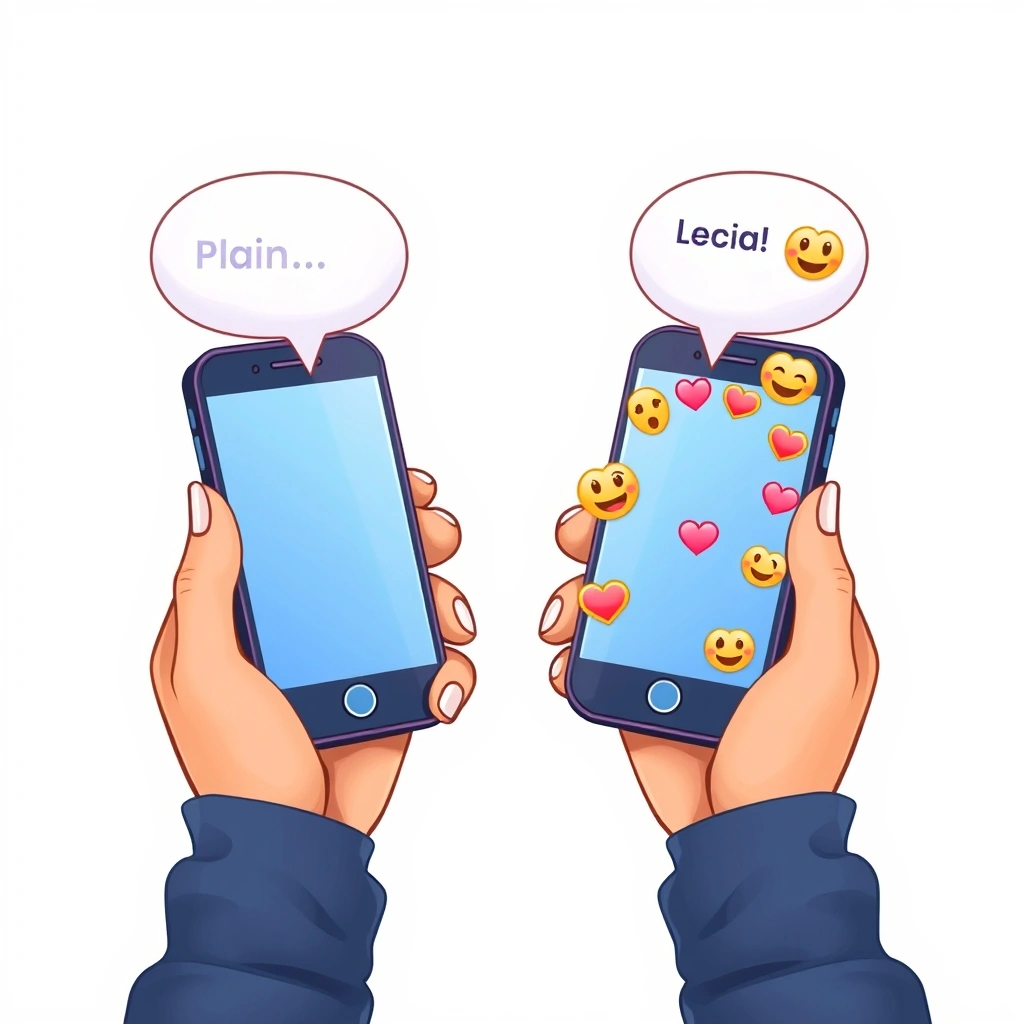
Perhaps the most telling sign of their power is what happens when they're absent. If someone who normally peppers their messages with hearts and smileys suddenly sends a stark, emoji-less text, your alarm bells might ring. "Are they mad at me?" The lack of the expected emotional cue becomes a cue in itself—one of potential distance, annoyance, or seriousness. The silence of a missing emoji can be louder than the emoji itself.
This shows that emojis have become a default part of our communicative fabric. We don't just use them to add emotion; we rely on them to establish baseline warmth and connection. Their absence creates a vacuum that our anxiety-prone brains are all too happy to fill with worst-case scenarios.
So, the next time you go to hit send, pause for a second on that emoji keyboard. You're not just choosing a cute picture. You're choosing a lens. You're handing your friend, your colleague, or your crush a specific pair of glasses through which to read your words and perceive you. You're doing the hard work for their brain, guiding them toward the feeling you want to share. In the messy, wonderful world of trying to connect through screens, that's a pretty powerful tool to have in your pocket.
Want to explore more about the psychology behind these digital symbols? Head over to our Emoji & Psychology section for more insights.
📒 Related Blogs
More...Beyond Words: How Emojis Secretly Shape What Others Think of You
The Unspoken Shield: How Emojis Absorb Social Tension in Delicate Moments
Why Emojis Are Your Secret Weapon for Smoother Status Updates and Happier Team Chats
The Quiet Confidence of Emojis: How Tiny Icons Speak Volumes in Our Most Subtle Conversations
Emoji Magic: How Tiny Icons Lighten Up Your Everyday Chats!
The Silent Power of Emojis: How They Keep Our Chats Light & Lively