The Tiny Heroes of Clarity: How Emojis Stop Misunderstandings in Their Tracks

Feb 03,2026
Think about the last time you sent a simple "okay" in a text. Did it feel a little cold? A little blunt? Now, think about sending "okay 😊" or "okay 👍". It's the same word, but the entire feeling of the message shifts. This is the quiet, everyday magic of emojis at work. In our digital conversations, where tone of voice and body language are completely absent, these little symbols step in to do a crucial job: they reduce the massive uncertainty that comes with interpreting plain text.
When we talk face-to-face, we have a whole symphony of cues to help us understand each other. A raised eyebrow, a slight smile, the pace of our speech—all of this adds layers of meaning to our words. In a text message, email, or social media comment, that symphony is reduced to a single, flat note. The words are there, but the music is missing. This creates what researchers call "context collapse"—a situation ripe for misinterpretation.
Is your friend's "That's interesting" genuine curiosity or sarcastic dismissal? Was your partner's "Fine" actually fine, or is it the kind of fine that means the opposite? Without visual or auditory cues, our brains are forced to guess, and we often default to a negative or neutral interpretation. This is where the humble emoji becomes a powerful tool for social coordination.
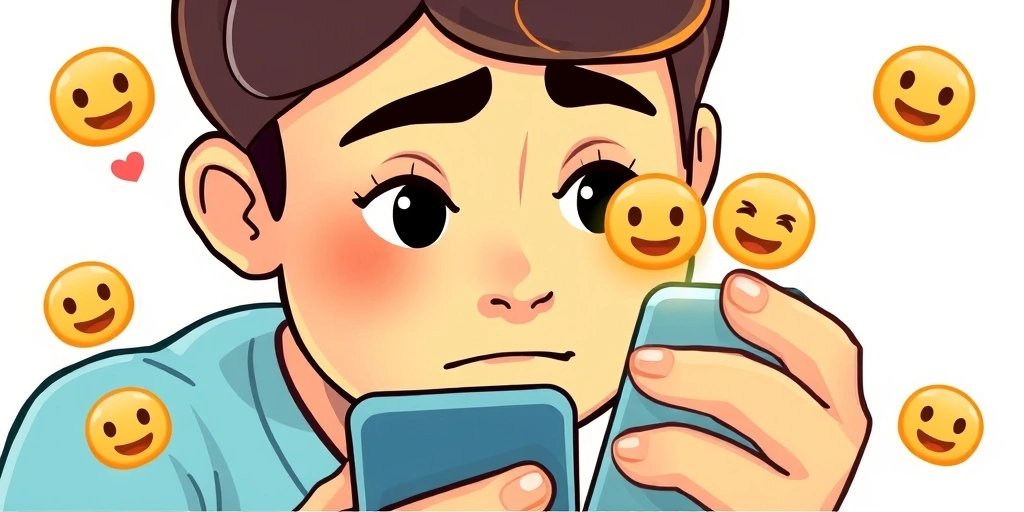
Emojis function as digital stand-ins for non-verbal communication. A grinning face 😁 or a heart ❤️ doesn't just decorate a message; it actively frames it. It tells the receiver, "Please interpret my words within this emotional container." This tiny visual cue dramatically narrows down the possible meanings of the accompanying text, guiding the recipient toward the sender's intended emotional state.
This isn't just a feeling; it's backed by how our cognition works. Our brains are pattern-recognition machines, and they crave context to make quick, efficient judgments. An emoji provides an immediate, pre-processed chunk of emotional context. When you see a 😂, your brain doesn't have to laboriously analyze if the previous sentence was a joke—it instantly knows it was, and it knows how to feel about it. This reduces cognitive load and speeds up understanding. For more on this cognitive shortcut, you can explore how emojis speed up our digital conversations.
From Ambiguity to Alignment
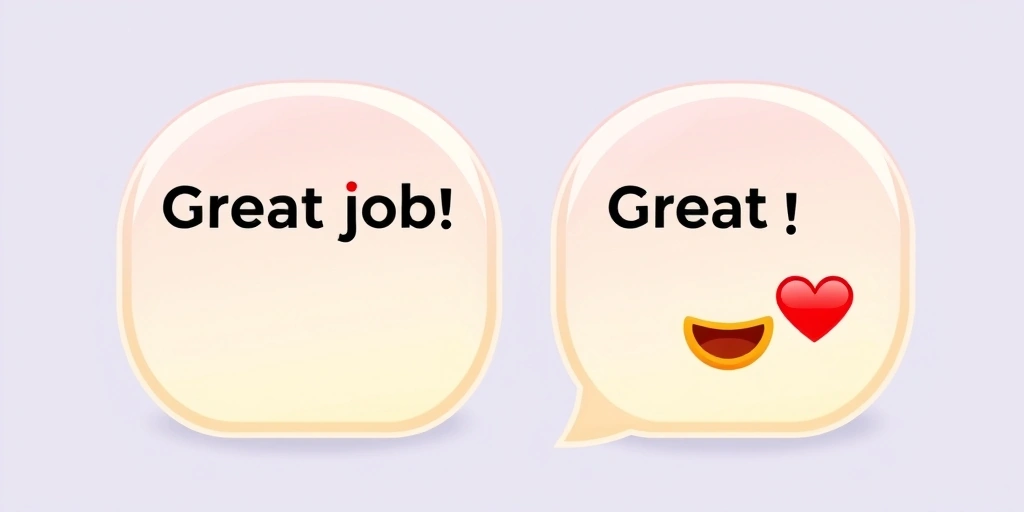
The practical effect of this is a significant reduction in everyday friction. In professional settings, a simple thumbs-up 👍 at the end of an instruction can transform it from a curt order into a friendly acknowledgment. In personal chats, a red heart 🧡 can soften a piece of difficult feedback, showing care alongside critique. They help align the sender's intent with the receiver's perception, moving you both closer to being on the same page.
This alignment is especially vital in weaker social ties—like with colleagues, acquaintances, or in customer service interactions. With close friends and family, we have a shared history that helps us interpret bare text. With people we know less well, that shared context doesn't exist. An emoji builds a small, immediate bridge of shared understanding, preventing the mild paranoia of wondering, "What did they really mean by that?"
The Limits of the Little Icons
Of course, emojis aren't a perfect solution. Their meaning can sometimes be ambiguous (does the 😬 face mean "awkward" or "in pain"?), and they can be overused or used ironically, creating new layers of potential misunderstanding. They are a tool for reducing uncertainty, not eliminating it entirely. Effective digital communication still requires clear language and, when things get complex, the willingness to pick up the phone or have a video call.
Yet, for the vast landscape of our daily, brief digital exchanges, they are remarkably effective. They patch the holes in our text-based communication, providing the emotional punctuation that our words desperately need. They are the digital equivalent of a nod, a smile, or a reassuring pat on the back—small gestures with a disproportionately large impact on clarity and connection.
As our lives continue to migrate online, the tools we use to maintain understanding become more important, not less. Emojis have evolved from fun novelties to essential components of our communicative toolkit. They help us navigate the subtle social landscapes of our digital worlds, one tiny, expressive icon at a time. For a deeper look at their role as clarifiers, consider reading about how emojis quietly prevent misunderstandings. It's fascinating to consider what other subtle cues we might develop next to bridge the gaps that technology creates.
📒 Related Blogs
More...The Global Language of Emojis: Decoding Cultural Meanings and Interpretations
Emoji Power: How They Erase Digital Doubt & Build Stronger Bonds Online
Emojis: The Universal Language Breaking Down Communication Barriers
Clarity in Every Chat: How Emojis Prevent Misinterpretations in Professional Messaging
Beyond a Single Emoji: How Combinations Speak Volumes in Group Chats
The Secret Language: How Emojis Instantly Bridge Emotional Gaps in Digital Chats