The Unsung Heroes of Clarity: How Emojis Quietly Prevent Misunderstandings

Jan 31,2026
Think about the last time you sent a plain text message. Maybe it was a simple 'Okay' or 'Sounds good.' Did you pause for a second, wondering if the person on the other end would read it the right way? Would they think you were annoyed, bored, or genuinely pleased? If you've ever felt that tiny pang of uncertainty, you're not alone. In a world where so much of our conversation happens through screens, we've lost the tone of voice, the facial expressions, and the body language that fill our in-person chats with meaning.
This is where our tiny, colorful friends come in. Emojis do something remarkable in their subtlety. They don't shout; they whisper context. A 'thumbs up' emoji at the end of a sentence transforms a potentially cold agreement into a supportive affirmation. A 'winking face' turns a sarcastic comment into a clear joke, saving you from having to send a follow-up message that says, 'I was just kidding!'
The Missing Pieces of Digital Talk
When we talk face-to-face, so much information is exchanged beyond the words. A raised eyebrow, a slight smile, a shrug of the shoulders—these non-verbal cues are the glue that holds our mutual understanding together. In text, that glue is missing. Our messages become ambiguous scripts waiting for an interpretation. This ambiguity is a breeding ground for anxiety and misinterpretation.
Emojis act as a brilliant patch for this fundamental flaw in text-based communication. They are the digital stand-ins for our non-verbal cues. A heart emoji conveys warmth and care. A thinking face shows contemplation. A face with tears of joy signals overwhelming amusement. By inserting these symbols, we manually add the emotional subtext that our keyboards alone cannot provide. It's a conscious effort to be clearer, kinder, and more understood.
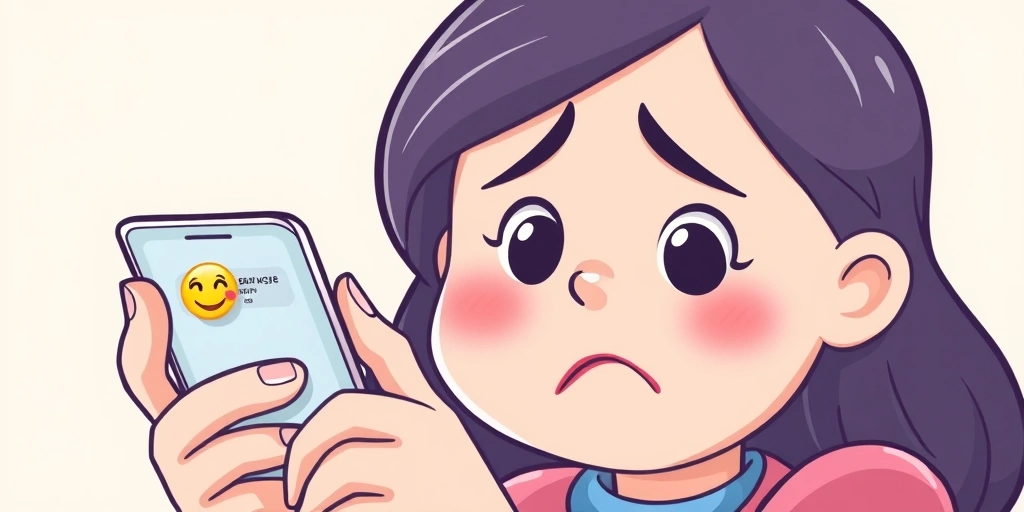
This reduction of uncertainty isn't just about avoiding fights or awkwardness (though it certainly helps with that!). It's about fostering connection. When we feel confident that our message's intent has been received correctly, we feel closer to the other person. The conversation flows more smoothly, with less second-guessing and more genuine interaction. It lowers the cognitive load of constantly analyzing tone, freeing us up to just... chat.
If you're fascinated by how emojis tap into our emotions so quickly, you might enjoy reading more about the instant feeling and gut reactions they spark.
More Than Just Decoration
It's easy to dismiss emojis as frivolous decorations, but their psychological function is real. They serve as 'emotional punctuation.' Just as a period ends a sentence, an emoji can define the emotional boundaries of a message. They guide the reader's emotional response, steering them away from negative or neutral interpretations and toward the one the sender intended.
For example, receiving critical feedback is hard. Receiving it in a text message with no context can feel brutal. Now, imagine that same feedback followed by a slightly smiling emoji or a flexed bicep for encouragement. The core message is the same, but the emotional framing is entirely different. The emoji signals goodwill and support, reducing the recipient's defensive uncertainty and making the message easier to receive constructively.
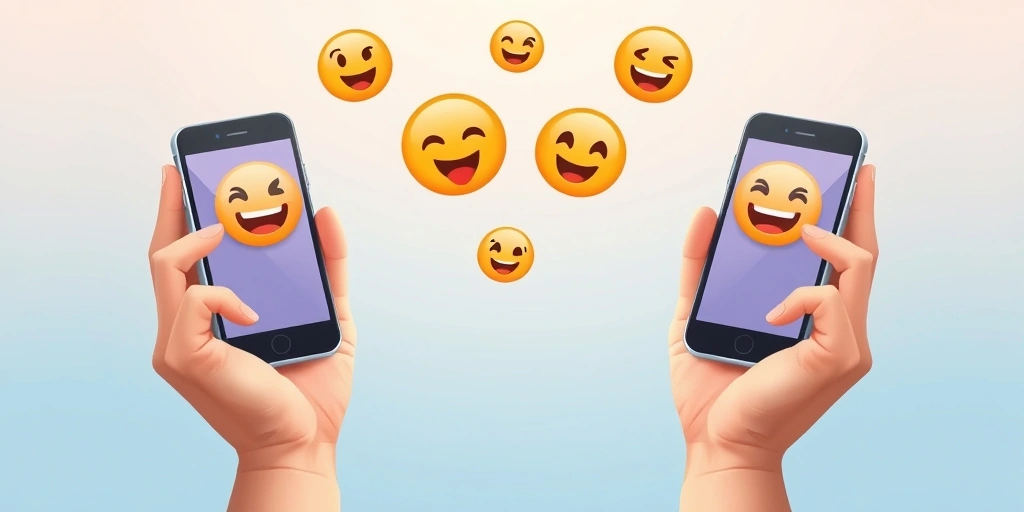
This function extends to professional settings, too. While the emoji lexicon might be more restrained, a simple smiley in a Slack channel or email can soften a request, show appreciation, or indicate a collaborative spirit. It breaks down the perceived formality and reminds everyone that there are real, feeling humans behind the screens.
Building a Shared Emotional Language
The power of emojis grows as they become a shared language within relationships, friend groups, or even cultures. You and your best friend might have a specific emoji that means 'I'm thinking of you' or 'that inside joke we have.' This creates a layer of private, nuanced meaning that further reduces uncertainty between you. You don't need long explanations; a single symbol conveys a complex, shared understanding.
This shared language is a cornerstone of modern digital rapport. It builds in-jokes, reinforces bonds, and creates a sense of belonging. When someone uses 'your' emoji correctly, it feels like they truly get you. This deepens connections in a way that plain text often struggles to achieve. For a deeper dive into the psychology behind these connections, explore our articles on emoji psychology.
Of course, emojis aren't a perfect solution. Their meaning can sometimes be ambiguous (is that crying face one of sadness or laughter?), and overuse can dilute their impact. But their primary role as clarifiers and connectors is undeniable. They are the gentle nudges that align our digital selves with our human intentions.
So, the next time you're about to hit send on a message, take a second. Could its intention be misread? Would a single, well-chosen emoji bridge the gap between what you typed and what you feel? In the quiet, subtle space of that choice, emojis are doing their most important work: making sure we understand each other, one little icon at a time.
📒 Related Blogs
More...The Silent Cheers: How Emojis Have Become Our Everyday Excitement Detectors
Beyond Text: How Emojis Transform Online Communication and Express Emotion
Emoji Etiquette: Master the Art of Digital Communication (Avoid Faux Pas!)
Unlocking Digital Emotions: The Psychology Behind Your Favorite Emojis
The Emoji Glow-Up: How Viral Trends Reshape Meanings Overnight 🤯
The Unsung Heroes of Remote Work: How Emojis Smooth Out Digital Communication