The Unspoken Comfort: How Emojis Bridge Emotional Gaps in Silence

Dec 28,2025
There's a specific kind of pause that hangs in the air, digital or otherwise, when emotions are swirling, and words suddenly feel clumsy, inadequate, or just too much. It’s that split second after reading a difficult message, or perhaps sharing some vulnerable news, where the instinct to respond clashes with the sheer impossibility of finding the ‘right’ words. We've all been there: staring at a blinking cursor, thumb hovering over the keyboard, a sense of quiet panic setting in because anything we type feels either too trite, too aggressive, or too demanding.
This isn't about grand gestures or profound declarations. It's about the small, everyday interactions where someone shares a minor victory laced with anxiety, a quiet disappointment, or a moment of shared understanding. How do you respond to a friend who texts, "Ugh, another rejection letter," when you know they’ve been trying for months? Or a family member who simply sends, "I'm just tired," after a particularly draining week? The traditional linguistic response feels heavy, a commitment to a conversation that might not be wanted or even possible in that immediate moment.
The Hesitation Before the Emoji
That moment of hesitation is crucial. It’s a silent deliberation, a rapid-fire assessment of the emotional landscape. Do I offer advice? Sympathy? A distraction? Sometimes, the weight of a full sentence feels like an intrusion into a fragile space. It’s in this void that the emoji steps in, not as a replacement for genuine connection, but as a bridge. It’s a recognition that something is felt, something is understood, without the pressure of articulate speech. It’s a gentle nod, a virtual hug, a shared sigh.
Consider the friend who’s just shared a small piece of good news they’re almost afraid to celebrate. A full sentence like, “That’s amazing, congratulations! You deserve it!” can feel overwhelming if they’re still processing it themselves. But a single 🎉 or ✨ communicates immediate joy and encouragement, allowing them to bask in the moment without feeling obliged to respond with equal enthusiasm or detail. It says, "I see you, I celebrate with you," in the softest possible way.
When Words Overwhelm, Emojis Offer Solace
In moments of shared sadness, the inadequacy of language is even more pronounced. How many times have we seen a message like, "I'm so sorry for your loss," and known it felt hollow? While genuine, it often feels like a placeholder, a social requirement rather than a true expression of empathy. A simple 🙏 or 🫂, on the other hand, carries a different kind of weight. It’s less about expressing a specific sentiment and more about offering presence. It’s a silent embrace, a gesture of solidarity that doesn't demand a reply or force a conversation that someone might not be ready for. It acknowledges pain without adding to the burden of having to articulate it further.
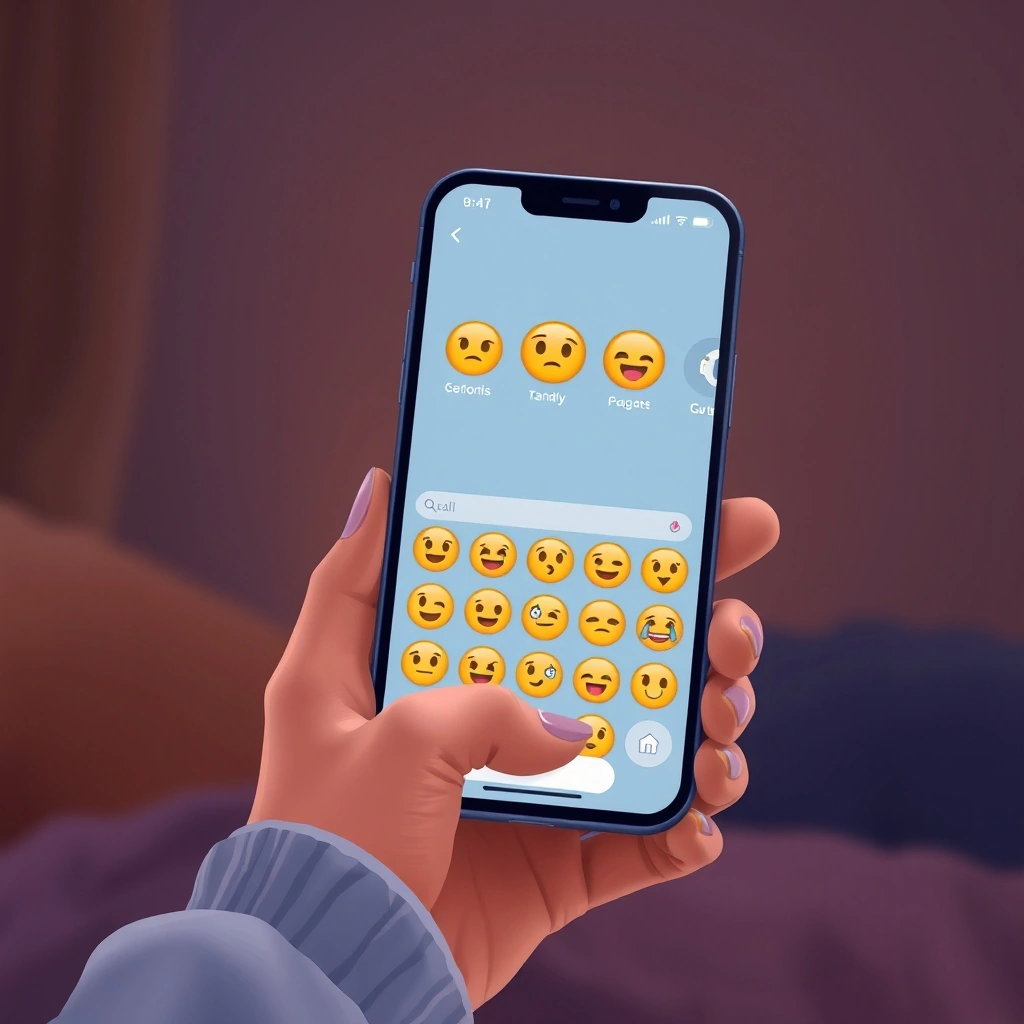
It's fascinating how a small icon can carry such significant emotional freight. It's not about being lazy; it’s about being thoughtful. It's about respecting the other person's emotional space and providing comfort in a way that feels less intrusive and more intuitive. We’re navigating an increasingly complex emotional landscape through digital screens, and these tiny symbols have become essential tools in our emotional toolkit. They allow us to communicate a depth of feeling that sometimes even the most eloquent words struggle to convey, especially when those words need to cross the barrier of a screen and be interpreted without the benefit of tone or body language.
Beyond the Obvious: Subtle Signals
The beauty of emojis in these situations lies in their subtlety. A slightly downturned mouth emoji 😔 after a long explanation of a bad day can instantly signal, "I hear you, and that really sucks," without requiring a lengthy response from the other person. Or a single sighing face 😮💨 from someone after a particularly stressful event can be met with a comforting 🤗 or a nod of understanding 👍, creating a brief, shared moment of relief without demanding a full conversation about the ordeal. It's a testament to the quiet comfort that emojis offer, speaking volumes when words fail.
This goes deeper than just avoiding awkwardness; it's about fostering genuine connection through nuanced communication. It's recognizing that sometimes the most powerful response is one that doesn't demand anything back, one that simply acknowledges, validates, and supports. For more on how these small icons can transform our digital interactions, you might find insight in our exploration of the role of emojis in various situations.
The decision to send an emoji instead of a sentence isn't a sign of indifference; it's often a sign of profound care. It’s a quick mental calculation: what does this person need right now? Do they need words of affirmation, or do they need the quiet comfort of knowing someone is simply *there*? Often, it’s the latter, and a carefully chosen emoji delivers that presence without the added pressure of a verbal exchange. It's a recognition of the delicate balance in human interaction, especially when emotions are tender.
The Art of Digital Empathy
In our fast-paced digital world, where every interaction can feel immediate and demanding, the emoji acts as a punctuation mark for empathy. It’s a way to say, “I understand, and I’m with you,” without forcing a detailed dialogue. It allows emotions to breathe, to simply *be*, without the need for immediate analysis or problem-solving. It's a silent agreement to hold space for someone, to acknowledge their feelings without overwhelming them with our own.
This particular skill – knowing when to send an emoji rather than a paragraph – is something we intuitively develop over time with those we communicate with regularly. It's part of the evolving language of digital intimacy, a shorthand for feelings that are too complex or too raw for immediate verbalization. It builds bridges of understanding in those tiny, often unnoticed moments of silence. Sometimes, the most eloquent response isn't a string of carefully chosen words, but a single, perfectly placed icon that speaks directly to the heart.
When we look at how these small images have woven themselves into the fabric of our daily communication, it's clear they do more than just add color; they add depth, nuance, and a unique form of emotional intelligence to our digital conversations. They represent a significant shift in how we express and perceive feelings in text-based exchanges. It’s about more than just convenience; it’s about a deeper, more empathetic way of connecting. The quiet comfort they provide is truly invaluable, speaking volumes when words fail to capture the full spectrum of our feelings. For a deeper dive into this concept, consider reading about how emojis speak volumes when words fail, to further understand their unique power in these delicate moments.
📒 Related Blogs
More...The Quiet Comfort of Emojis in Everyday Chats
Emoji Etiquette: Mastering Professional & Casual Communication
The Rise of Animated Emojis & Stickers: Transforming Digital Communication
The Secret to Lighter Chats: How Emojis Make Fast-Paced Conversations Effortless
The Fascinating History of Emojis: From Kaomoji to Global Phenomenon
Emoji Psychology: Decoding What Your Favorite Emojis Reveal About You