The Emoji Lifeline: How a Simple Icon Saves You From Awkward Delayed Replies

Mar 13,2026
Your phone buzzes. It’s a message from a friend who’s just shared some difficult news. Or maybe it’s your partner asking a question that feels loaded. Your brain scrambles for the perfect, thoughtful, supportive response. But the perfect words are… nowhere to be found. The screen stares back, a blinking cursor in a void of silence. Minutes tick by. The ‘Seen’ timestamp mocks you. This is where things can start to go wrong.
Without any signal from you, the other person is left in that silence. They might wonder if you’re ignoring them. If you’re upset. If their message was too much. That empty space becomes a vacuum, and anxiety rushes in to fill it. The delay itself isn’t the problem—it’s the complete lack of signal during the delay. It’s the digital equivalent of someone asking you a heartfelt question and you just turning and walking away without a word.
This is where the humble emoji performs its quiet magic. It’s not the reply, but it’s a signal. It’s a hand on the shoulder while you gather your thoughts.
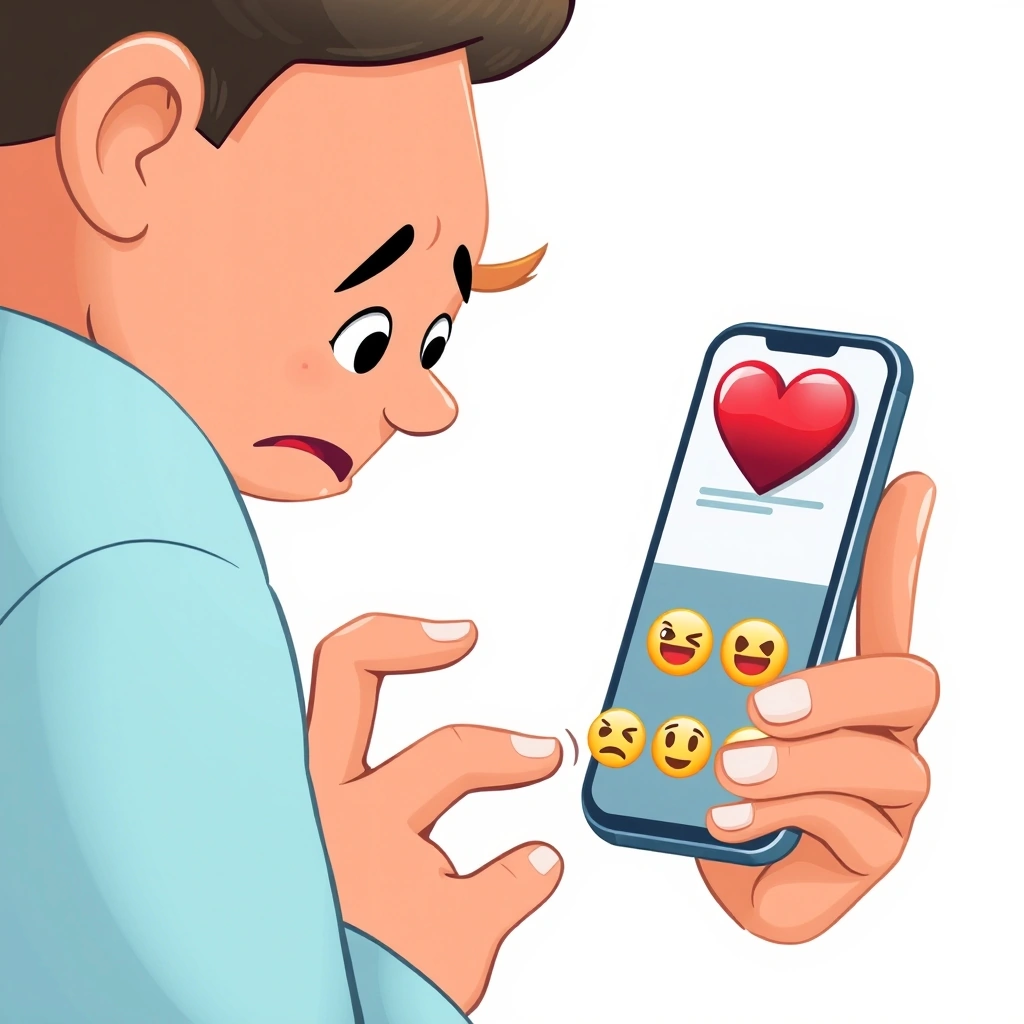
Sending a simple heart, a thinking face, or a pair of praying hands does something crucial: it acknowledges. It says, “I see you. I am here. I am processing this.” It immediately defuses the potential misinterpretation that silence creates. You’re no longer absent; you’re present and engaged, just taking a moment. It transforms an awkward pause into a considered one.
Think about the alternative. The pressure to respond quickly with something—anything—often leads to a reply that’s rushed, tone-deaf, or overly simplistic. “That’s tough,” you might type, immediately cringing at how inadequate it feels. Or worse, you might send something unintentionally flippant because you’re panicking about the time lapse. The emoji acts as a buffer, giving you the grace to compose something meaningful without the relationship suffering in the interim.
The Unspoken Weight of the Blank Screen
In socially delicate moments, every second of digital silence is amplified. A question about plans becomes a test of commitment. A vulnerable confession becomes a gauge of your care. When you leave that message hanging, you’re not just not replying—you’re inadvertently communicating indifference, confusion, or even rejection. The other person is left to write the story for you, and our brains, wired for social threat, often write the worst one.
An emoji interrupts that negative narrative. It’s a placeholder for your empathy. A heart says, “My feelings are with you, even if my full words aren’t ready.” A sad face meets their energy where it’s at. A thinking face shows you’re giving their point the consideration it deserves. It’s about managing the emotional climate of the conversation while you work on the substantive reply. For more on how emojis absorb social tension, this piece on the unspoken shield delves deeper.
Choosing Your Moment (and Your Emoji)
Not every delayed reply needs an emoji, and not every emoji fits the moment. The key is intentionality. A laughing face in response to a serious problem would be catastrophic. But a red heart, a folded hands emoji, or even a simple “…” or ellipsis emoji can be profoundly effective. It’s about matching the emotional valence.
The beauty is in its lightness. You’re not committing to a full stance or a detailed opinion. You’re offering emotional support and buying yourself time, all with a single tap. It keeps the connection warm. It tells the other person they are still on your screen and in your mind, which is often all they need to know while they wait.
This tactic is especially vital in our asynchronous messaging world. We don’t have the real-time cues of a face-to-face chat—the nodding, the “mmhmm,” the eye contact that says “I’m listening.” The emoji becomes that digital nod. It fills the gap left by the absence of body language. It’s a cornerstone of the unspoken language we’ve all learned to speak.
So next time you find yourself frozen, trying to craft the perfect response to a delicate message, remember you have a two-part job. First, send the signal. Send the emoji that says “I’m here with you in this.” Then, take the breath you need. The pressure will lift. The silence will no longer feel heavy or awkward. And you’ll be free to write the reply you actually want to send, knowing the bridge between you hasn’t cooled in the meantime. That tiny icon isn’t a cop-out; it’s a lifeline—for you, and for the person waiting on the other side.
For more insights on using emojis in tricky situations, explore our other posts in the Emoji & Situation category.
📒 Related Blogs
More...The Psychology of Emojis: Decoding Your Digital Emotions
The Unseen Hand: How Online Communities Shape Our Favorite Emojis
Unleash the Fun: How Emojis Turn Casual Chats into Playful Mini-Games
The Unsung Heroes of Texting: How Emojis Keep Our Digital Chats Flowing
Beyond the Words: How Emojis Bring Clarity to Your Daily Check-Ins