That Awkward Pause: When Your Emoji Sends the Wrong Message

Jan 23,2026
You know the feeling. You fire off a quick text, punctuating it with what feels like the perfect emoji. It’s friendly, it’s clear, it’s you. Then you wait. The reply bubble appears… and disappears. A minute passes. Then five. Finally, a tentative message comes back: “Wait, are you mad at me?” Your heart sinks. Somehow, your attempt at lightness just landed with a thud.
This isn’t about being bad at texting. It’s about the inherent fragility of text-based communication. We strip away tone of voice, facial expressions, and body language, and in their place, we offer a single, tiny, colorful icon. We ask it to carry a tremendous emotional weight. And sometimes, it buckles under the pressure.
The Intention Gap
The core of the issue is what I call the “intention gap.” It’s the space between what you meant when you tapped that emoji and how the person on the other end interprets it. Your brain is filled with context—your mood, your relationship with the person, the preceding five messages. Their brain is working with a blank screen and a solitary symbol. That symbol is a Rorschach test, and everyone sees something slightly different.
Take the classic “thumbs up.” For some, it’s a cheerful “Got it!” or “Sounds good!” For others, it’s the digital equivalent of a dismissive grunt, a conversation-ender that feels cold and abrupt. There’s no universal decoder ring for this stuff.
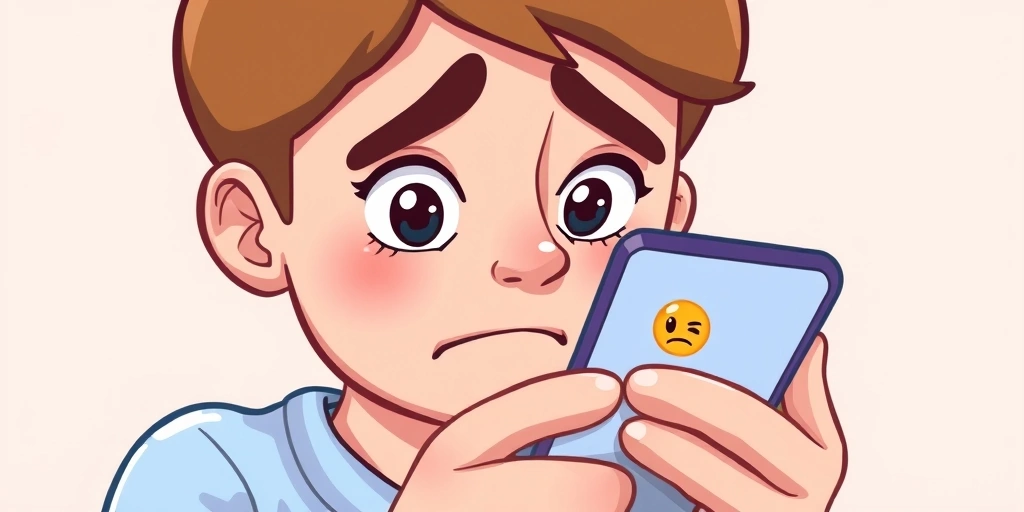
These misunderstandings don’t just happen between acquaintances. They can be most painful with close friends and family, precisely because we assume a shared understanding. You might use the “face with rolling eyes” emoji with a sibling as a playful, “Can you believe this?” shorthand. But send that same emoji to a coworker about a project update, and you’ve just broadcast monumental disrespect without saying a word. The emoji didn’t change; the context did, and the meaning shattered.
When Ambiguity Reigns
Some emojis are practically designed for confusion. The “smirking face” is a prime culprit. Is it flirtatious? Smug? Sarcastic? Knowing? It’s a cocktail of emotions that leaves the recipient guessing. The “loudly crying face” is another. Is the person sobbing with laughter or genuine despair? In a celebratory “You got the job!” text, it’s clearly joy. In a “My cat just knocked over my favorite plant” text, the interpretation is far less certain.
This ambiguity isn’t a bug; it’s a feature of visual language. But in fast-paced, low-context chats, that feature can malfunction. We’re forced to be amateur psychologists, reading tea leaves made of pixels. Did they just send a single red heart or a pink one? What’s the difference? In some dynamics, the difference feels enormous. You can fall down a rabbit hole of over-analysis from a single character. For more on how these little icons twist our casual chats, it’s worth reading about the emoji enigma.
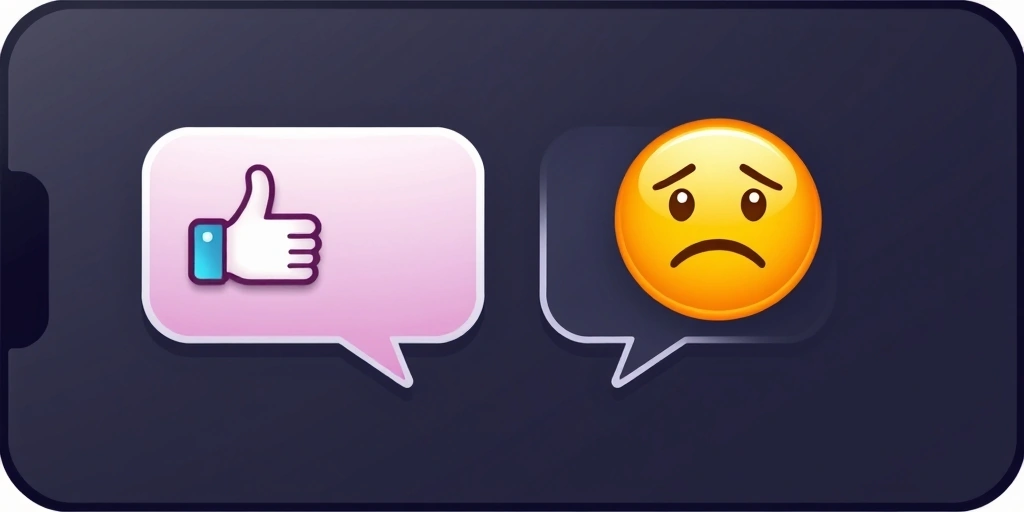
And it’s not just about the emoji itself. Placement matters. An emoji at the end of a sentence can soften it. The same emoji in the middle can feel like a strange, jarring interruption. Replacing a word with an emoji can be cute and efficient, or it can come across as lazy and dismissive. We’re all navigating these unspoken rules in real-time, and we don’t always get it right.
The Ripple Effect of a Single Icon
The fallout from a misread emoji is often disproportionate. A simple misunderstanding can spiral into hours of tension. You spend energy you don’t have clarifying, “No, I meant the laughing-crying face, not the straight-tear face!” The other person might feel silly for misreading it, or annoyed that they had to ask. The original, often mundane, topic of conversation is lost, buried under a pile of meta-communication about communication itself.
It creates this weird digital anxiety. You hesitate before sending. You swap one emoji for another, then back again. You consider just not using one at all, but then the message feels sterile and angry. It’s a lose-lose sometimes. This is part of a broader, unseen complication of trying to convey tone through our screens, something explored in thoughts on when emojis backfire.
In group chats, the stakes feel even higher. You’re performing for an audience. An emoji that lands perfectly with one friend might be completely misconstrued by another. The silent observers are forming opinions based on your pictorial punctuation. It’s exhausting.
So, we find ourselves in a constant, low-grade negotiation of meaning. We use strings of emojis to try and clarify a single one. We follow up with “lol” or “jk” just to be safe. We’ve developed these corrective mechanisms because we know the system is flawed. We’re trying to patch the intention gap with more symbols, hoping that quantity will somehow guarantee quality of understanding.
At the end of the day, these aren’t just silly pictures. They’re the emotional landmarks we drop into the flat, gray terrain of a text bubble. We rely on them to build tone, express warmth, and signal intent. But like any landmark, if you’re not looking from the same direction, you can get terribly lost. And sometimes, you both just stand there, looking at the same little icon, wondering how you ended up in such different places.
📒 Related Blogs
More...The Mind's Shortcut: How Emojis Speed Up Our Digital Conversations
The Unspoken Language of Emojis in Your Coziest Chats
Beyond Text: How Businesses Are Revolutionizing Marketing with Emojis
The Secret Language of Our Screens: How Emojis Mirror Cultural Moods Online
When Emojis Backfire: The Unseen Complication of Digital Tone
The Quiet Comfort of Emojis: How Tiny Icons Are Replacing Small Talk