The Gentle Art of the Short Reply: How Emojis Add Warmth to Your Texts

Feb 13,2026
We've all been there. You're busy, your phone pings, and you tap out a quick reply. 'Okay.' 'Sure.' 'Thanks.' You hit send, and almost immediately, a tiny doubt creeps in. Did that sound too blunt? Too annoyed? Too... cold?
In face-to-face conversation, so much meaning is carried by our tone of voice, our facial expressions, and our body language. A simple 'yep' can sound enthusiastic, resigned, or sarcastic depending on how it's delivered. In text, all those cues vanish. What's left are bare words on a screen, open to interpretation. This is where the humble emoji steps in, not as a replacement for conversation, but as a vital tool for clarity and connection.
Why Short Replies Need a Little Help
Brief messages are a necessity of modern life. We're juggling conversations while working, commuting, or managing a household. There's no time for lengthy paragraphs with every text. But efficiency can sometimes come at the cost of perceived tone. A message intended to be neutral can easily be read as passive-aggressive or disinterested by the person receiving it.
This isn't about being overly sensitive; it's about the inherent ambiguity of written language without vocal inflection. The sentence 'Fine.' is a classic example. Is it genuine agreement, or is it the 'fine' you use when you're actually very much not fine? Without context, it's a guessing game.
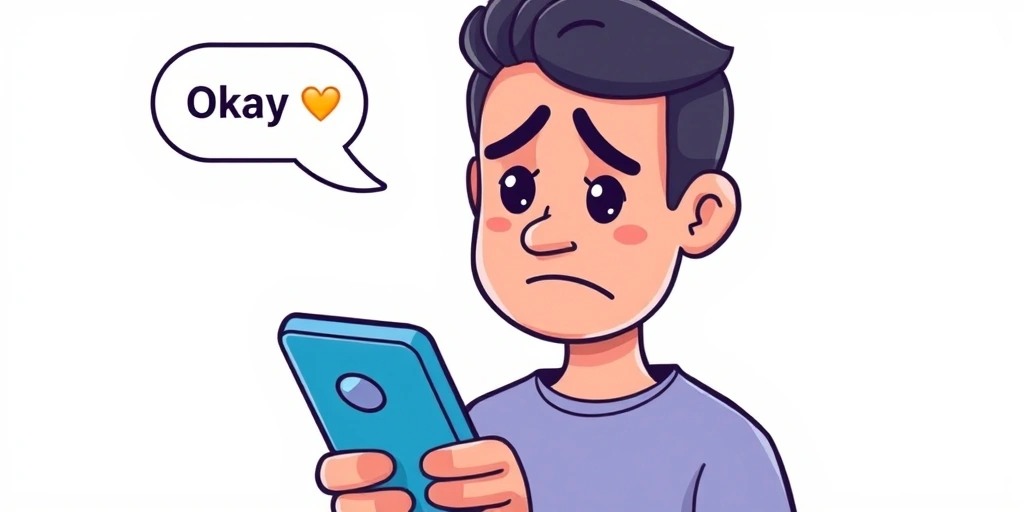
This is precisely the gap emojis are so good at filling. They act as digital tone-of-voice markers. They don't change the words; they change how the words are likely to be felt. Think of them as the smile or nod you'd give someone if you were saying the words out loud.
Transforming Common One-Word Replies
Let's look at some everyday examples. Imagine you're confirming plans.
- 'Okay.' feels like a bare-bones acknowledgment.
- 'Okay 👍' feels like a positive confirmation. The thumbs-up adds a layer of agreement and approval.
- 'Okay 😊' feels warm and friendly. The smile suggests you're happy with the plan.
Or consider expressing gratitude.
- 'Thanks.' is perfectly polite.
- 'Thanks! 🙏' feels more earnest and appreciative. The folded hands emoji adds a sense of genuine gratitude.
The word is the same. The core message is identical. But the emotional subtext, the 'vibe' of the message, is completely different. For more on how emojis bring clarity to quick exchanges, you might find this guide on how emojis transform quick replies really useful.
Choosing the Right Softening Touch
Not every emoji works for every short reply. The goal is to match the emoji's inherent emotion to the sentiment you want to convey. A grinning face 😀 with a somber message would be confusing. The key is subtlety and appropriateness.
For affirmative replies (Okay, Sure, Yes, Yep), emojis like the thumbs-up 👍, the check mark ✅, or a simple smile 😊 work well. They signal 'got it' in a positive way.
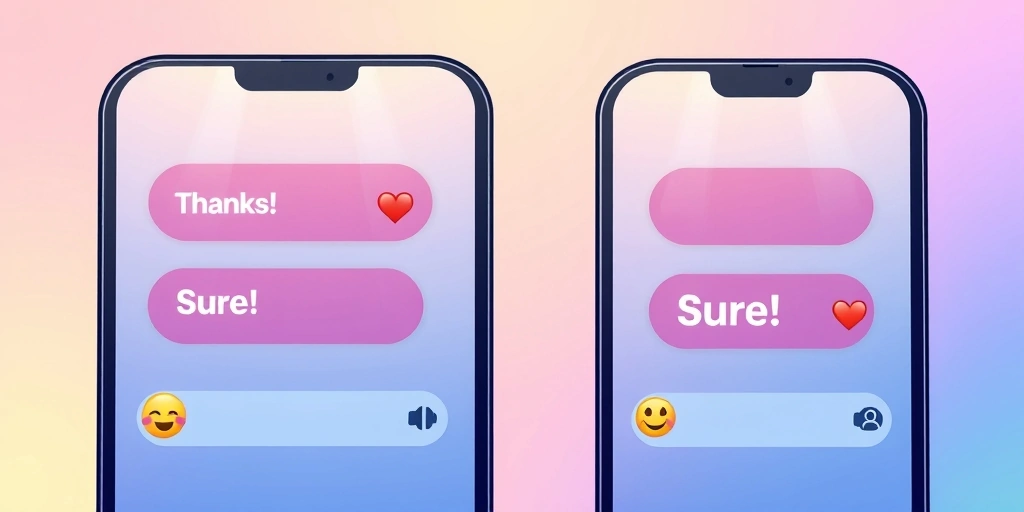
For appreciative replies (Thanks, Thank you), the folded hands 🙏, smiling face with smiling eyes 😊, or even a heart ❤️ (depending on your relationship with the person) can elevate the sentiment.
For acknowledging replies (Got it, I see), a lightbulb 💡 (for 'I understand'), eyes 👀 (for 'I'm looking'), or a nodding face 🙇 can show you're engaged.
The magic is in this tiny, almost effortless addition. It takes a fraction of a second to add, but it fundamentally alters the reception of your message. It tells the other person, 'I am not annoyed. I am not brushing you off. I am here, and this is my tone.' It's a small act of digital kindness that prevents misunderstandings.
Beyond Words: The Unspoken Layer
Emojis do more than just clarify tone; they can also convey effort and presence. In a fast-paced chat, taking that extra moment to select an emoji shows you're considering how your message will land. It demonstrates a level of care that a stark, punctuation-less reply might not.
This is especially important in more distant or formal relationships, like with colleagues, acquaintances, or service providers, where you have less shared context to rely on. A quick 'Will do.' to your boss can feel much more cooperative as 'Will do! 👍'. It bridges the professional distance with a hint of agreeable energy.
Of course, emoji use is personal and cultural. What feels warm and friendly to one person might feel unprofessional to another. The trick is to read the room—or in this case, read the chat. Pay attention to how the people you communicate with use emojis themselves. It's often a good guide. For a deeper dive into this subtle social function, explore the unspoken magic of emojis in our chats.
So, the next time you go to send that one-word reply, pause for just a second. Consider the person on the other end of the screen. Would a single, well-chosen emoji help them hear your intended tone? In most cases, that tiny icon is the simplest way to ensure your brief message is received not just as information, but as communication. It's the digital equivalent of making eye contact and smiling when you say 'thanks'—a small gesture that makes all the difference.
If you're looking to improve your digital communication in other ways, our emoji guides and how-tos are a great place to start.
📒 Related Blogs
More...The Quiet Language of Family: How a Simple Emoji Says 'I'm Here'
When Emojis Miss the Mark: The Unseen Awkwardness in Digital Chats
When Words Feel Heavy: How Emojis Quietly Ease Our Nervous Moments
The Secret Language: How Emojis Make Our Digital Chats Flow Effortlessly
Unpacking Global Emojis: Regional Differences in Digital Communication
Emoji Etiquette: Navigating Professional Communications with Emojis