When Emojis Miss the Mark: The Unseen Awkwardness in Digital Chats

Feb 03,2026
We've all been there. You send a text, punctuated with what you think is the perfect emoji—a friendly gesture, a splash of tone, a little digital smile. You hit send, feeling good. Then, the reply comes. It's a bit flat. A bit delayed. Or maybe it's just a simple 'Okay.' followed by a period. And in that tiny space, a quiet, shared awkwardness blooms. It wasn't a fight. It wasn't an insult. But something definitely missed the mark.
This isn't about the glaring, obvious blunders. We're not talking about sending a skull emoji to someone who's just shared bad news. This is about the subtler territory, where the emoji itself is innocent, but the context, the audience, or the unspoken rules of the relationship turn it into a little landmine of misunderstanding.
The Generation Gap in Your Pocket
One of the most common sources of this quiet awkwardness is the generational divide. What feels like a warm, laughing reaction to you might read as sarcastic or dismissive to someone else. Take the classic 'crying-laughing' face. For many, it's the ultimate signifier of 'this is hilarious.' But for others, particularly in more formal or cross-generational chats (think: with a boss, a professor, or a relative), it can seem overly casual, unprofessional, or even like you're laughing at them, not with them.
The reverse is also true. You might receive a simple smiley face from an older colleague and wonder if it's genuine approval or a polite brush-off. The 'thumbs up' can be the ultimate in efficient, positive feedback... or it can feel like a conversation-ender, a digital version of 'talk to the hand.' There's no malice intended, but the emotional resonance is completely different. You can read more about these hidden traps in our piece on the hidden traps of emoji misuse.
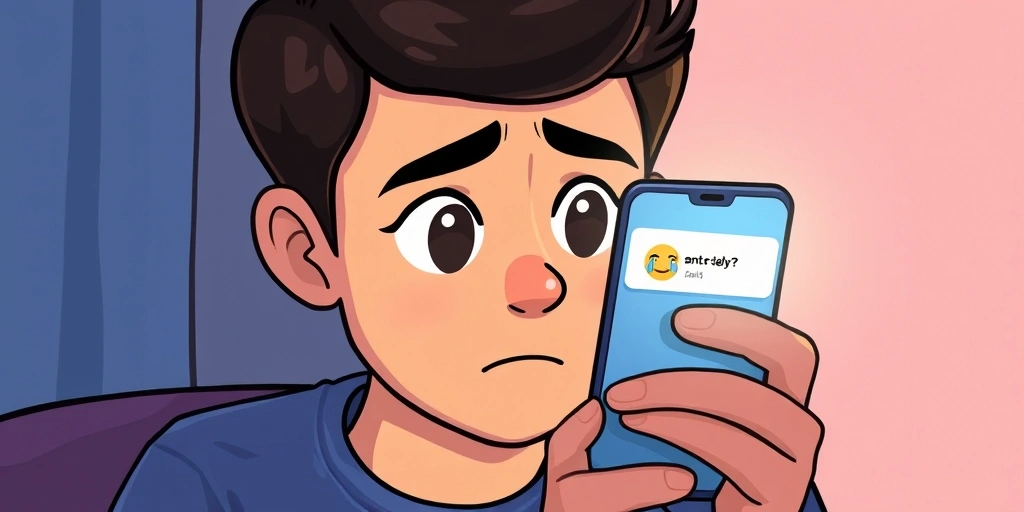
These moments create a low-grade friction. You don't bring it up because it feels silly to dissect a single tiny picture. But it adds up, creating a faint static in the relationship where you're never quite sure your tone is being received as you intended.
The Context Collapse
Another sneaky culprit is what sociologists call 'context collapse'—when audiences from different parts of your life (work, family, old friends) all see the same message. An emoji that's an inside joke with your college friends might baffle your aunt. A winky face you use playfully with a partner could raise eyebrows in a group chat with coworkers.
We often use emojis as shorthand for complex, shared histories. But outside that specific bubble, the shorthand breaks down. The emoji doesn't translate. The recipient is left trying to decode your intent, often landing on an interpretation you never imagined. It leads to those follow-up texts: 'Wait, what did you mean by that eggplant?' or 'Was that sarcasm?' The magic of the emoji—its ability to convey nuance—ironically becomes the source of the confusion.
The Unspoken Rules of Professionalism
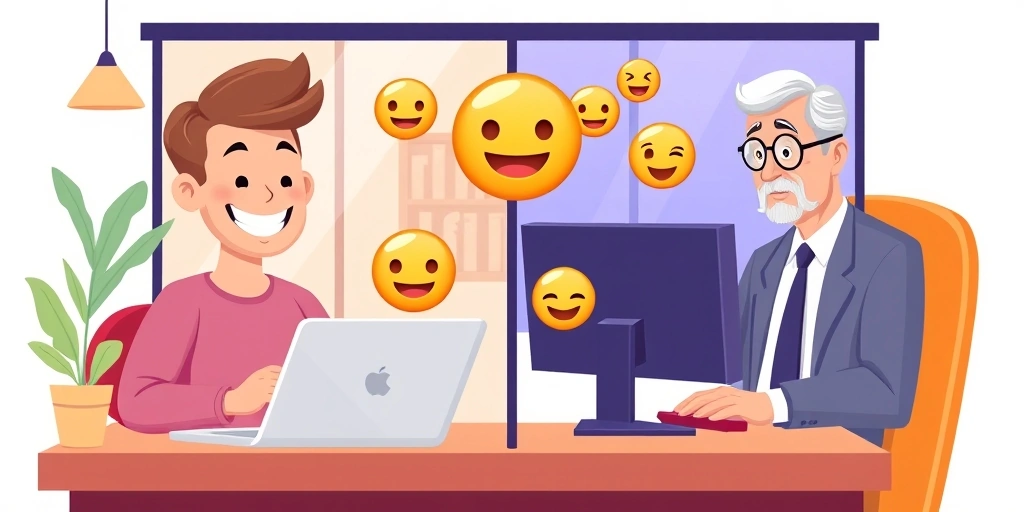
The workplace is a minefield for this kind of subtle awkwardness. The rules are unwritten and constantly shifting. Is a heart emoji appropriate for thanking a teammate? Is a fire emoji too 'Gen Z' for a client presentation deck? Some offices have a culture of playful emoji use; others maintain a more reserved, text-only standard.
When you misjudge, the consequence is rarely a reprimand. It's a slight cooling. A perception that you might not be taking things seriously enough, or that you're blurring boundaries. It's the modern equivalent of wearing jeans on a casual Friday when everyone else is in chinos—you're not wrong, but you're not quite in sync.
These professional faux pas are often about subtle misuse, not glaring errors. For a deeper look at how innocent emojis can say the wrong thing, check out this article: Oops, Did Your Emoji Just Say Something You Didn't Mean?.
So, what do we do with all this potential for awkwardness? The goal isn't to stop using emojis—they're a wonderful tool for connection. The first step is simply awareness. Recognizing that these tiny icons aren't a universal language, but a dialect that changes from person to person, group to group.
Maybe it means pausing for a second before you send that string of celebratory emojis to a new client. Maybe it's remembering that your dad might not read the 'folded hands' emoji as 'thank you' but as 'prayer.' It's about developing a kind of digital empathy, reading the room even when the room is a text thread. It's understanding that sometimes, the safest emoji is no emoji at all, and that a few clear words can often bridge the gap that a picture can't. The awkward moments will still happen—they're part of the messy, human experiment of digital communication. But perhaps we can meet them with a little more grace, and a little less panic, the next time our perfect emoji lands with a silent, confusing thud.
📒 Related Blogs
More...The Silent Peacemakers: How Emojis Dissolve Digital Tension and Misunderstandings
Beyond Words: How Emojis Shape Our Online Personalities & Digital Identity
Decoding Emoji Trends: What's Hot, What's Not, and Why It Matters
The Digital Chameleon: How Emojis Shape-Shift with Every Viral Trend
Unlocking the Secret Language: How Emoji Pairs Transform Your Digital Conversations
Emoji Etiquette: Master the Art of Digital Communication (Avoid Faux Pas!)