The Hidden Nuance of Emoji Pairs: How Two Little Icons Change Everything

Mar 23,2026
Think about your last text conversation. You probably didn't just send a single thumbs up or a lone crying-laughing face. Chances are, you paired a couple of emojis together. Maybe it was a heart followed by a crying face 😭❤️, or a fire emoji with a hundred points 🔥💯. On the surface, it seems simple—just two little pictures. But in practice, that combination does something profound. It adds a layer of meaning that a single emoji just can't convey on its own.
This isn't about creating a new, rigid language. It's about the organic, almost instinctive way we've started to use emojis to fill the massive gap left by the absence of tone, facial expressions, and body language in our digital chats. A single emoji can be ambiguous. Is that smiling face with sweat 😅 genuinely nervous or just politely awkward? But pair it with a face screaming in fear 😅😱, and the context becomes crystal clear: you're laughing through a moment of pure panic.
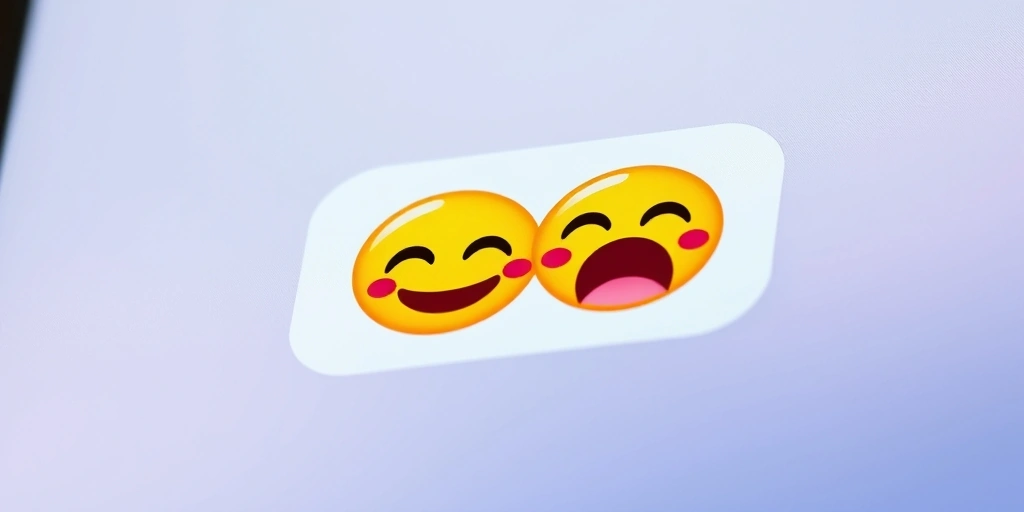
We use these pairs to soften blows, to amplify joy, or to inject a dose of sarcasm so thick you could cut it with a knife. Sending "Great job" with a clapping emoji 👏 feels like a genuine compliment. Send "Great job" followed by clapping hands and a zipper-mouth face 👏🤐, and you've just delivered a masterclass in silent, seething disapproval. The combination creates a subtext, a whispered aside that lives between the lines of your typed words.
From Reinforcement to Complete Transformation
Some pairings work by reinforcing a single emotion, making it louder and more emphatic. Think of the classic tears of joy paired with a rolling-on-the-floor-laughing emoji 😂🤣. It's not a new idea; it's pure, unadulterated amplification. The message is simple: "This isn't just funny, it's hysterical."
The more fascinating shift happens when the second emoji doesn't just reinforce the first—it changes it. This is where nuance is born. Take the simple red heart ❤️. It means love, affection, gratitude. But what happens when you send a heart followed by a pleading face ❤️🥺? Suddenly, it's not just a statement of love; it's a vulnerable request, a hopeful expression of "I love you, please be kind." The pleading face adds a layer of emotional fragility that transforms the entire sentiment.
This transformative power is key to understanding modern digital tone. A message like "Sure" with a thumbs up 👍 is neutral agreement. "Sure" with a thumbs up and a side-eye 👍👀 is agreement laced with suspicion, doubt, or playful judgment. The combination has created a completely new, context-specific meaning that your friend will understand instantly. For a deeper dive into how these sequences form a kind of digital grammar, check out our exploration on the hidden grammar of emoji sequences.
The Unspoken Rules of Pairing
While there's no official rulebook, certain conventions have emerged. Order often matters. A skull followed by crying-laughing 😂💀 ("I'm dead from laughter") has a different energy than crying-laughing followed by a skull 💀😂—the latter often feels more dramatic, like the laughter was the final, fatal blow. Repetition is another tool. Sending three heart-eye emojis 😍😍😍 doesn't just mean "I like this"; it screams "I AM OBSESSED WITH THIS."
We also use pairs to bridge the gap between literal and figurative meaning. Sending a rocket 🚀 might mean something is physically launching or that an idea is "taking off." Pair it with a chart increasing upwards 🚀📈, and you've locked in the figurative, business-minded meaning without a single extra word.
This layered communication is becoming the norm because it's efficient and deeply human. It allows for emotional precision in a medium that is inherently imprecise. You're not just telling someone you're happy; you're telling them you're proudly happy 🥹🎉, or exhaustedly happy 😴❤️, or sarcastically happy 🎉😒. Each pair paints a more complete picture of your internal state.
So, the next time you're about to hit send, pause for a second. Look at that single emoji you've chosen. Could its meaning be misinterpreted? Is there a subtle feeling—the hesitation, the excitement, the irony—that's missing? Often, the answer lies in adding just one more icon. That second emoji isn't redundant; it's the secret ingredient that turns a basic message into a true conversation. The art of the emoji pair is, ultimately, the art of being understood. To see more examples of how these combinations shape our digital dialogues, explore other posts in our emoji combinations category.
📒 Related Blogs
More...The Secret Shortcut: How Emojis Help Our Brains Communicate Faster
The Unspoken Stop Sign: How Emojis Mark the End of a Chat
Unlocking Tone: How Emojis Reshape Professional Message Interpretation
Emojis & Identity: How Digital Expressions Shape Who We Are Online
How Emojis Turn Your Casual Chats Into a Playful Game
The Hidden Language of Emojis: When Your Smiley Face Says More Than You Think