The Hidden Language of Emojis: When Your Smiley Face Says More Than You Think

Feb 17,2026
We've all been there. You send a quick text, punctuated with what you think is a perfectly harmless emoji. Maybe it's the classic smiley face 😊 or the ever-popular thumbs up 👍. You hit send, feeling good about your clear, friendly message. Then, the reply comes back. It's short. It's cold. Or worse, it's a question mark. Suddenly, you're re-reading your own message, wondering: What did my emoji just say?
It turns out, our tiny digital symbols are carrying a heavy load. In the absence of tone of voice, body language, and facial expression, emojis have become our primary tool for injecting emotion into text. But they're not a universal language. The signal you're sending and the signal being received can be two completely different things.
The Generation Gap in Your Keyboard
One of the most common fault lines runs straight between generations. Take the simple period. For many, it's just proper punctuation. For a younger demographic, a period at the end of a short text like "Sure." or "Okay." can feel passive-aggressive, final, or even angry. It transforms agreement into something tense.
The smiley face has undergone a similar shift. The once-innocent :) or 😊, used by older generations to denote genuine warmth, is sometimes read by younger people as insincere, patronizing, or even sarcastic. It's the digital equivalent of someone saying "Bless your heart." The intent and the interpretation are worlds apart. This isn't about right or wrong; it's about recognizing that the same symbol lives in different linguistic ecosystems. You can read more about these generational divides in our piece on when digital tone goes wrong.
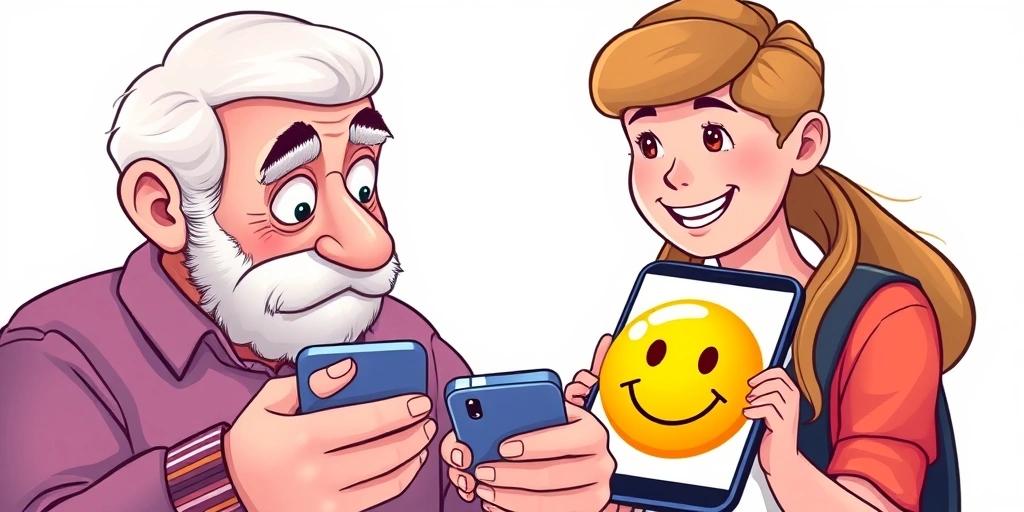
Then there's the infamous "crying laughing" emoji 😂. For years, it was the king of reactions, the ultimate signifier of something being genuinely hilarious. But its overuse has, for some, drained its meaning. Now, to certain audiences, it can signal a lack of authentic emotion—a default, almost dismissive reaction instead of real laughter. The very emoji meant to convey peak humor can now subtly imply the opposite.
When Culture Colors the Emoji
Our personal and cultural backgrounds paint how we see these symbols. The "folded hands" emoji 🙏 is a great example. In many Western contexts, it's used to say "please" or "thank you," or to represent a high-five. In several Asian cultures, however, it is predominantly a symbol of prayer, respect, or a humble greeting. Using it casually in a request for a favor might seem perfectly normal to one person, but oddly formal or spiritually tinged to another.
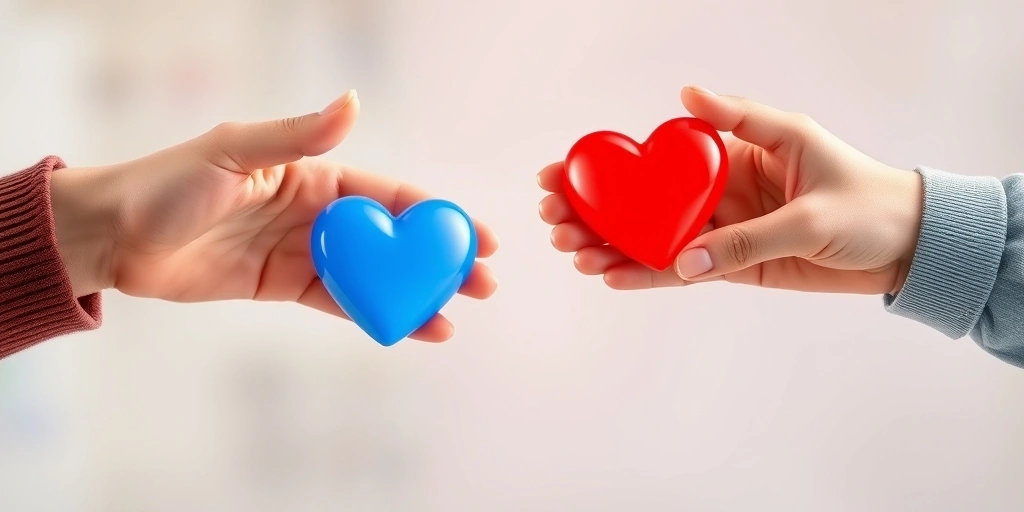
Even colors aren't safe. The red heart ❤️ is universally recognized for love, but what about the blue heart 💙? Its meaning is far less fixed. It can symbolize trust, loyalty, friendship, support for a cause (like autism awareness), or even sadness. Without shared context, sending a blue heart can leave the recipient guessing: Are you saying you're my loyal friend, or that you're feeling sad?
The Relationship Context is Everything
Perhaps the most volatile arena for emoji ambiguity is in our personal relationships. An emoji that's playful and flirty with a close partner might be wildly inappropriate with a coworker. The wink 😉 can be fun and conspiratorial among friends, but in a professional Slack channel, it might come across as unprofessional or even creepy.
The "fire" emoji 🔥 is another chameleon. Commenting "You killed that presentation! 🔥" on a colleague's post is a strong compliment. Sending that same emoji to someone you're newly dating, however, carries a completely different, more intimate connotation. The emoji hasn't changed, but the relational frame around it changes its entire meaning.
This is where the real danger of unintended signals lies. We often choose emojis reflexively, based on our own internal dictionary. We forget that the person on the other side is consulting a different dictionary altogether. A playful tease with a tongue-out face 😛 can be read as mockery. A thoughtful pause indicated by ellipses "..." can be interpreted as anger or disappointment. You can explore more common pitfalls like this in our emoji mistakes and misuse category.
Navigating the Minefield (Without Overthinking It)
So, do we have to become emoji linguists, analyzing every symbol before we send it? Not exactly. The goal isn't paralysis; it's awareness.
First, consider your audience. Who are you talking to? What's their age? Your relationship? A quick mental check can help you avoid the biggest blunders. If you're unsure, sometimes simpler is better. A plain "Thank you!" might be clearer than a thank you accompanied by an emoji that could be misread.
Second, use emojis to reinforce your words, not replace them. If your text says "I'm just kidding," then a laughing emoji can amplify that. But if your text is ambiguous, don't rely on a single emoji to do the heavy lifting of clarifying your tone. Words are still your best tool for precision.
Finally, when in doubt, you can always ask. If someone reacts oddly to a message, a gentle "Hey, did my text come off weird? I used the [emoji] to mean [your intention]" can clear the air instantly. It opens a dialogue about your personal digital language.
At the end of the day, emojis are a brilliant, evolving part of how we connect. They add color, emotion, and personality to our flat screens. But they are, by their nature, imperfect translators of the human heart. The very thing that makes them fun—their simplicity and symbolism—is also what makes them prone to cross-wires. The next time you reach for that smiling pile of poop or the mysterious grimacing face, it might be worth a half-second of thought. Because in the silent world of text, that little picture might be shouting something you never meant to say. And isn't it fascinating how much meaning we've packed into these tiny, colorful squares?
📒 Related Blogs
More...The Unwritten Rules: How Emojis Shape New Meanings in Online Communities
The Secret Code in Your Group Chat: How Emoji Pairs Change Everything
Stop Misunderstandings! How Emojis Make Professional Messaging Crystal Clear
The Fascinating Journey of Emojis: From Simple Text to Universal Language
When Emojis Get Lost in Translation: The Unseen Cost of Digital Misunderstanding
Beyond Words: How Emojis Shape Our Online Relationships and Digital Communication