Stop Misunderstandings! How Emojis Make Professional Messaging Crystal Clear

Jan 06,2026
In our increasingly digital workplaces, where emails, chat apps, and project management tools are the backbone of daily communication, the subtle art of conveying tone often gets lost. We've all been there: reading a message and wondering if the sender is being serious, sarcastic, annoyed, or just busy. This ambiguity can lead to unnecessary stress, missed deadlines, and even strained professional relationships. But what if there was a simple, universally understood tool that could bridge this gap?
Enter emojis – those small, expressive icons that have become an indispensable part of our personal conversations. While some might still view them as unprofessional or too casual for the workplace, a growing number of us are discovering their incredible power to clarify intent and prevent misunderstandings in professional messaging. They're not just for playful banter; they're vital tools for effective communication.
Beyond Words: The Power of Visual Cues
Think about a face-to-face conversation. We pick up so much from a smile, a nod, or a raised eyebrow. These non-verbal cues add layers of meaning to our words. In text-based communication, these cues vanish. A simple phrase like "Sounds good" can mean enthusiastic agreement or reluctant acceptance, depending on how you imagine it being said. This is where emojis step in, providing that much-needed visual context.
A well-placed emoji can instantly transform the perceived tone of a message. It's not about replacing words but enhancing them, ensuring your message lands exactly as intended. It helps cultivate a more positive and less stressful communication environment, which is crucial for team cohesion and productivity. If you're looking to unlock smoother work chats, understanding this power is key.
Navigating Routine Professional Exchanges with Emojis
Acknowledging and Affirming
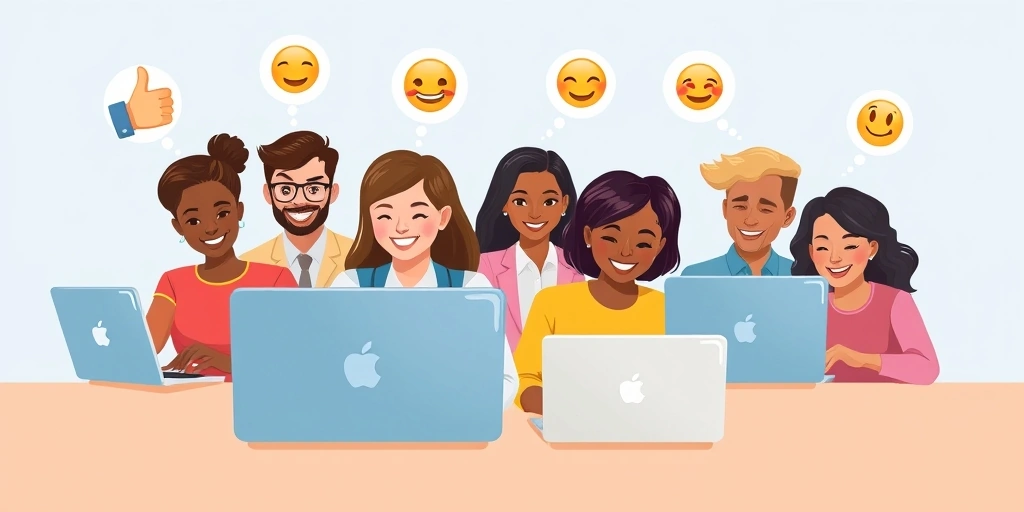
How often do you send a quick "Got it" or "Received" to acknowledge a message? While efficient, it can feel a bit abrupt. Adding a simple 👍 (thumbs up) or ✅ (check mark) makes it feel far more personable and reassuring. It signals not just receipt, but also understanding and agreement, fostering a sense of smooth collaboration. Similarly, a 🙏 (folded hands) or 😊 (smiling face with smiling eyes) can elevate a "Thanks" into a truly heartfelt expression of gratitude, making colleagues feel genuinely appreciated for their efforts.
Setting the Right Tone for Requests and Deadlines
Requests can be tricky in text. "Can you send the report by EOD?" can sound like a demand. Adding a 🙏 or even a 🙂 (slightly smiling face) softens it considerably, turning it into a polite request. For urgent matters, instead of just using ALL CAPS (which can feel aggressive), a 🚨 (police car light) or ⏳ (hourglass) alongside a clear, calm message can convey urgency without causing alarm or appearing demanding. It provides a visual shorthand that grabs attention appropriately.
Softening Feedback and Constructive Criticism
Delivering feedback is perhaps one of the most delicate forms of workplace communication. Even constructive criticism, when delivered purely in text, can easily come across as harsh or accusatory. Imagine saying, "We need to revise this section." Now imagine adding a 🤔 (thinking face) or an 💡 (light bulb) to it. These emojis indicate a collaborative, problem-solving mindset rather than a definitive judgment. They invite discussion and signal that your intent is to improve, not to criticize personally.
Building Rapport and Team Cohesion
While professionalism is paramount, a purely sterile communication environment can hinder team bonding. Emojis, used judiciously, can help inject a touch of humanity into daily interactions, fostering a friendlier and more connected atmosphere. A 👋 (waving hand) for a quick "hello" or "goodbye," or a 🎉 (party popper) to celebrate a team success, can subtly build rapport and strengthen relationships without crossing into unprofessional territory. They acknowledge the human element behind the screen.
It’s about understanding that clarity in every chat is essential, and emojis are a powerful tool for achieving it. They allow us to communicate not just information, but also the crucial emotional context that makes human interaction meaningful.
The Art of Professional Emoji Use
The key isn't to flood every message with emojis, but to use them thoughtfully and strategically. Consider your audience, the context, and your company culture. A general rule of thumb is to use emojis to clarify tone or express a universally positive sentiment, rather than to replace words or obscure meaning. If an emoji could be misinterpreted, it's often best to stick to words alone.
For example, in formal external communications, restraint is usually best. However, within an internal team chat, where relationships are more established, a broader range of appropriate emojis can be used. It's a skill that develops with practice and awareness, much like mastering the tone of your verbal communication. Exploring broader topics in this domain can be found under our emoji & work / professional category.
Conclusion
Emojis are no longer just cute digital embellishments; they are evolving into essential tools for effective communication in the modern workplace. By providing much-needed emotional and tonal cues, they help us avoid misunderstandings, build stronger professional relationships, and foster a more positive and productive working environment. Embracing emojis wisely means embracing clearer, more human-centric digital communication. So go ahead, add that subtle 🙂 or 👍 – your colleagues (and your stress levels) will thank you.
📒 Related Blogs
More...Emojis in Pop Culture: How They Influence Movies, Fashion & Beyond
How Emojis Became Our Secret Weapon for Calming Awkward Chats
The Future of Emojis: Decoding Digital Expression's Next Frontier
The Emoji Chameleon: How Digital Trends Secretly Reshape What Your Favorite Emojis Really Mean
When Emojis Backfire: How a Simple Smiley Can Confuse Your Professional Message