When Emojis Backfire: How a Simple Smiley Can Confuse Your Professional Message

Jan 19,2026
We've all been there. You're typing a quick message to a colleague or client, and you want to soften a request or show you're on the same team. Your finger hovers, then taps. A smiling face. A thumbs up. A simple wink. It feels friendly, helpful, human.
But what if the person on the other end reads it completely differently? What if your attempt to be approachable comes across as passive-aggressive, dismissive, or even unprofessional?
This is the subtle trap of emojis in professional spaces. They are powerful tools for conveying tone, but their power lies in their ambiguity. In the absence of vocal inflection and body language, a single tiny graphic carries a heavy interpretive load.
The Gap Between Sender and Receiver
The core of the problem isn't the emoji itself, but the gap in context and perception. Your internal state when you send an emoji is one thing. The receiver's mood, their relationship with you, and the surrounding message create an entirely different lens.
Consider the classic smiley face 🙂. You might use it to say "I'm saying this in a friendly way" or "no hard feelings." But in a tense conversation about a missed deadline, that same smiley can be interpreted as sarcastic, insincere, or like you're not taking the matter seriously. The intent to de-escalate accidentally escalates.
Or take the thumbs-up 👍. It's the universal digital "got it" or "sounds good." Yet, for some, it reads as abrupt, cold, or a conversation-ender. It can blur the intent of a thoughtful message, making it seem like you've brushed it off.
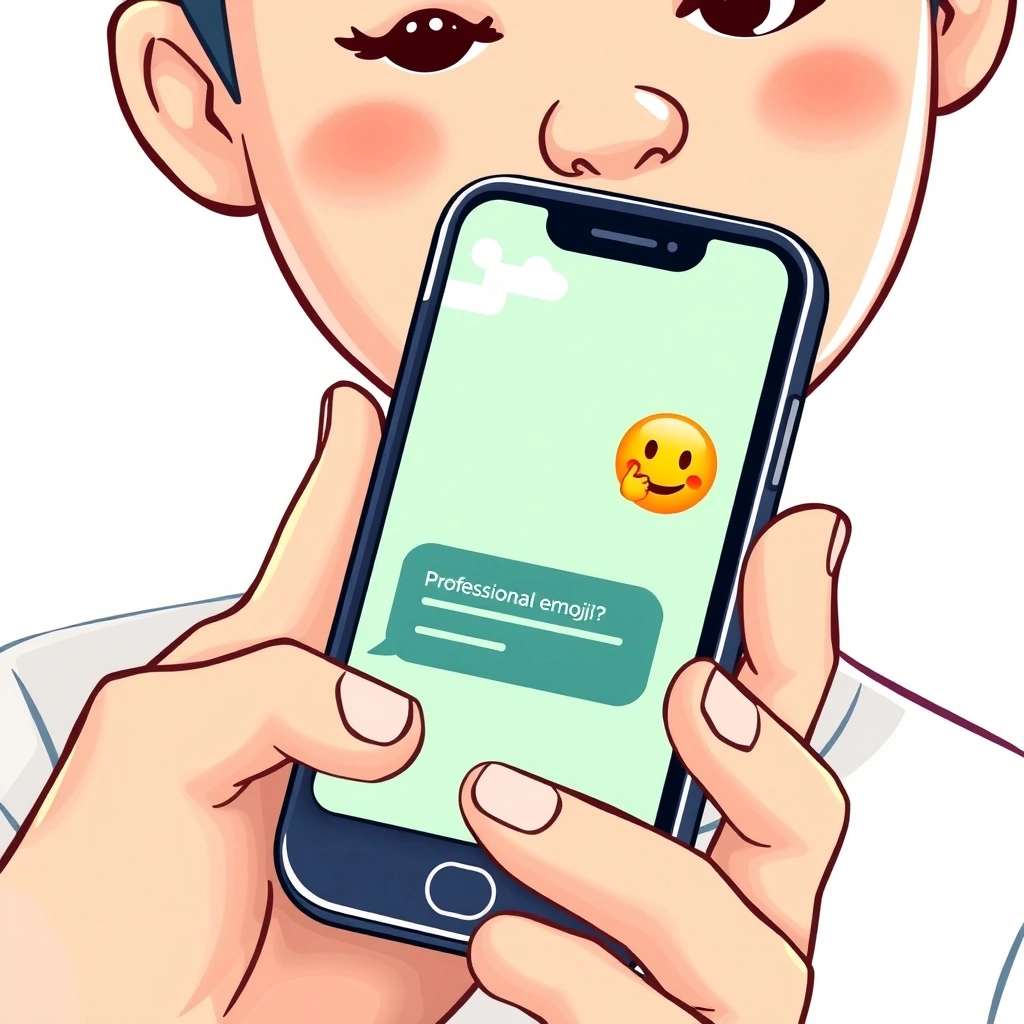
These misinterpretations aren't about anyone being wrong. They're about the inherent fuzziness of visual language. As discussed in our look at how tone gets lost in translation, the same symbol can land in wildly different emotional territories depending on the reader.
When Clarity Gets Clouded
The blurring of intent often happens in a few key scenarios:
The Feedback Sandwich: You're giving constructive criticism and put a smiley at the end to seem supportive. The risk? The critical part feels minimized or insincere, and the supportive emoji undermines the seriousness of your feedback.
The Ambiguous Request: "Can you get that report to me by EOD? :)" Is this a friendly reminder or a pointed demand? The smiley blurs the line, potentially causing stress as the receiver tries to decode your true urgency.
The Generational or Cultural Divide: Emoji dictionaries are not universal. A wink 😉 might mean "just kidding" to you but could be read as flirtatious or sly by someone else. What's playful in one culture or age group can be confusing or inappropriate in another.
This isn't to say we should banish emojis from work chats. That would rob our digital communication of much-needed warmth. The goal is mindful use. It's about recognizing that these tiny icons are not neutral. They are active participants in shaping your message's meaning.
Navigating the Professional Emoji Landscape
So, how do we use emojis without blurring our professional intent?
Prioritize the Words: Let your text carry the primary meaning. If your message is clear and well-phrased, an emoji becomes a gentle enhancer, not the main signal. If you need to rely on an emoji to convey your tone, consider rewriting the sentence first.
Know Your Audience: Tailor your use to the person and the platform's culture. A quick 👍 might be perfectly fine with a close teammate on Slack but feel too casual for an external client on email.
When in Doubt, Leave it Out: In high-stakes, sensitive, or formal communications, clarity is king. Opting for precise language over a potentially ambiguous symbol is always the safer bet. It's better to be seen as slightly formal than to be profoundly misunderstood.
Understanding emoji etiquette is an ongoing part of digital literacy. It's about developing a shared sense, within your teams and networks, of what these symbols mean in your specific context.
Emojis are a brilliant invention that made our flat text feel round and human again. But with that power comes responsibility. The next time you go to add that grinning face or prayer hands to a work message, take a half-second pause. Ask yourself: "Is this clarifying my intent, or could it cloud it?" Often, that moment of reflection is all it takes to ensure your message—and your professionalism—comes through crystal clear.
For more on navigating the tricky side of our digital shorthand, explore our other posts in the Emoji Mistakes & Misuse category.
📒 Related Blogs
More...The Silent Storytellers: How Emoji Sequences Shape Our Digital Mood
How Viral Moments Shape Our Emoji Language
Lost in Translation? The Surprising Ways Emojis Stir Up Mixed Reactions Online
Emoji Evolution: The Secret Life of New Emojis and Their Approval Process
Bridging the Unspoken: How Emojis Resolve Emotional Uncertainty in Group Chats