The Quiet Confidence of Emojis: When Words Feel Too Risky

Jan 21,2026
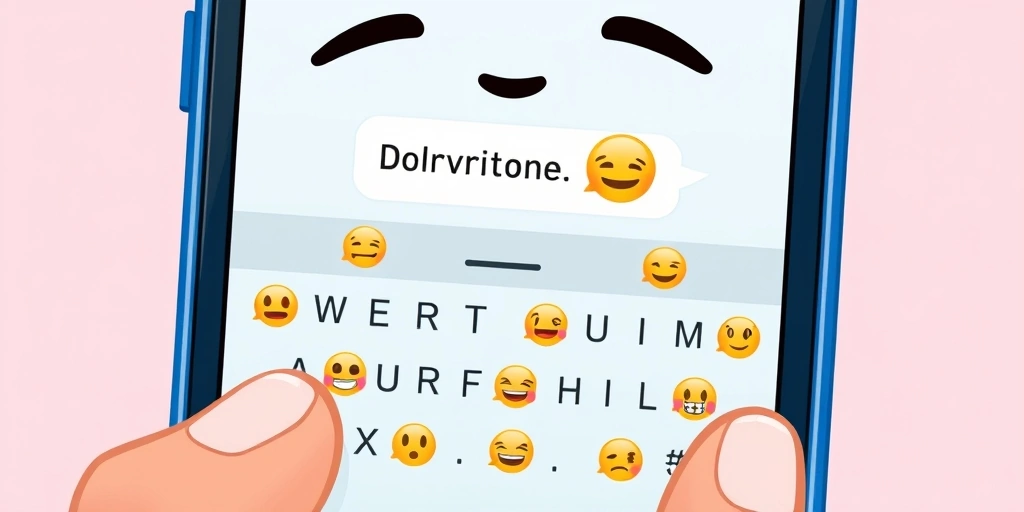
Have you ever stared at a text box, your fingers hovering over the keys, knowing exactly what you want to say but completely unable to type it? The words feel too heavy, too exposed, too… risky. Maybe it's admitting you're hurt, or showing excitement for something you're afraid might not happen, or simply saying "I miss you." In those moments, our thumbs often drift away from the letters and straight to the emoji keyboard.
It's not a cop-out. It's confidence in disguise.
Think about it. Sending a heart emoji can feel infinitely safer than typing "I love you" in a new relationship. A single 😬 can convey a whole paragraph of "I'm so nervous about this meeting tomorrow and I hope I don't mess it up." We're not replacing words out of laziness; we're using a visual shorthand to navigate emotional minefields. It’s a way to test the waters, to be emotionally honest without feeling emotionally naked.
The Safety of the Symbol
Emojis give us a layer of plausible deniability that raw text simply doesn't. If the sentiment isn't reciprocated, or if the tone is misread, we can always fall back on, "Oh, it was just an emoji!" It's a built-in escape hatch for our vulnerability. This allows us to express feelings we might otherwise bottle up entirely. That winking face 😉 takes the edge off a slightly cheeky comment. The pleading face 🥺 softens a request into something more palatable.
This is a fascinating part of emoji and emotion. They don't just add flair; they provide emotional scaffolding. They hold our hand while we say the difficult thing.
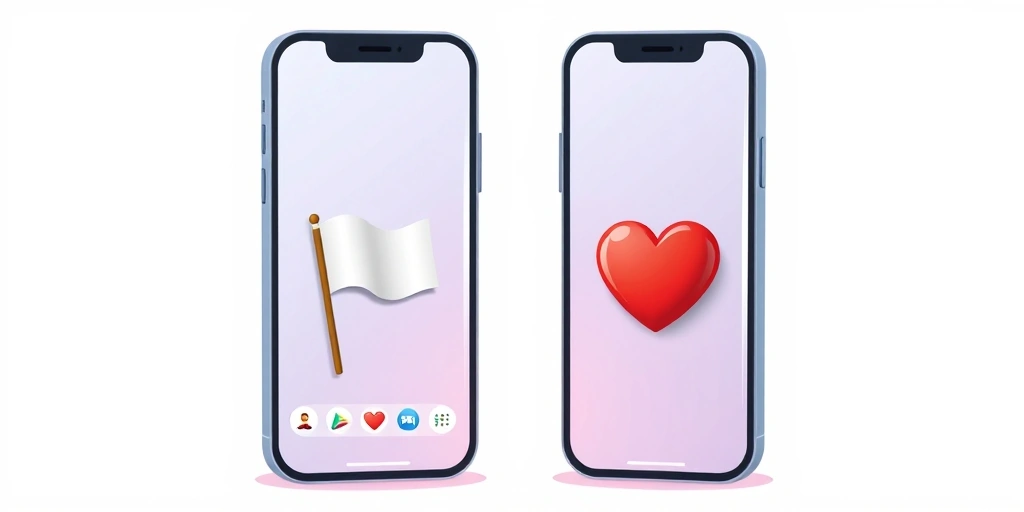
I remember texting a friend after a big argument. I wanted to apologize, but the words "I'm sorry" felt stiff and insufficient. Instead, I sent a message about something mundane, followed by a white flag emoji 🏳️. It was my way of signaling surrender, of offering peace, without having to dissect the fight all over again. She replied with a heart. No lengthy discussion was needed. The emojis did the heavy lifting of reconciliation.
Confidence is Communicating, Anyway
True confidence isn't about never feeling fear; it's about feeling the fear and doing the thing anyway. When we're scared to be emotionally honest, choosing an emoji is doing the thing anyway. It's a small, brave step. It’s choosing connection over self-protection, even if we need a little pictographic armor to do it.
This is especially true in situations of emotional uncertainty. Waiting for news, checking in after a first date, sharing a personal win—these are all high-stakes emotional moments. A string of nervous-face or clock emojis 📅😬⏳ communicates our state of mind perfectly, often creating a sense of shared anticipation with the person on the other end.
The Unspoken Agreement
What makes this work is a mutual understanding. We all know the code. We know that a sobbing emoji 😭 can mean anything from "I'm devastated" to "This comedy show is hilarious," and we use context to decipher it. This shared language creates a safe space. We grant each other the grace to express big feelings in small, symbolic ways.
It’s like the digital equivalent of a knowing glance across a room or a gentle nudge with an elbow. It says, "I'm feeling this, and I trust you'll get it." That act of trust is, itself, a confident move.
So, the next time you find yourself reaching for the smiling face with tear of joy 😂 instead of writing "that's hilarious," or sending the fire emoji 🔥 instead of "you're amazing at this," don't dismiss it as trivial. You're participating in a nuanced, modern form of emotional intelligence. You're choosing to connect, to be seen, and to be understood—on your own terms.
You're using a tiny, colorful icon to stand in where words tremble. And that's not a weakness. It's a quiet, pixelated kind of courage.
📒 Related Blogs
More...The Instant Feeling: How Emojis Spark Our Quickest Emotional Reactions
Beyond Words: How Emojis Masterfully Shape Tone in Public Online Conversations
Emoji Etiquette: Mastering the Unspoken Rules of Digital Communication
Emojis & Identity: How Digital Expressions Shape Who We Are Online
Spark Joy! How Emojis Turn Relaxed Chats into Playful Adventures