The Unwritten Rules: How Emojis Shape New Meanings in Online Communities

Dec 31,2025
The digital landscape is a vibrant, ever-changing tapestry, and nowhere is this more evident than in the way emojis evolve to fit new cultural contexts within online communities. What starts as a simple, universal symbol can quickly take on layers of meaning, often completely transforming its original intent. It’s like a secret handshake that only those in the know understand, and it’s truly fascinating to watch unfold.
The Ever-Shifting Meanings of Digital Expressions
Emojis aren't just static images; they're living, breathing components of our online conversations. They reflect our collective mood, humor, and even our anxieties. Think about the classic 'tears of joy' emoji 😂. For years, it was the undisputed king of conveying extreme amusement. But then, almost overnight, it started to feel... well, a bit boomer. Younger generations began to use it ironically, or even replaced it entirely with emojis like 😭 (loudly crying face) for intense laughter or to express overwhelming emotions. This isn't a top-down dictate; it's an organic shift born from the unique communication styles within different online communities.
From Literal to Ironic: The Art of Subversion
One of the most exciting aspects of emoji evolution is their capacity for irony and subversion. Take the skull emoji 💀. Originally, it’s pretty straightforward – death, danger, maybe a pirate flag. But in online spaces, especially on platforms like Twitter or TikTok, it often means "I'm dead" – not literally, of course, but dead from laughter, embarrassment, or simply being overwhelmed by a post. It's a testament to how creative and playful we are with our digital language. The context of a meme, a viral video, or a trending tweet completely redefines its utility.
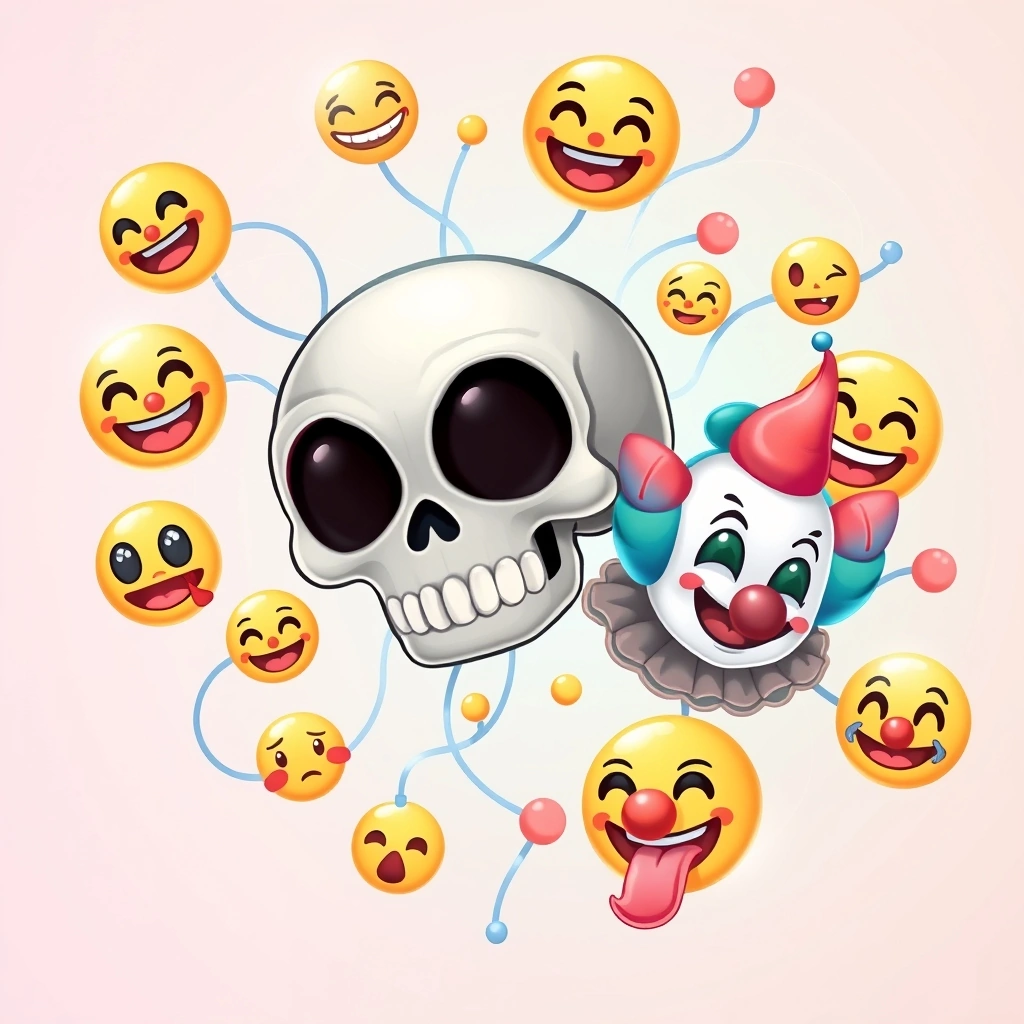
Remember the "clown" emoji 🤡? Once just a circus performer, it transformed into a powerful symbol for calling someone foolish, hypocritical, or making a spectacle of themselves online. It's a subtle but cutting insult, understood instantly by anyone tuned into the current internet lexicon. This kind of rapid evolution is a hallmark of how online communities adapt and adopt new ways to express complex ideas with simple symbols. It highlights how emoji culture and trends are always in motion, reflecting societal shifts.
When Emojis Become Inside Jokes
Every online community, from niche gaming forums to broad social media groups, develops its own internal shorthand. Emojis play a huge role in this. A seemingly innocent emoji can become a deeply specific in-joke. For instance, the "sparkles" emoji ✨ might be used sincerely to add flair or indicate something magical. But within certain online spaces, it could signify sarcasm, a "fixed" version of someone's bad take, or even be used ironically to highlight something decidedly un-sparkly. It’s all about the shared understanding within the group.
The Peach and Eggplant Phenomena: A Classic Example
Perhaps one of the most famous examples of emojis breaking free from their intended meaning is the peach 🍑 and eggplant 🍆. Designed to represent fruit and vegetables, these emojis quickly became synonymous with buttocks and male genitalia, respectively. This wasn't a corporate decision; it was a grassroots movement by users finding clever, often playful, ways to communicate more risqué topics without explicitly typing them out. It shows how the secret language of generations is constantly being redefined by emojis.
[[emojilar_img2]]
This kind of adaptation is a testament to the dynamic nature of online communication and how communities collectively agree on new definitions.The speed at which these new meanings propagate is astounding. A new meme or a particular usage can go viral globally in a matter of hours, and suddenly, an emoji’s common usage has expanded or completely shifted. This phenomenon underscores the power of collective cultural creation in digital spaces.
Emojis as Cultural Barometers
Beyond humor and in-jokes, emojis also serve as cultural barometers, reflecting broader societal feelings and movements. During periods of collective stress or joy, certain emojis surge in popularity, taking on meanings far beyond their initial design. The 'pleading face' emoji 🥺, for instance, is often used to convey cuteness or a "puppy dog eyes" plea, but it also became a subtle way to express vulnerability or ask for a favor with a softer touch online. Similarly, the 'eyes' emoji 👀 can simply mean "looking," but it has also evolved into a way to express curiosity, suspicion, or "I see what you did there," acting as a digital raised eyebrow.It’s truly incredible to witness how online communities shape our favorite emojis. They don't just passively adopt what's given to them; they actively transform and inject new life into these symbols, creating a rich, evolving lexicon. Each new context, each new inside joke, adds another layer to the story of these tiny digital expressions. It makes you wonder what meanings our favorite emojis will take on next, and how quickly we'll all be fluent in their new, unspoken language.
📒 Related Blogs
More...The Unwritten Rules: How Emojis Shape New Meanings in Online Communities
The Speed of a Smile: How Emojis Shape Intent in Fast-Paced Chats
When Emojis Take the Pressure Off: The Secret to Truly Relaxed Messaging
The Unspoken Rules: How Emojis Shape Our Social Expectations
The Quiet Confidence of Emojis: When Words Feel Too Risky
Unlocking Tone: How Emojis Reshape Professional Message Interpretation