The Speed of a Smile: How Emojis Shape Intent in Fast-Paced Chats

Feb 02,2026
The Need for Speed (and Clarity)
Think about the last frantic group chat you were in. Maybe it was planning a last-minute outing, coordinating a work project, or just catching up with friends. Messages pile up, notifications buzz, and you're trying to keep up while cooking dinner. In this high-speed environment, words alone can fall short. Without the vocal tone, facial expressions, and body language of face-to-face talk, our intent is incredibly fragile. This is where the humble emoji steps in, not as a frivolous add-on, but as a critical piece of social infrastructure.
An emoji acts like a packet of social data attached to your text. In a slow, thoughtful email, you might carefully craft sentences to convey nuance. But in a fast-moving thread? You don't have time for three paragraphs of context. You need a shorthand, a signal that travels faster than the words themselves. A simple thumbs-up or a grinning face does in one character what might otherwise take a full sentence to explain.
From Neutral to Loaded: The Power of a Single Symbol
Consider the difference between a plain text "Okay" and an "Okay 👌". The first can feel cold, dismissive, or even sarcastic depending on the preceding messages. The second, with the OK hand emoji, typically reads as genuine agreement or acknowledgment. It adds a layer of cooperative intent. Similarly, "Thanks" can feel obligatory, while "Thanks! 😊" feels warmer and more appreciative. The emoji doesn't change the dictionary meaning of the word; it changes the social meaning.
This signaling becomes even more crucial when the text itself is ambiguous. A statement like "That's an interesting choice" is a classic example. Is it genuine curiosity or veiled criticism? Slot in a 🤔 (thinking face) and it leans analytical. Use a 😂 (face with tears of joy) and it becomes a lighthearted joke. The emoji acts as a guide, telling the reader how to interpret the words within the shared social space of the thread. For more on how these signals work in different contexts, explore our thoughts on the hidden power of emojis in private chats.
Mitigating Misreads in the Blink of an Eye
Fast threads are breeding grounds for misunderstanding. Someone skims a message, reacts based on their current mood or the last two texts they saw, and suddenly a minor comment sparks a major conflict. Emojis are one of our best tools for pre-empting these misreads. They function as a kind of pre-emptive social repair.
Adding a winking face 😉 to a teasing comment signals playful intent, hoping to prevent the recipient from taking it as a genuine insult. A red heart ❤️ after a supportive message amplifies the sentiment of care. Even the humble period/full stop has been studied for its potential abruptness in messaging; an emoji can soften that edge, making a sentence feel complete but not closed off. It's about managing the recipient's emotional response before it even happens.
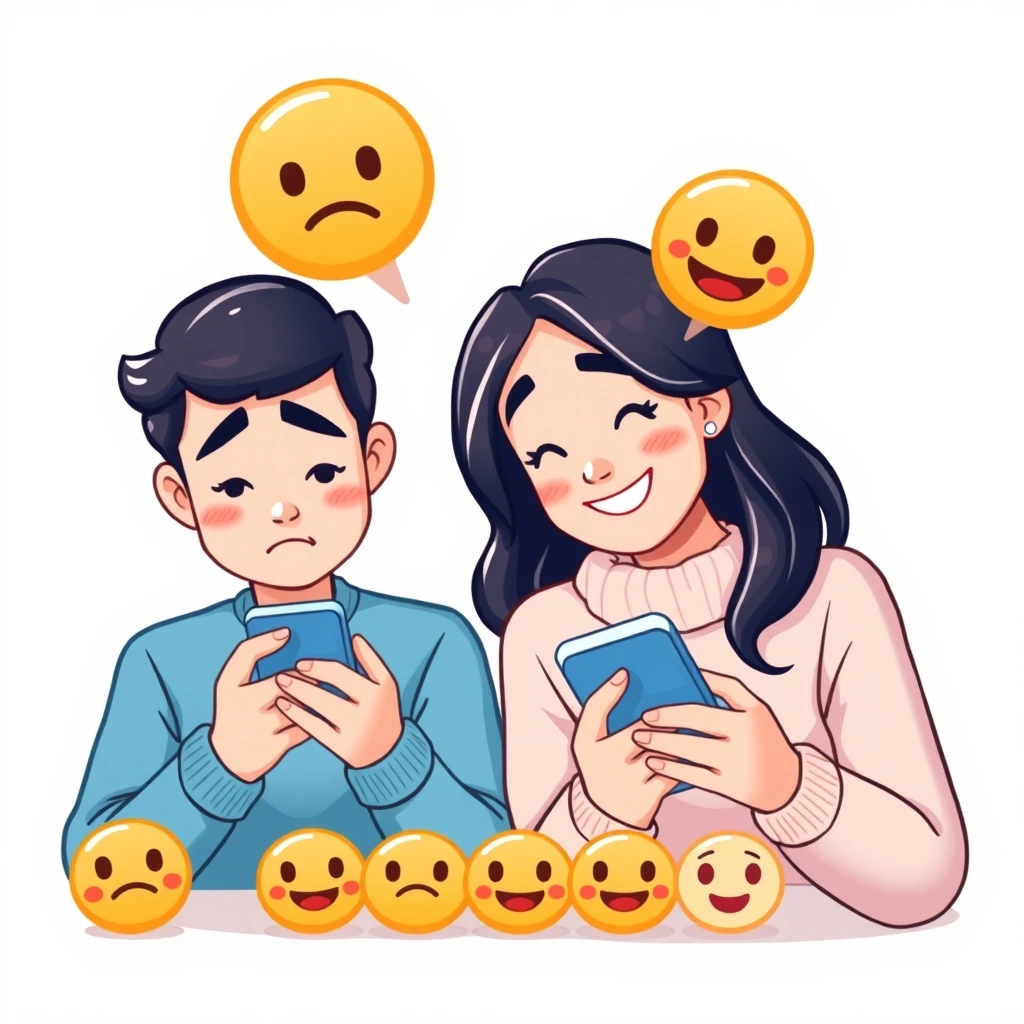
The Risk of Over-Signaling
Of course, this system isn't foolproof. The overuse of certain emojis can dilute their meaning or create new, unintended signals. Replying to every message with a laughing-crying face 😂 can start to feel dismissive or like you're not truly engaging with the content. In some groups, the thumbs-up 👍 has evolved from "acknowledged" to a slightly passive-aggressive "message received, moving on." The context of the group—its shared history, inside jokes, and norms—dictates the emoji lexicon. What signals warmth in one family chat might signal sarcasm in a work Slack channel.
This is why understanding emoji signaling is a form of digital literacy. It's less about memorizing a universal dictionary and more about reading the room—even when the room is a tiny screen. You learn that your boss uses the clapping hands 👏 emoji to show genuine praise, while your friend uses it ironically. This nuanced understanding is key in professional settings, a topic we delve into deeper in our article on how emojis shape professional messages.
Building Rhythm and Cohesion
Beyond clarifying single messages, emojis help build the rhythm of a fast-moving conversation. They act as social glue. A string of reactions—a series of heart-eyes 😍, fire 🔥, and mind-blown 🤯 emojis—to someone's news creates a wave of collective support or excitement that would take far too long to type out. This shared, visual language keeps the thread's energy positive and cohesive, encouraging further participation.
In essence, in the blur of a fast thread, emojis are our tools for social precision. They are the quick nod, the raised eyebrow, the warm smile, and the playful nudge translated for the digital age. They help us navigate the delicate task of being understood at the speed of our conversations, ensuring our intent lands just as we mean it to. For more insights into the fascinating world of emojis and how we use them to connect, check out our broader collection on emoji and communication.
📒 Related Blogs
More...When Words Are Too Much: How Emojis Carry Our Emotional Weight
The Psychology of Emojis: Decoding What Your Favorite Icons Reveal About You
More Than Just Fun: How Emojis Unravel the True Meaning in Busy Chats
Decoding Emojis: Surprising Hidden Meanings You Never Knew
Mastering Emoji Combinations: Craft Your Creative Messages
The Future of Emojis: Decoding Digital Expression's Next Frontier