When Words Are Too Much: How Emojis Carry Our Emotional Weight

Jan 21,2026
You know the feeling. Your phone buzzes with a message that makes your stomach drop. It’s news you didn’t want to hear, or a question you don’t know how to answer. Your fingers hover over the keyboard, but the right words just won’t come. What do you say? How do you even begin?
So often, in that moment of pure hesitation, we don’t type a paragraph. We don’t craft the perfect sentence. We reach for an emoji.
It’s not a cop-out. It’s not lazy. It’s something far more profound. In that split second, the emoji becomes a tiny, digital sponge, soaking up all the emotional stress swirling inside us. It absorbs the anxiety, the sadness, the overwhelm, and presents it back as a simple, recognizable icon. It does the emotional labor so we don’t have to—at least, not right then.
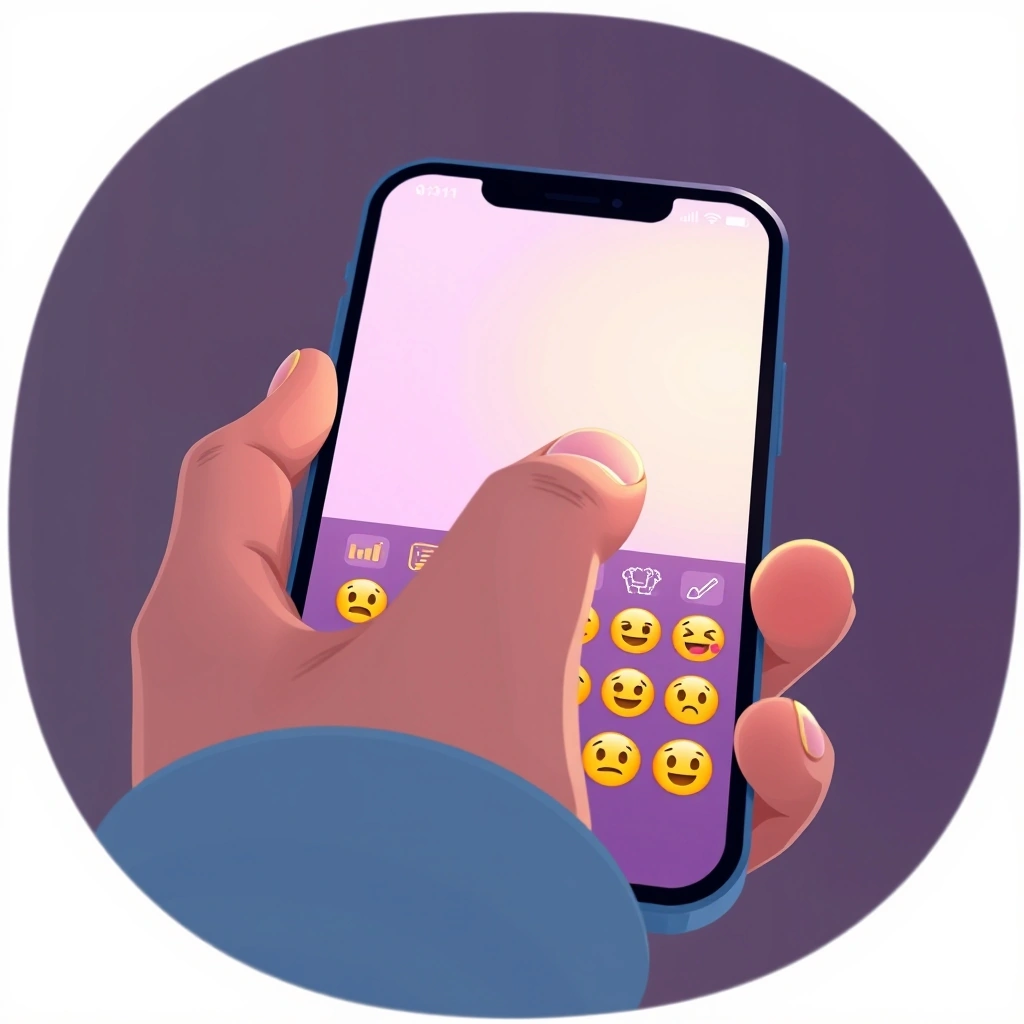
Think about the last time you sent a heart. Not the flirty, red one, but the simple blue one, or the pulsing purple one. Were you feeling pure, uncomplicated love? Or were you sending support when a friend shared bad news, a gesture that said, “I’m here, and my heart aches for you,” without having to articulate the ache itself? The emoji held that complex, heavy feeling for you.
Or the face with a single tear. It’s not full-on sobbing. It’s not the wailing emoji. It’s that precise point of being moved, touched, or saddened just enough for one tear to escape. It’s the emotion contained, packaged, and delivered. We use it when saying “I’m so sorry that happened” feels too generic, but describing our own empathetic sorrow feels too self-involved. The emoji sits perfectly in that gap.
This is the quiet power of emojis in our emotional lives. They act as buffers. When the emotional charge of a moment is too high for words, they step in and carry the load we can't. They say, “This is big. This matters. And I am feeling it with you,” without requiring us to dissect the feeling in real-time.
It’s a form of emotional shorthand that everyone intuitively understands. We’ve all been on the receiving end, too. Getting a string of sad faces after sharing a disappointment can feel more validating than the phrase “That sucks.” The emojis don’t just sympathize; they mirror. They reflect back the emotional tone you’re projecting, confirming that you’ve been heard on a visceral level.
This absorption isn’t just for negative stress, either. Consider the flurry of party emojis, confetti, and fireworks for good news. That explosion of icons isn’t just celebration; it’s the release of joyful tension. It’s the digital equivalent of jumping up and down or screaming with excitement—a way to offload the burst of positive energy that’s too big for a calm “Congratulations.”
In a way, emojis have become our emotional shock absorbers. They smooth out the bumps in our digital conversations. A difficult message might be followed by a gentle face or a folded hands emoji, softening the blow. An awkward admission might be trailed by a grimacing face, acknowledging the discomfort so the other person doesn’t have to. They manage the subtext, allowing the main text to be simpler, clearer.
This is why debates about “the correct” emoji for a situation can feel so heated. We’re not just arguing about pictures; we’re arguing about which vessel is best suited to hold a specific, fragile emotion. Is a pink heart more appropriate than a red one in this context? Does the smiling face with sweat convey grateful nervousness or anxious dread? We instinctively know these tiny differences matter because we’re entrusting them with real feelings.
Of course, this system isn’t perfect. Misunderstandings happen. An emoji that absorbs your stress might be misinterpreted by the receiver. But even in the miscommunication, there’s a shared attempt to engage emotionally, to use more than just words.
So the next time you pause, your thumb scrolling through the emoji keyboard, looking for the one that *fits*, give yourself grace. You’re not avoiding conversation. You’re participating in a modern, nuanced form of it. You’re finding a container for an emotion that’s too potent, too raw, or too complicated for words alone. You’re letting a little digital icon say, “I feel this, too,” and in doing so, you’re sharing the weight. And sometimes, that shared weight is the most human connection we can offer.
To explore more about the intersection of emoji and emotion, you can find other thoughts on how these symbols shape our digital hearts.
📒 Related Blogs
More...The Psychology of Emojis: Why We Can't Live Without Digital Icons
Emoji Art & Design: Creative Ways to Use Digital Icons
Decode the Digital Silence: How Emojis Revolutionize Online Communication Clarity
The Shifting Faces of Digital Culture: How Emojis Mirror Our Online Worlds
The Hidden Language of Emoji Combos: How Tiny Pictures Build Big Emotions
How Emojis Are Revolutionizing Branding & Marketing: A Modern Guide