The Unspoken Rules: How Emojis Shape Our Social Expectations

Dec 28,2025
Ever found yourself overthinking a text message, wondering if adding a specific emoji would send the wrong signal, or if omitting one would make you seem cold? If so, you’re not alone. Emojis have seamlessly woven themselves into the fabric of our daily digital conversations, becoming far more than just decorative additions. They’re powerful, subtle tools that actively shape our social expectations and influence how we perceive and respond to others.
The Unspoken Language of Digital Vibes
Think about the sheer volume of information a simple smiley face or a crying-laughing emoji can convey. They’re like micro-expressions for our digital selves, injecting personality, humor, or even a touch of vulnerability into otherwise flat text. But beyond mere expression, emojis often carry an unspoken social contract, subtly hinting at how we expect a conversation to proceed or how we want our message to be received. They establish a 'vibe' that can be crucial for understanding the true intent behind words.
For instance, a message like "Okay" can feel curt, even confrontational. Add a "👍" and it becomes a simple affirmation. Add a "😊" and it softens, suggesting warmth or friendliness. The words haven't changed, but the emotional expectation attached to them has shifted dramatically. This isn't just about conveying emotions; it's about managing social interactions and relationships without needing a long-winded explanation.
Signaling Expectations and Emotional Cues
One of the most fascinating aspects of emoji use is how they signal expectations. When someone sends a playful "What are you up to? 😉", the winking face isn't just a quirky addition; it often implies a lighthearted, perhaps flirty or teasing, response is desired. It sets a particular tone for the interaction, guiding the recipient towards a certain kind of reply. Conversely, receiving a serious message without a single emoji can signal that the topic is weighty, requiring a more formal or earnest response.
We use emojis to soften potentially harsh news, express sincere gratitude, or even to apologize more genuinely. A simple "Sorry! 🥺" carries a different weight than just "Sorry." It conveys a level of remorse and perhaps an expectation of forgiveness that pure text struggles to achieve. It’s a delicate dance where these tiny icons help us navigate the nuanced landscape of human emotion and social etiquette in a way that feels natural and intuitive.
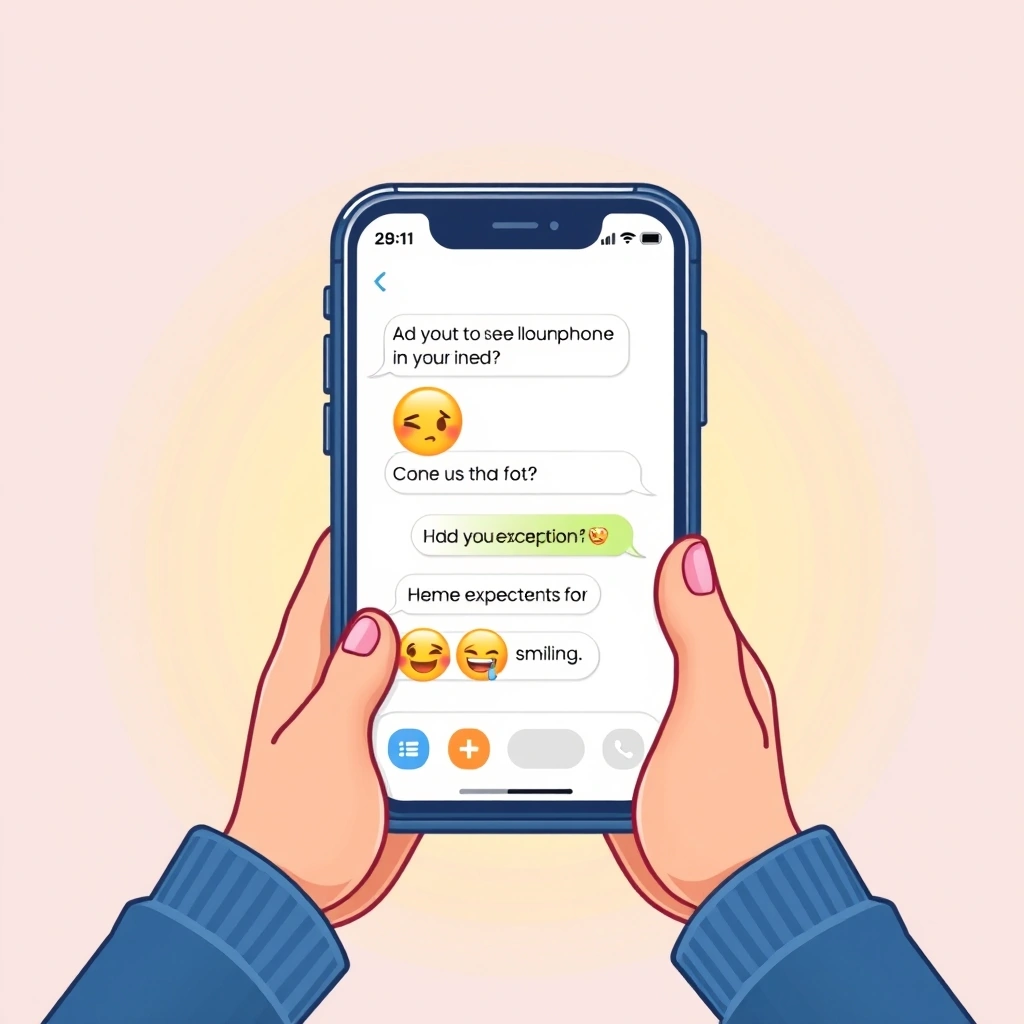
Navigating Social Graces with Tiny Pictures
Consider the act of saying thank you. "Thanks" is polite, but "Thanks! 🙏" or "Thanks so much! 😊" feels warmer, more appreciative, and perhaps even implies an expectation of continued goodwill. Emojis become essential tools for fulfilling social graces in the digital realm. They help us avoid misinterpretations that could lead to awkwardness or even conflict. Without them, our casual conversations could easily fall flat, or worse, be perceived as rude or indifferent.
This isn't just about avoiding negativity. Emojis also help us celebrate together. A flurry of party popper 🎉 and clapping hands 👏 emojis after good news isn't just expressive; it's a communal reinforcement of joy, creating a shared positive expectation and encouraging others to join in the celebration. It builds a sense of connection and shared experience.
When Silence Speaks Volumes: The Absence of Emojis
Just as the presence of emojis hints at social expectations, so too can their absence. If someone typically peppers their messages with smiling faces and exclamation marks, and then suddenly sends a series of plain, emoji-less texts, it can trigger concern. We instinctively wonder if something is wrong, if they're upset, or if the mood of the conversation has shifted. The lack of an expected emoji becomes a signal in itself, prompting us to adjust our own responses accordingly.
This subtle shift highlights how deeply ingrained emojis have become in our communicative habits. They’ve established a baseline, and any deviation from it is noticed and often interpreted as meaningful. It’s a testament to their power in setting and reflecting social norms within our personal circles. To understand more about how different contexts influence communication, you might find insights on emoji communication generally helpful.
The Evolving Etiquette of Digital Interaction
The rules governing emoji use are rarely explicitly stated; they’re learned through observation, experience, and the occasional social faux pas. What might be perfectly acceptable in a casual chat with a close friend could be inappropriate in a work context. While this article focuses on casual conversations, it's interesting to consider how this contrasts with formal settings. For instance, unlocking tone in professional messages requires a different approach to emoji usage, often leaning towards greater restraint and specific choices to maintain professionalism.
In casual settings, the etiquette is much more fluid and relationship-dependent. With some friends, a string of absurd emojis might be the norm, while with others, a single well-placed emoji is sufficient. These unspoken rules are constantly evolving, shaped by individual personalities, group dynamics, and even new emoji releases. As we gain more experience communicating digitally, we become more adept at 'reading' these signals and adjusting our own emoji use to meet or subtly influence social expectations.
Maintaining Connections and Defining Boundaries
Emojis also play a crucial role in maintaining the emotional temperature of our relationships. A consistent use of friendly emojis can signal warmth and availability, keeping a connection strong. Conversely, a deliberate reduction or change in emoji use can subtly indicate a desire for distance or a shift in the relationship dynamic, without needing a direct, potentially confrontational conversation. They allow for a softer, less explicit way of communicating complex social boundaries.
Ultimately, emojis are an integral part of how we manage our social lives in the digital age. They are the tiny, often overlooked architects of our online interactions, guiding our expectations, smoothing over potential misunderstandings, and adding richness to our casual conversations. Next time you send a text, take a moment to consider the silent, powerful role those little icons are playing in shaping the social dance between you and your recipient.
📒 Related Blogs
More...The Unspoken Language: How Emojis Gently Guide Conversations Through Sensitive Topics
The Future of Emojis: Anticipating New Icons and Digital Expressions
The Instant Feeling: How Emojis Spark Our Gut Reactions
The Polite Power of Emojis in Remote Work Messages
The Quiet Nod: How Emojis Acknowledge Messages in Our Daily Chats
The Art of the Quick Reply: How Emojis Effortlessly Elevate Our Daily Chats