The Quiet Nod: How Emojis Acknowledge Messages in Our Daily Chats

Jan 20,2026
Think about your last group chat. Someone shares a funny meme, another vents about their day, and you’re busy making dinner. You don’t have time for a full reply, but you want them to know you’re there. What do you do? You send a single emoji. That little icon isn't just decoration; it's a digital nod, a silent 'I heard you.'
This is the unspoken rhythm of modern conversation. In familiar chats—with close friends, family, or your partner—emojis have become our go-to for casual acknowledgment. They bridge the gap when words feel like too much effort, but silence feels like too little care.
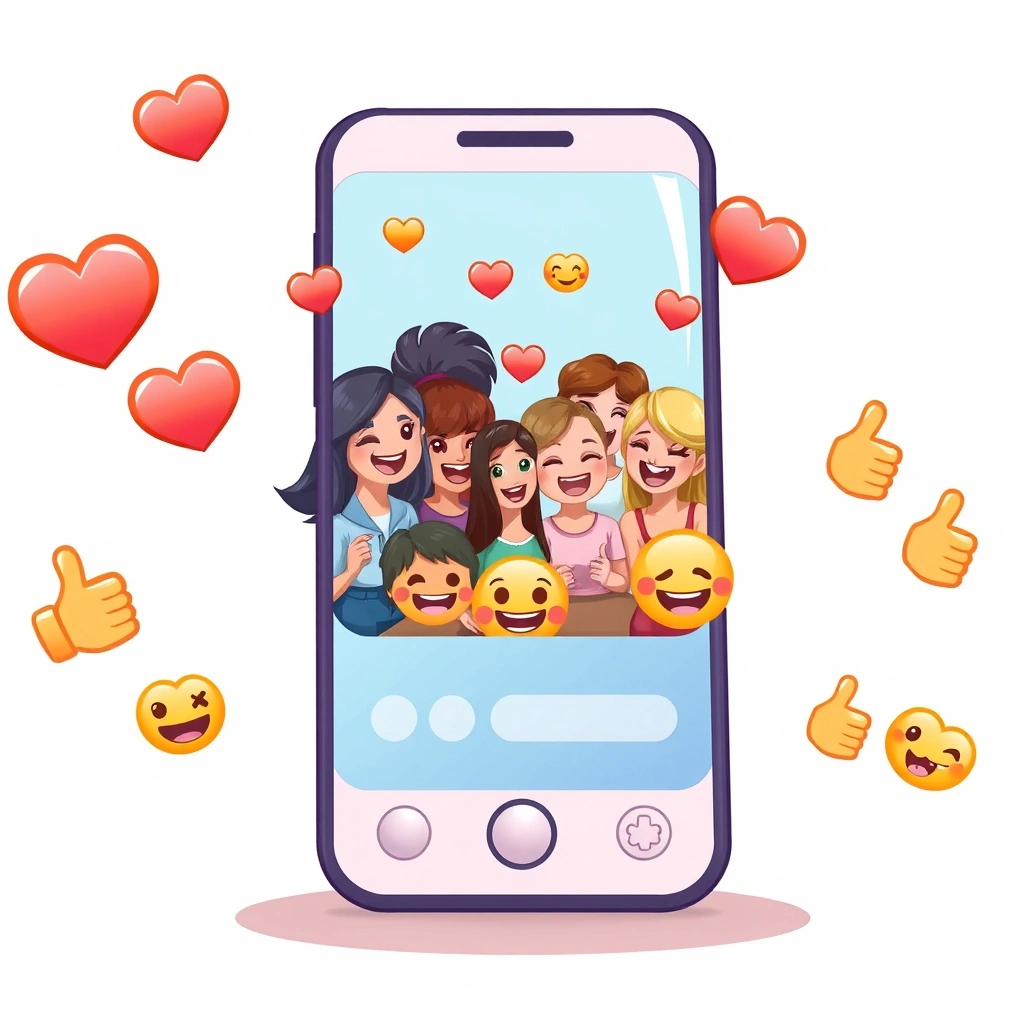
It’s the difference between a text thread that feels alive and one that feels like shouting into a void. When a friend texts a photo of their new puppy, a string of heart-eyes or crying-laughing faces from the group isn't just a reaction; it's validation. It says, 'We see your joy, and we share it.' That tiny bit of shared emotion, facilitated by an emoji, strengthens bonds in a way a 'seen' timestamp never could.
This casual acknowledgment is a form of low-effort, high-impact social glue. In a world where we're all a little distracted, sending a 👍 or a ❤️ takes a fraction of a second. Yet, it completes the conversational loop. It tells the sender their message landed. Without it, we’re left wondering: 'Did they get it? Are they mad? Did I say something wrong?' An emoji cuts through that anxiety instantly.
More Than Just a 'Seen' Receipt
Platforms show when a message is 'read,' but that's a cold, automated function. An emoji is a human response. Choosing the 😊 over the 👌, or the 🔥 over the 💯, adds a layer of personal tone. It’s the difference between a grunt of acknowledgment and a warm smile. This subtlety is the unspoken language that makes digital talk feel more like real talk.
These tiny icons also manage the flow of conversation. In a busy chat, replying to every message with paragraphs is impossible. A well-placed emoji can signal 'I agree,' 'That's hilarious,' or 'I'm thinking about it,' allowing the main thread to continue without you having to formally step in. It’s like murmuring 'mmhmm' in a group conversation—it shows you’re engaged without needing the spotlight.

The Comfort of Familiarity
This works best with people who know you. Your best friend knows your 😒 is playful sarcasm. Your sibling knows the 🎉 is genuine excitement for their news. This shared understanding, built over countless messages, is what makes emoji acknowledgment so powerful and effortless. It relies on context and history, something you can read more about in our look at how emojis lighten up everyday chats.
Of course, it’s not a perfect system. The dreaded thumbs-up can be contentious! But within your inner circle, its meaning is usually clear: 'Message received, all good.' The key is that it’s a shared shorthand. We’ve collectively decided that in the economy of digital attention, an emoji is a valid currency of care.
So next time you quickly react with a 😂 to a friend's joke or a 🤞 for their big interview, don't think of it as lazy. Think of it as keeping the connection humming. In the quiet, constant stream of our daily lives, these small signals are how we tell each other, 'I'm here. I'm listening.' And sometimes, that's exactly what a conversation needs.
For more thoughts on how emojis weave into the fabric of our daily routines, explore our other posts in the Emoji & Daily Life category.
📒 Related Blogs
More...The Hidden Power of Emojis in Public Online Conversations
The Fascinating Evolution of Emojis: From Early Kaomoji to Global Unicode
Emoji Etiquette: Mastering the Unwritten Rules of Digital Communication
Emoji Etiquette: Mastering the Unspoken Rules of Digital Communication
How Emojis Are Reshaping Global Language & Culture: A Linguistic Deep Dive
The Hidden Language: How Emojis Subtly Shape Your Digital Reactions