When Emojis Take the Pressure Off: The Secret to Truly Relaxed Messaging

Jan 20,2026
You know that feeling. You're typing out a message, and something about it just feels… stiff. A little too formal. Maybe it's a question that could be read as demanding, or a statement that lands a bit flat. Then, you add an emoji. Suddenly, the whole vibe shifts. The pressure evaporates. That's the quiet power of emojis in our everyday chats: they're masters at making messaging feel less serious.
It's not about dumbing down our conversations. Far from it. It's about adding a layer of human nuance that plain text often struggles to convey. In a relaxed, friendly exchange, the goal isn't to be perfectly articulate or impressively profound. The goal is connection, ease, and a shared understanding that we're just hanging out, digitally.
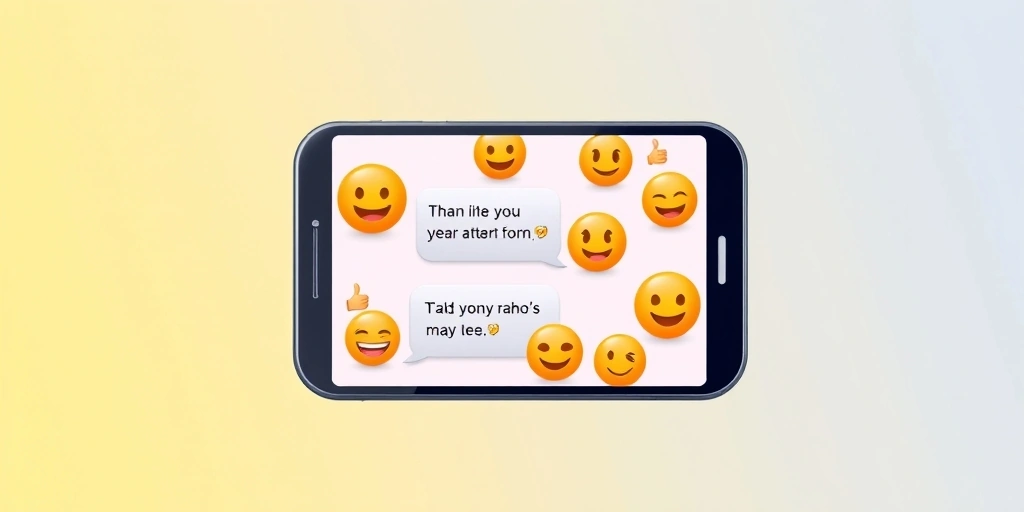
Think about the difference between "Sure" and "Sure 😊". Or "Okay" and "Okay 👍". That tiny icon does the heavy lifting of a friendly nod, a warm smile, or a casual shrug. It tells the person on the other end, "We're good. No stress here." This is especially crucial in our fast-paced, text-heavy world where tone is so easily misread. An emoji acts as a tone-of-voice insurance policy.
The Unspoken Rules of Chill Communication
Relaxed messaging has its own etiquette. It's forgiving, it's playful, and it prioritizes vibe over vocabulary. Emojis are the native language of this space. When you're planning a casual get-together, a string of pizza 🍕, movie ticket 🎟️, and crying-laughing 😂 emojis can be more effective—and way more fun—than a perfectly punctuated paragraph.
This playful approach turns mundane logistics into a mini collaborative game. It signals that the process is part of the fun, not a serious business negotiation. You can explore more about this idea of turning chats into playful adventures in our piece on how emojis transform casual chats.
When "Serious" Needs a Soft Landing
Sometimes, we need to broach slightly sensitive topics even in a relaxed friendship. Maybe you need to cancel plans, give gentle feedback, or share a minor frustration. Leading with or ending with a lighthearted emoji can frame the entire message. A "Ugh, my day was long 😮💨" feels like an invitation for sympathy and camaraderie. The same sentence without the emoji might just feel like a complaint.
The emoji here isn't making light of the situation; it's managing the emotional temperature. It says, "I'm sharing this, but I'm not in crisis mode. We can talk about this without it becoming a heavy thing." It maintains that crucial relaxed atmosphere even when the subject matter dips a toe into more serious waters.
This is a core part of emoji fun and games—using playfulness to navigate the full spectrum of human interaction, not just the happy parts.
The Joy of Imperfect Expression
Part of what makes relaxed messaging so enjoyable is its embrace of imperfection. We don't need to have the wittiest comeback or the most eloquent thought. A simple "same 😭" in response to a friend's story can be the most perfect, relatable reply possible. The emoji does the work of communicating shared experience and emotional resonance.
It creates a space where we don't have to perform. We can just be. A thumbs up, a heart, a face with tears of joy—these are the digital equivalents of a nod, a pat on the back, or a shared laugh across the room. They build rhythm and rapport without effort.
If you think about it, this is how we often communicate in person. We use facial expressions, gestures, and tone to soften our words, to show we're listening, and to keep the energy light. Emojis are our tools to replicate that invaluable non-verbal layer in a medium that otherwise lacks it. They are, in essence, the joy of play in our everyday chats.
So, the next time you're texting a friend and you feel that slight stiffness in your message, don't overthink it. Don't rewrite the whole thing. Just ask yourself: what's the feeling here? Is it gratitude? A heart. Is it silliness? A goofy face. Is it just a friendly acknowledgment? A simple smiley.
Let the emoji do its job. Let it take the seriousness down a notch and invite the other person into that comfortable, relaxed space where the best conversations—the real ones—actually happen. After all, sometimes the deepest connection comes from not taking ourselves, or our messages, too seriously.
📒 Related Blogs
More...The Unspoken Rules: How Emojis Shape What We Really Mean in Text
When Words Feel Heavy: How Emojis Quietly Ease Our Nervous Moments
Emoji Etiquette: Mastering Professional & Casual Communication
The Quiet Power of Emojis: How They Build Confidence in Private Chats
The Friendly Nudge: How Emojis Keep Remote Work Human
Emoji Evolution: The Secret Life of New Emojis and Their Approval Process