The Heartbreak of a Misread Emoji: When Digital Tone Goes Wrong

Feb 15,2026
We've all been there. You're having a serious, maybe even tense, conversation over text. You want to show you're listening, that you care, so you add a little emoji to soften your words. A simple smiley face. A thumbs up. A heart. You hit send, feeling like you've bridged the emotional gap. Then, the reply comes: "Are you laughing at me?" or "Why are you being so casual about this?" And just like that, your attempt at warmth has backfired spectacularly.
It's a uniquely modern form of heartbreak. The tiny, colorful pictograms we rely on to convey tone in our text-heavy world can become landmines during sensitive exchanges. What feels supportive to the sender can feel dismissive, sarcastic, or even cruel to the receiver. This isn't about using the wrong emoji on purpose; it's about the vast, silent gulf of context and emotion that a single tiny image has to span.
The Illusion of a Shared Language
We often treat emojis as a universal language, but they're anything but. Their meaning is incredibly fluid, shaped by culture, generation, personal history, and the specific dynamics of a relationship. The "folded hands" emoji 🙏 can mean "please" or "thank you" to one person, and a heartfelt "prayer" to another. In a sensitive conversation about a loss, that difference in interpretation is everything.
When emotions are high, our capacity for nuance shrinks. We read texts through the lens of our own anxiety, sadness, or anger. A period can seem hostile. A "K" can feel like a brush-off. So when an emoji enters the chat, it doesn't get a calm, considered analysis. It gets filtered through that heightened emotional state. A thinking face 🤔 meant to convey "I'm considering what you said" can be read as "I'm judging you." A grinning face 😊 intended as friendly can be seen as mocking.
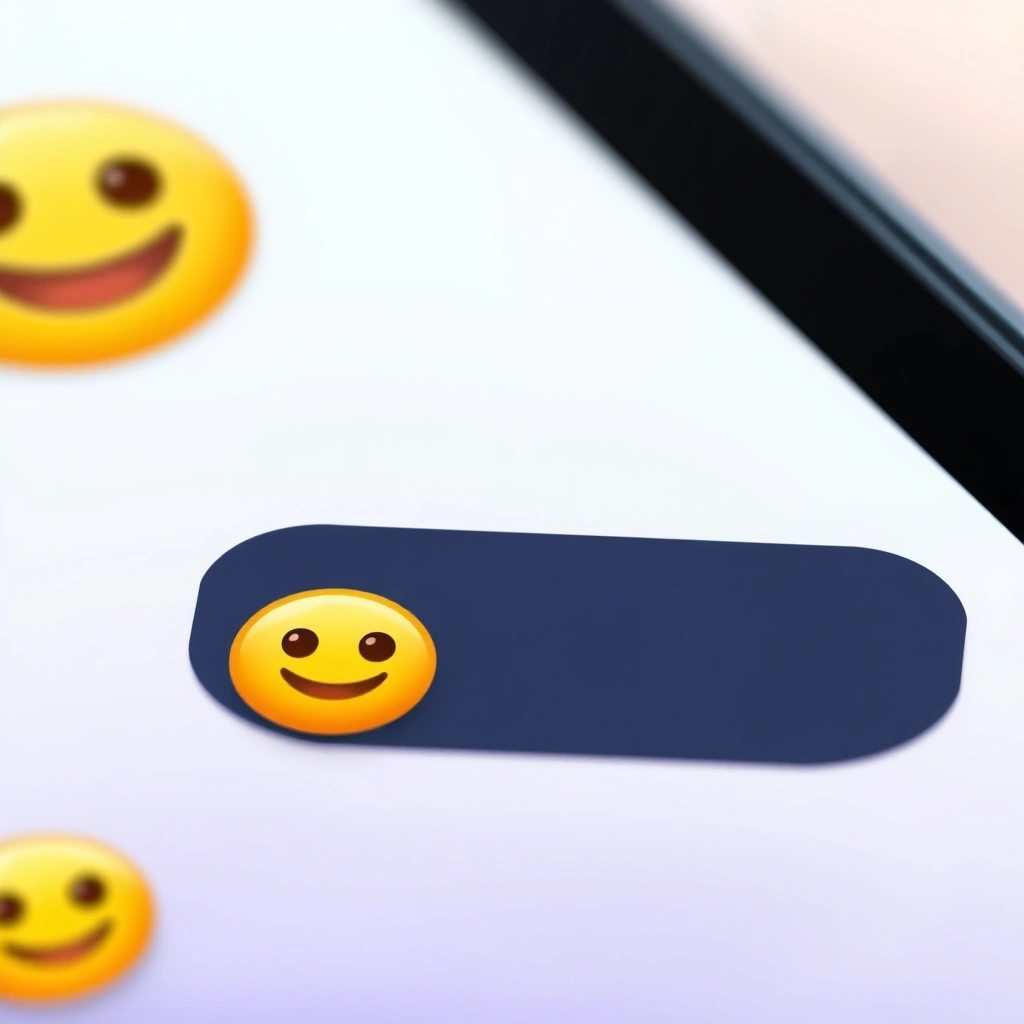
This problem is especially pronounced because we lack the other 93% of communication. No facial expression to see if the smile reaches the eyes. No vocal tone to hear if the words are gentle. No body language to gauge sincerity. The emoji is asked to carry an impossible weight, and it often buckles under the pressure. For more on how group dynamics amplify this issue, our piece on misunderstood emojis in group chats dives deeper.
When Intent and Impact Diverge
The core of the issue is the gap between intent and impact. You might send a crying-laughing emoji 😂 after sharing a vulnerable story about an embarrassing moment, intending it as a "we can laugh about it now" gesture. But to the person receiving it, it can feel like you're laughing at their pain, minimizing their experience. Your intent was connection; the impact was alienation.
Similarly, the infamous thumbs-up 👍. For many, it's a quick, positive acknowledgment. "Got it." "Sounds good." "I agree." But in the middle of a deep, emotional outpouring, that same thumbs-up can feel like the digital equivalent of a pat on the head—a conversation-ender that says, "Topic closed, moving on." It shuts down vulnerability instead of holding space for it.
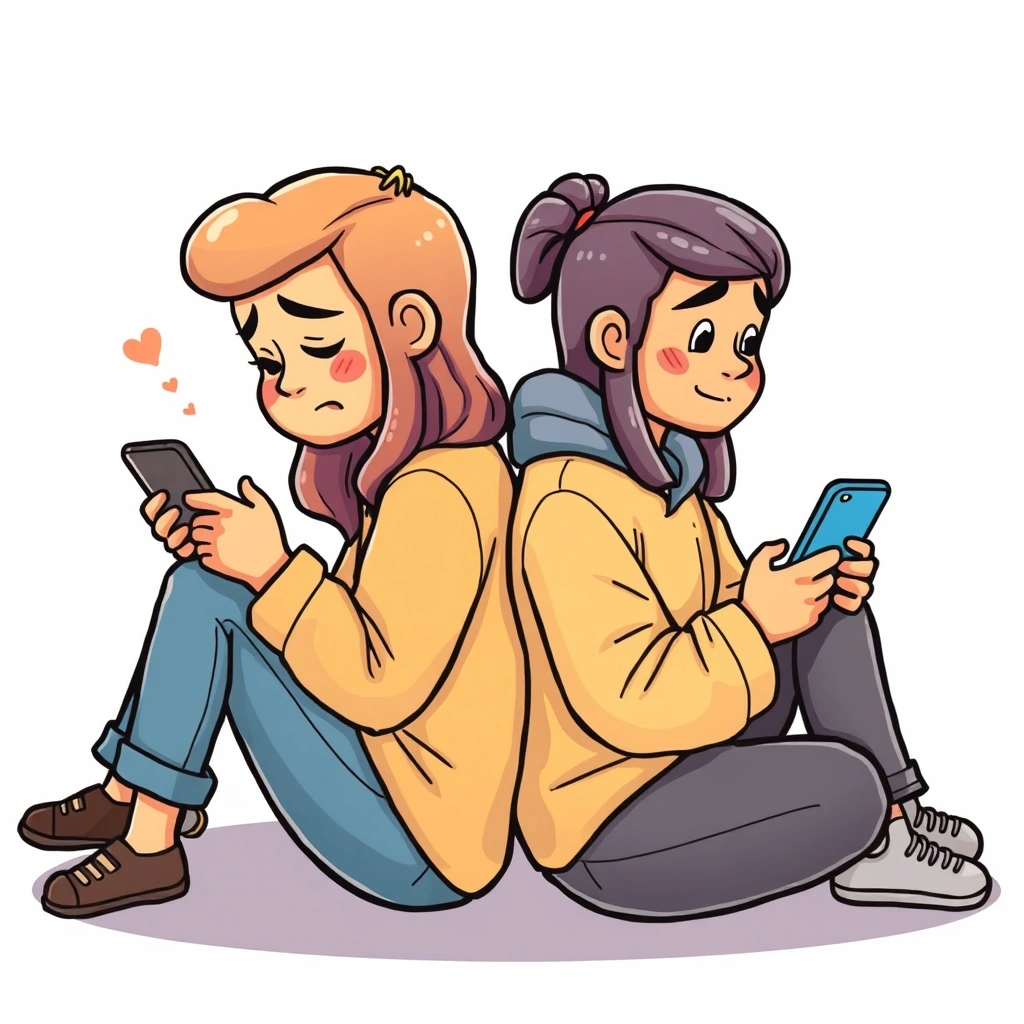
This isn't just a personal problem; it spills into professional spaces too. The line between friendly and unprofessional is razor-thin, and emojis often blur it. You can explore this tightrope walk in our article about the professional emoji paradox.
Navigating the Minefield (Without a Map)
So, what do we do? Abandon emojis altogether during serious talks? That might be one solution, but it feels like surrendering a useful tool. The better path is heightened awareness.
First, practice emoji empathy. Before you send, pause. Try to read the message from the other person's perspective, in their current emotional state. Could that winking face 😉 be misconstrued? In a conversation about trust, it almost certainly could.
Second, when in doubt, use words. A simple "That sounds really difficult, I'm here for you" carries zero risk of misinterpretation compared to a string of heart and hug emojis. Words are clunkier, but they are precise. In sensitive moments, precision is kindness.
Finally, if a misunderstanding happens—and it will—address it directly. "I just realized my emoji might have come across differently than I intended. I used the [emoji] to show I was listening warmly, not to make light of it. I'm sorry if it felt that way." This repairs the rupture and builds a shared understanding for next time.
The reality is that digital communication, for all its speed and convenience, is a poor medium for human emotion. Emojis are a brave, creative attempt to fix that. But they are a patch, not a solution. They work beautifully in casual, low-stakes banter. But in the conversations that matter most—the ones filled with fear, hope, grief, or love—they often remind us of what's missing: a real voice, a real face, and the courageous, messy complexity of being truly present with another person. The conversation about how we connect in a digital world is far from over, and you can find more perspectives in our broader collection on emoji mistakes and misuse.
Maybe the lesson isn't to stop using emojis, but to remember their limits. They are highlights, not the full text. They are sprinkles, not the cake. And when someone is sharing a piece of their heart with you, they deserve the whole, thoughtful, word-filled cake—even if it takes a few more seconds to bake.
📒 Related Blogs
More...The Quiet Comfort: How Emojis Speak Volumes When Words Fail
Unlock Your Brain: How Emojis Instantly Streamline Your Digital Thoughts!
The Emoji Takeover: How Tiny Icons Replaced Our Small Talk
The Quiet Confidence of Emojis: When Words Feel Too Risky
The Hidden Power of Emoji Pairs in Your Private Chats
The Unspoken Comfort: How Emojis Bridge Emotional Gaps in Silence