The Mind's Shortcut: How Emojis Speed Up Our Digital Understanding

Feb 19,2026
Think about the last text you sent. Chances are, it included an emoji. Maybe it was a simple thumbs-up to confirm plans, a crying-laughing face to show you found something hilarious, or a heart to express affection. We sprinkle these little icons into our messages almost without thinking. But have you ever stopped to consider why they feel so necessary? From a psychological standpoint, emojis are far more than decorative pixels. They are powerful cognitive shortcuts, helping our brains navigate the often ambiguous world of digital conversation.
In face-to-face talk, we rely on a symphony of cues: tone of voice, facial expressions, gestures, and body language. These signals provide instant context, telling us if a statement is sarcastic, sincere, joyful, or sad. Strip that away, and you're left with plain text—a format that is notoriously easy to misinterpret. Is "fine" actually fine, or is it seething with quiet frustration? This is where our brains crave efficiency. Emojis step in to fill the void, offering a quick, visual substitute for those missing nonverbal cues.
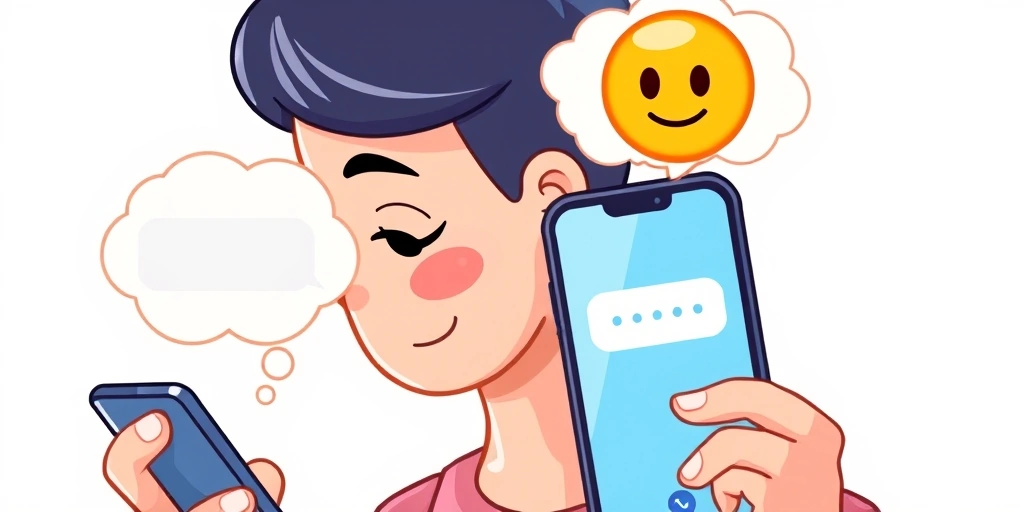
This process is a form of cognitive economy. Our brains are wired to conserve energy, constantly looking for patterns and shortcuts to understand the world faster. Reading a string of words and then interpreting an emoji requires less mental effort than parsing a potentially ambiguous sentence on its own. The emoji acts as a guiding label, instantly framing the emotional intent of the message. A wink 😉 can instantly signal playful teasing, turning a potentially confusing comment into a clear joke. It’s a mental hack that speeds up comprehension and reduces the cognitive load of decoding pure text.
This shortcutting extends to memory and emotional connection as well. Information tied to an image or a strong emotion is often easier to recall. An important message accompanied by a celebratory 🎉 or a supportive 🤗 isn't just read; it's felt. The emoji creates a tiny emotional anchor, making the interaction more memorable and impactful. It transforms a transactional exchange into a more socially rich one, mimicking the warmth of in-person interaction. For more on how emojis create these emotional bridges, check out our piece on how emojis rewire your brain's conversations.
Beyond Decoration: The Social Glue of Pixels
This isn't just about individual comprehension; it's about social cohesion. In group chats or online communities, emojis become a shared language. Using the same in-joke emoji or a particular reaction creates a sense of belonging and shared understanding. They help establish and reinforce group norms without lengthy explanation. The collective use of a 🤣 or a 🙌 builds a communal emotional experience, even when participants are miles apart.
Furthermore, emojis allow for nuanced emotional expression that words alone can struggle to capture. How do you succinctly convey bittersweet nostalgia, sympathetic cringing, or proud encouragement? A single thoughtful 🤔, facepalm 🤦♂️, or flexed bicep 💪 can do the job elegantly. They provide a granularity of feeling that enriches our digital dialogues, preventing them from becoming flat and transactional.
The Flip Side of the Shortcut
Of course, no shortcut is perfect. The very efficiency of emojis can sometimes lead to new ambiguities. Does a red heart ❤️ mean the same as a pink one 💗? Is the grimace 😬 expressing sympathy or secondhand embarrassment? Cultural and generational differences in interpretation can also create misunderstandings. What serves as a perfect cognitive shortcut for one person might be a confusing detour for another.
Yet, despite these potential pitfalls, the overarching psychological benefit is clear. Emojis reduce uncertainty. They lower the risk of miscommunication in a medium stripped of human presence. They allow us to be more emotionally expressive and socially attuned with minimal effort. In a world of rapid-fire messaging, they are the tools our brains have gladly adopted to keep conversations flowing smoothly and humanely.
So, the next time you tap that smiley face or fire emoji, remember—you're not just decorating your text. You're engaging in a sophisticated psychological dance, using a visual shorthand to connect, clarify, and care, all at the speed of thought. To dive deeper into the subtle forces at play, explore our article on the hidden power of emojis. For more insights like this, you can always browse our full collection in the emoji psychology category.
📒 Related Blogs
More...The Silent Peacemakers: How Emojis Dissolve Digital Tension and Misunderstandings
How a Simple Emoji Can Transform Your Daily Status Update
How Emojis Became Our Digital Mood Ring: Capturing the Pulse of Online Culture
The Secret Power of Emoji Order: How Sequence Changes Everything in Your Comments
The Psychology of Emojis: Decoding Your Digital Emotions
Emojis: The Secret Sauce for Friendly, Flowing Digital Conversations