The Pause Before the Emoji: Navigating Delicate Moments with a Single Tap

Mar 12,2026
You know the feeling. Your thumb hovers over the send button. The words you've typed sit there on the screen, feeling suddenly too heavy, too direct, or maybe not quite enough. There's a gap between what you mean and what you've written, and in that small, silent space, you glance at the emoji keyboard.
It happens in the quiet moments. A friend shares a piece of difficult news—not a catastrophe, but a personal disappointment. You type "I'm so sorry to hear that." It's true, but it feels flat, like a form letter of sympathy. Your finger drifts from the letters to the smileys. A heart? Too romantic. A hug? Maybe too forward. You land on the folded hands, or the slightly sad but caring face. It's not a replacement for your words; it's a softener, a visual sigh that says, "I'm here, and I feel this with you."
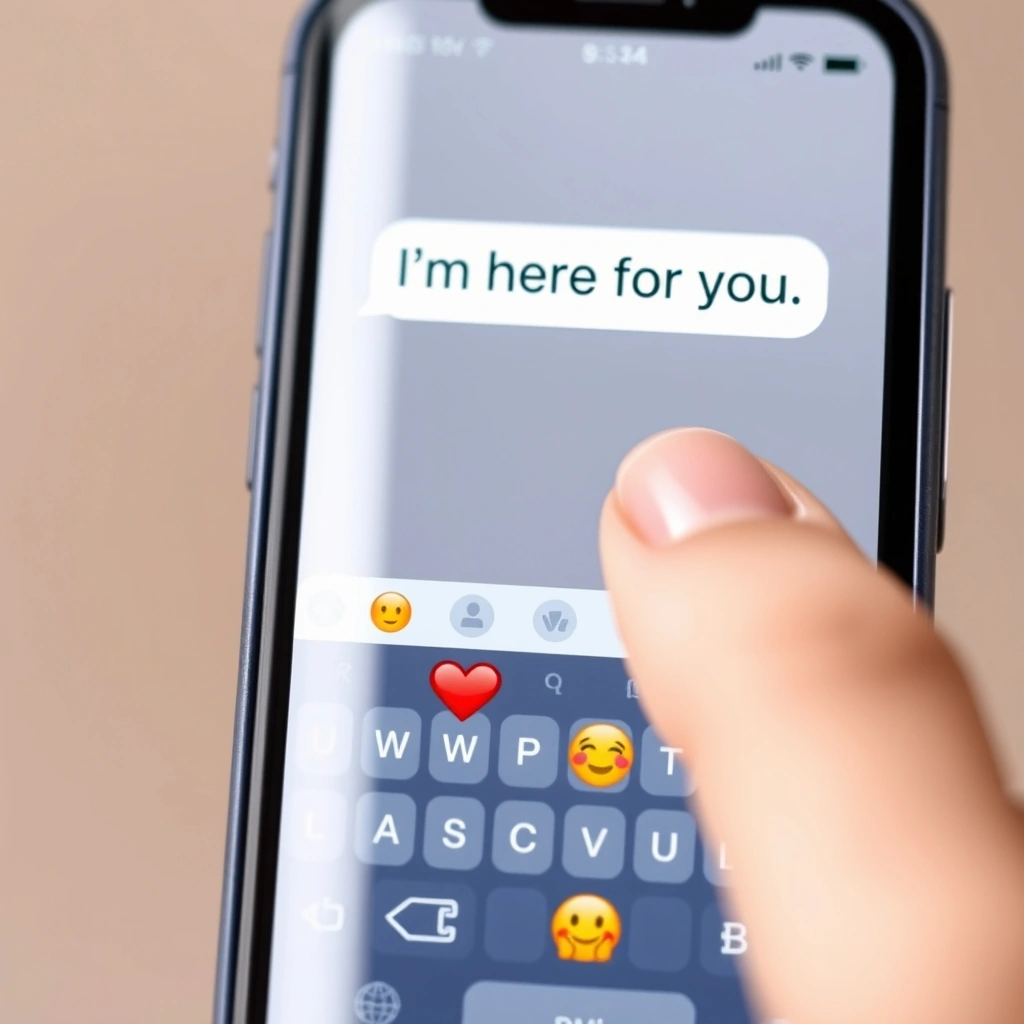
This isn't about avoiding conversation. It's about navigating the nuance that pure text so often strips away. When we're face-to-face, we have tone of voice, a gentle touch on the arm, a look in the eyes. In a message, all we have are black and white characters. An emoji, in that crucial moment of hesitation, becomes the digital equivalent of that softening glance. It adds a layer of emotional texture that words alone can struggle to convey.
Think about apologizing. "Sorry" can read as cold, or sarcastic, or dismissive depending on the context. But "Sorry 😔" or "Sorry 🙏" carries a different weight. The emoji does the emotional labor of showing your regret, making the apology feel more genuine and less like a transactional word. It pre-empts the other person's doubt. It answers the unasked question: "Do you really mean it?"
The pause before choosing an emoji is a moment of emotional calibration. You're asking yourself: What is the core feeling I need to communicate? Is it support? Solidarity? Lightheartedness to diffuse tension? The emoji becomes the punctuation for your emotional intent. A period is final. An exclamation point can be aggressive. But a carefully chosen symbol is a bridge.

This is especially true in everyday, sensitive situations. Checking in on someone who's been quiet. Responding to a vulnerable admission. Even saying "no" to an invitation can feel less harsh when accompanied by a weary or apologetic face. It acknowledges the slight sting of rejection while affirming that your reason isn't personal malice, but simple human reality—tiredness, prior commitments, or needing space.
We sometimes worry that emojis trivialize serious matters. But in practice, they often do the opposite. They allow us to approach heavy topics with a touch of grace, to show we're engaging not just with the facts of a statement, but with the feeling behind it. They stop our messages from reading like official bulletins and let them feel like human conversation.
So the next time you feel that hesitation, that micro-moment where your words feel insufficient or overly blunt, don't dismiss the impulse to add an emoji. That pause is you being a more considerate communicator. You're reading the emotional subtext of the conversation and reaching for the right tool to honor it. In the delicate economy of digital conversation, sometimes a single, silent, colorful character speaks volumes, turning a simple message into a moment of genuine connection.
📒 Related Blogs
More...The Secret Language: How Emojis Unleash Powerful Reactions in Shared Social Posts
When Emojis Backfire: The Unseen Complication of Digital Tone
The Effortless Charm of Emojis: How a Simple 😊 Can Say It All
The Silent Lifeline: How Emojis Keep You Connected When the Chat Goes Quiet
The Hidden Language of Emoji Sequences: How Tiny Icons Shape Your Chat's Vibe
The Secret Weapon for Better Online Vibes: How Emojis Shape Public Tone