The Silent Echo: How Emojis Speak When Words Are Hardest to Find

Dec 29,2025
The digital age has reshaped how we connect, converse, and convey our deepest emotions. It’s a landscape where quick taps and instantaneous messages have replaced lingering phone calls and handwritten letters. Yet, despite the speed and convenience, there are moments when the sheer weight of an emotion renders words obsolete. We’ve all felt it – that pause, that hesitation, fingers hovering over the keyboard, searching for the perfect phrase, only to come up empty. It’s in these very instances that the humble emoji quietly steps forward, offering a silent echo where words once faltered.
Consider a friend sharing news of a setback, a disappointment, or even a quiet joy that feels too fragile to articulate fully. Your first instinct might be to craft a thoughtful response, a paragraph of comforting words or effusive congratulations. But sometimes, those words feel… insufficient. They might feel forced, too long, or worse, too short. You type, you backspace, you retype, and then you just stare at the blinking cursor, feeling the awkward silence stretching between screens. It's a universal dilemma in our interconnected world: how do you truly respond when the emotions are too complex for simple text?
This isn't just about avoiding a difficult conversation; it's about acknowledging a shared human experience. It's about recognizing that sometimes, the most profound empathy isn't expressed through a carefully worded sentence, but through a simple, universally understood symbol. A "😭" can convey a depth of sorrow and shared pain that "I'm so sorry to hear that" might struggle to reach. A "🥺" can communicate a plea for understanding or a vulnerable longing that would take several sentences to awkwardly explain. It’s an unspoken language that transcends cultural barriers, becoming a shortcut to the heart of a matter.
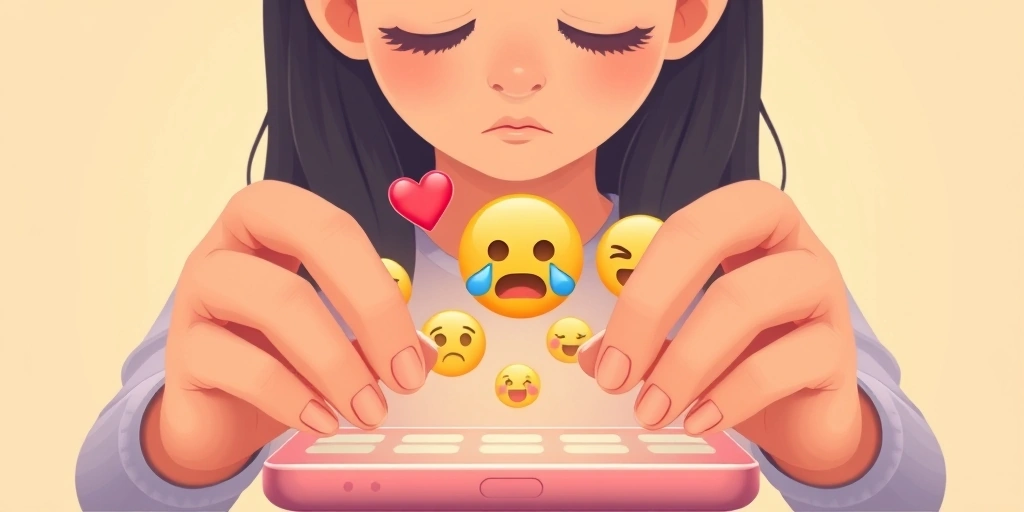
The beauty of emojis in these moments lies in their non-committal yet deeply expressive nature. They don't demand a long explanation or a reciprocal outpouring of words. They simply exist, a small, vibrant punctuation mark in the emotional narrative. Think of responding to a friend's sad news with a single red heart ❤️. It’s not just a symbol; it's a silent embrace, a nod of understanding, a presence without intrusion. It says, "I see you, I feel with you, and I’m here." All without the pressure of finding the "right" thing to say.
Navigating the Emotional Lulls
We often find ourselves in situations where a digital conversation hits a lull, not because of disinterest, but because the topic has shifted to something more sensitive. Perhaps someone has shared a personal vulnerability, or hinted at a struggle they're facing. The immediate reaction is to offer support, but the perfect articulation eludes us. We want to be sensitive, comforting, and present, but the sheer effort of translating those complex feelings into text can feel overwhelming. It’s in these moments of quiet contemplation, fingers hovering, that an emoji often provides the perfect solution. It’s a bridge over that momentary chasm of awkward silence.
These aren't just decorative additions; they are vital tools in the modern emotional toolkit. They allow us to convey nuance, sarcasm, affection, or distress with a speed and clarity that plain text often struggles to match. When a colleague shares an unexpected success, and you're genuinely thrilled but also perhaps a little overwhelmed, a series of "🥳🙌" can say more than a stilted "That's great news, well done." It expresses unbridled, spontaneous joy.
Sometimes, it’s about acknowledging the unspoken. We might be in a group chat, and someone posts something deeply personal or concerning. The silence that follows, even for a few seconds, can feel deafening. Who speaks first? What do they say? A quick "🫂" or a "😔" from multiple people can instantly shift the atmosphere, creating a collective sense of support and understanding, effectively breaking the ice and affirming that the person isn't alone. This collective use of emojis creates a powerful, non-verbal chorus of empathy. You can learn more about how emojis help bridge these silent gaps in emotional conversations by checking out some of our related articles, like The Unspoken Comfort: How Emojis Bridge Emotional Gaps in Silence.
The Comfort of the Unspoken
The power of an emoji in these critical moments is that it doesn’t demand a verbal reply. It offers a soft landing, a gentle affirmation, or a quiet shared feeling without pushing the conversation further if the recipient isn't ready. This is particularly true in grief or sadness. When words fail, and they often do in the face of deep pain, a simple candle emoji "🕯️" or a praying hands "🙏" can be the most profound expression of sympathy. It acknowledges the situation, offers silent solace, and respects the other person's space without requiring them to articulate their feelings back. It’s a thoughtful way to show up, even when you don’t have all the answers.
It’s truly fascinating how these tiny icons have evolved from simple digital embellishments to essential components of our emotional communication. They're not just shortcuts; they're emotional amplifiers, allowing us to inject warmth, humor, or profound sentiment into text-based interactions that might otherwise feel cold or impersonal. They serve as a crucial buffer, softening the edges of difficult news or uncomfortable truths, making them more palatable for both sender and receiver. This nuanced role makes them indispensable in today's rapid-fire messaging environments.

Think of the relief when you receive a "😂" after sending a self-deprecating joke that you worried might fall flat, or a "👍" confirming understanding when you're unsure if your message was clear. These small gestures reduce anxiety and build connection. Sometimes, just knowing that someone "gets it" through a quick reaction is enough. This often leads to a deeper sense of connection, where both parties feel understood without the burden of extensive verbal exchanges. It’s a dance of digital signals, intricate and expressive.
In a world that sometimes feels overly verbose, where every thought can be typed out and sent, the deliberate choice to use an emoji instead of words speaks volumes. It's a testament to emotional intelligence, an understanding that sometimes silence, punctuated by a meaningful symbol, is the loudest statement of all. It’s about recognizing the limits of language and embracing the expansive possibilities of visual cues. For more insights into how emojis speak volumes when traditional words fall short, explore our category on Emoji & Situation. We also have articles like The Quiet Comfort: How Emojis Speak Volumes When Words Fail. These resources highlight the incredible adaptability of emojis in various contexts.
So, the next time you find yourself pausing, fingers hovering, wrestling with the perfect response to an emotionally charged message, remember the quiet power of the emoji. It’s often the most human, most empathetic choice you can make, breaking the silence not with more words, but with a universal symbol of understanding and connection. It’s a beautiful testament to how we’ve adapted our communication, finding warmth and meaning in the simplest of digital gestures.
📒 Related Blogs
More...Mastering Emoji Etiquette: Your Guide to Using Emojis Appropriately
Beyond "K": How Emojis Make Quick Online Replies Warm and Understood
When Words Feel Too Risky: How Emojis Quietly Clarify Our Intentions
The Emoji Enigma: Why Those Cute Icons Keep Causing Confusion in Your Chats
The Secret Life of Emojis: Decoding Their Hidden Meanings & Cultural Impact
The Secret Power of Emojis: How a Tiny Icon Can Change Your Message's Meaning