The Secret Life of Emojis in Slow Chats: How a Simple Icon Changes Everything

Feb 07,2026
You know the feeling. You send a message, and then… nothing. Hours pass. Maybe a day. In that long, silent gap, your words just sit there, naked and open to interpretation. Was that sarcasm too sharp? Did my suggestion sound like a demand? In the slow, ongoing chats that define so much of our digital lives—group threads, remote work check-ins, long-distance friendships—the lack of immediate feedback creates a vacuum. And into that vacuum, a single emoji often steps in to play a surprisingly powerful role.
Unlike fast-fire texting, where context flows quickly, slow chats are a series of isolated statements. Each message is a self-contained unit, dropped into the conversation and left to be examined. Without the vocal tone, the facial expression, or the quick follow-up, our plain text is incredibly fragile. This is where the humble emoji transforms from a cute add-on into an essential piece of communicative infrastructure. It’s the tiny guide that tells the reader exactly how to navigate your words.
From Ambiguity to Clarity in a Single Tap
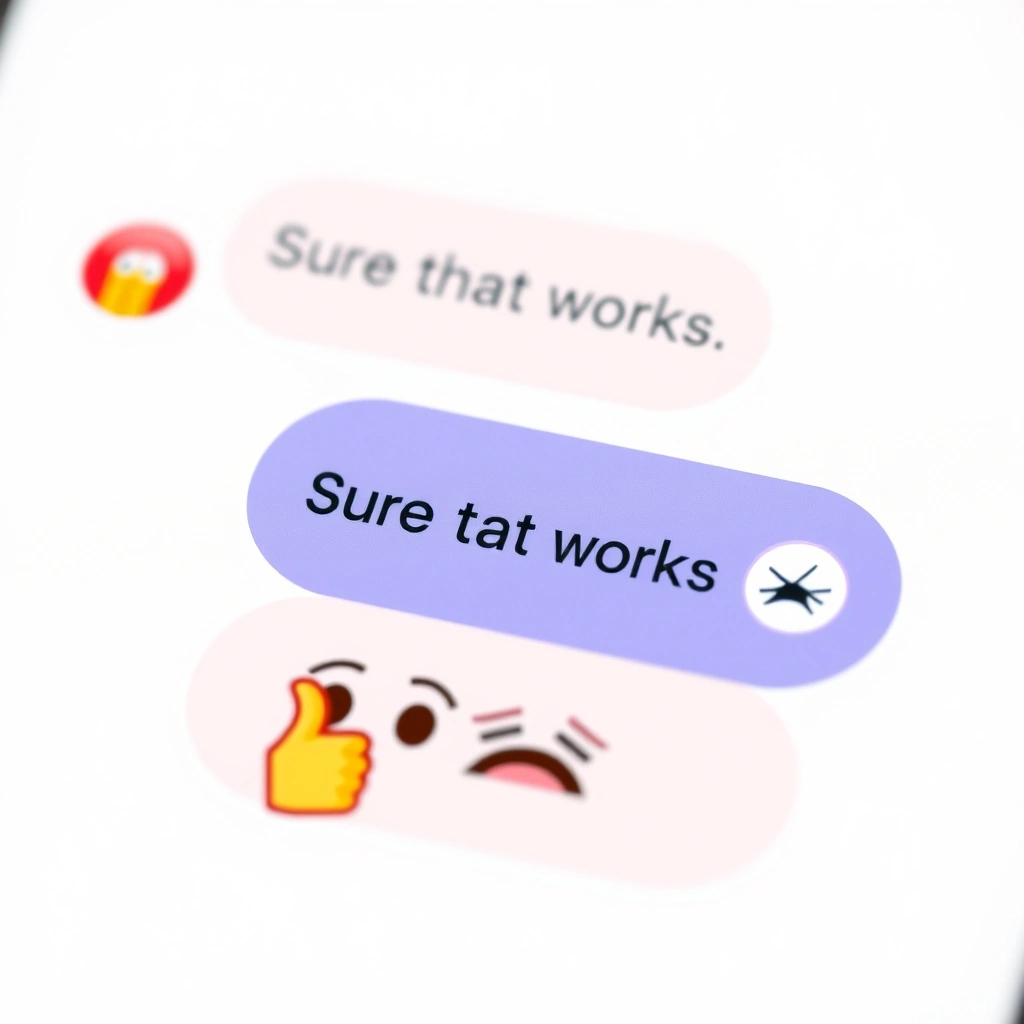
Consider a simple message like “Sure, that works.” Sent on its own in a slow work chat, it could be read as agreeable, passive-aggressive, or downright resentful. Add a 👍, and it’s cooperative and positive. Swap that for a 😒, and the entire meaning flips to reluctant acceptance. The words didn’t change; the emotional roadmap did. The emoji instructs the reader on the correct emotional lens to use, preventing the mental gymnastics of “what did they really mean?”
This guiding function is crucial for maintaining harmony. It softens blunt statements (“We need to talk 😬”), signals genuine enthusiasm (“That’s amazing! 🎉”), or indicates playful teasing (“Oh, you’re an expert now? 😏”). In a slow chat, these cues don’t just add flavor—they provide critical social safety rails. They prevent the slow burn of misunderstanding that can happen when a misinterpreted tone festers for hours before anyone can correct it.
Think of emojis as the punctuation marks of the 21st century, but for emotion. A period ends a sentence; a 😊 can end a potential conflict. They help manage the flow and expectations of digital conversation, especially when the rhythm is out of sync. A heart react (❤️) on a vulnerable text sent hours ago doesn’t just mean “I like this.” It means “I saw this, I’m with you, and I’m holding space for it even though I’m not replying right now.” It’s a bridge across the temporal gap.
The Unseen Rules of the Reaction
This guiding role extends heavily into reactions—the emoji-only replies that have become a language of their own. In a slow group chat, a cascade of 😂 or 🤣 under a joke does more than signal laughter. It validates the humor and encourages a specific, joyful reading for anyone who opens the chat later. Conversely, a solitary 😶 or 🧐 can subtly signal to the group that a statement might be off-key, guiding the collective interpretation without a direct confrontation.
These reactions create a silent consensus. They’re a way for participants to collaboratively “set the tone” for a thread, especially when it’s discussing something sensitive or complex. It’s a low-effort, high-impact way of participating and steering the emotional direction, which is vital when real-time feedback isn’t possible. You can learn more about these unspoken social rules in private chats here.

When the Guide is Missing
The power of the emoji-as-guide becomes painfully obvious in their absence. A plain-text message in a sea of otherwise expressive chats can feel cold, abrupt, or even angry. It stands out precisely because it lacks the emotional steering that everyone else is using. The recipient is left to pilot through the meaning alone, often defaulting to negative or anxious assumptions—a phenomenon sometimes called “textual tension.”
This is why, in our most important slow chats, we often become more emoji-reliant, not less. With a partner, a close friend, or a tight-knit team, we use emojis to maintain emotional connection and clarity across the delays. A random 🍀 or 🌞 sent mid-day isn’t random at all; it’s a deliberate injection of a specific feeling into the shared space, keeping the channel warm and the tone friendly.
Of course, this system isn’t perfect. Emojis themselves can be misread (is that 😅 nervous or genuinely amused?). But their primary function in slow chats remains: they are the best tool we have to compensate for the lost cues of face-to-face talk. They fill the silence between messages with intention.
So the next time you pause before hitting send in a slow-moving conversation, think about the emotional landscape you’re creating. That one tiny emoji you choose isn’t just decoration. It’s the signpost you’re leaving for someone you care about, telling them exactly how to walk through your words, hours after you’ve gone. And sometimes, a well-placed emoji can even gracefully signal the end of a chat, providing a clear and comfortable exit from the conversation. In the drawn-out, beautiful mess of ongoing digital connection, these little guides make sure we still find our way to each other.
📒 Related Blogs
More...How Emojis Are Revolutionizing Branding & Marketing: A Modern Guide
The Quiet Comfort of Emojis: How a Tiny Icon Eases Our Awkward Pauses
Are Emojis Reshaping How We Communicate? A Comprehensive Look
Emoji Psychology: Unpacking What Your Favorite Emojis Reveal About You
Emoji Magic: Why a Simple Icon Beats a Thousand Words in Casual Conversation
Decoding Emoji Trends: What's Popular and Why People Use Them