The Tiny Lifesaver: How Emojis Rescue Your One-Word Replies

Feb 27,2026
We've all been there. You're in the middle of a busy day, juggling a dozen things, and a message pops up from a friend. They've sent a long, thoughtful text, and all you have the mental bandwidth for is a quick reply. 'Okay.' 'Sure.' 'Yep.' You hit send, and a nanosecond later, a wave of dread washes over you. How will that read? Will they think you're annoyed? Dismissive? Bored?
This is the modern dilemma of minimal messaging. In one-on-one chats, especially with people we care about, our short replies carry a lot of unseen weight. Without the context of body language, facial expression, or tone of voice, those one- or two-word answers are blank canvases—and our conversation partners are left to paint them with their own anxieties or assumptions.
This is where the humble emoji performs its daily magic. It's not just decoration; it's punctuation for the digital age. It's the difference between 'K' and 'K 😊'. The first might feel like a door slamming shut; the second feels like a friendly nod. That tiny, colorful character does the heavy lifting of conveying your intent, softening your tone, and closing the emotional gap that pure text so often creates.
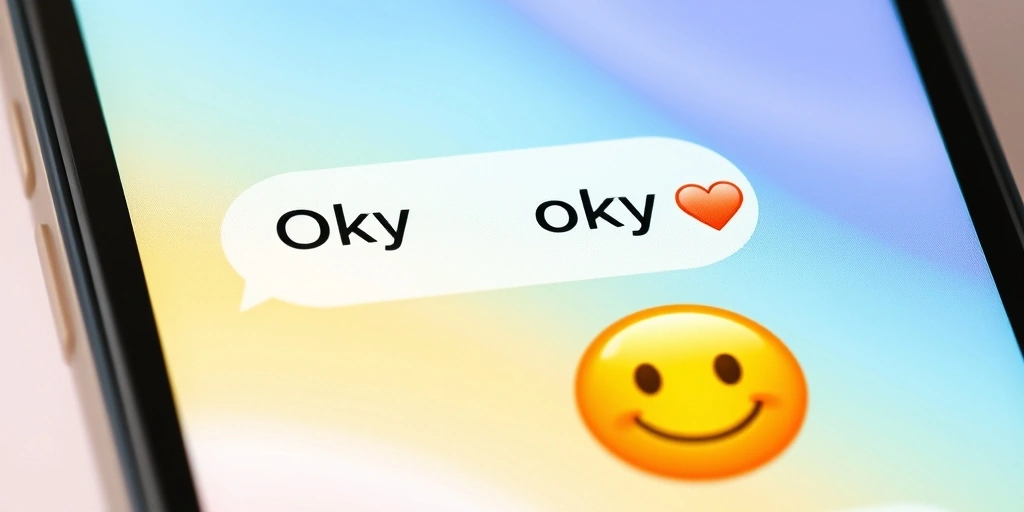
From Functional to Friendly in One Tap
Think about the most common minimalist replies. 'Thanks.' It's polite, but flat. 'Thanks! 😄' feels genuinely appreciative. 'Got it.' is a simple acknowledgment. 'Got it! 👍' signals understanding and agreement. The emoji acts as a tone indicator, instantly clarifying the emotional subtext of your words.
This is crucial because in personal chats, we're not just exchanging information; we're maintaining connection. A quick 'On my way!' is efficient. 'On my way! 🚗💨' adds a little spark of personality and excitement. It tells the other person, 'I'm not just informing you, I'm happily en route to you.' It turns a logistical update into a shared moment.
For more on how emojis complete the thought behind our fastest messages, you might enjoy this deeper look at emojis as the final touch.
Navigating the Minefield of Ambiguity
Some words are particularly dangerous on their own. 'Fine.' is arguably the most loaded word in the English language when stripped of context. 'Fine. 😑' suggests resigned acceptance. 'Fine! 😤' hints at frustration. 'Fine 😌' can imply peaceful contentment. The emoji you choose becomes the key that unlocks your true meaning, preventing unnecessary 'What's wrong?' follow-up texts.
Similarly, sarcasm is notoriously difficult to convey in text. 'Great.' after a plan falls through could be read as sincere disappointment. 'Great. 😒' makes the sarcasm crystal clear, allowing you to share in the mutual frustration without having to spell it out with a clumsy '/s'.
It's About More Than Just Being Nice
While adding warmth is a huge benefit, the clarity emojis provide is about more than just politeness. It's about efficiency in emotional labor. In a long, ongoing chat, constantly having to reassure someone that your 'Okay' meant 'okay' and not 'I'm secretly furious' is exhausting. A consistent, well-chosen emoji acts as a shorthand for your communicative style.
It tells your friend, partner, or family member: 'When I send a thumbs up, it's my digital signature for 'all good.'' It builds a shared, private language within your conversation. This tiny act of consistency reduces cognitive load for both people. The sender spends less time worrying about being misunderstood, and the receiver spends less time decoding.
The power of a single symbol to convey complex feelings is truly remarkable. If you're fascinated by this idea, this article explores the magic behind how one emoji can say it all.
A Guide, Not a Rulebook
The beauty of using emojis this way is that there's no pressure to be perfect. This isn't about memorizing official meanings or following strict rules. It's about intuition. What face would you be making if you said that word out loud to them? A smile? A smirk? An eye roll? Your instinct is usually right.
Start simple. Pair your most common, quick replies with an emoji that feels authentic to you. A heart for loved ones. A smiling face for friends. A thumbs up for colleagues. Notice how the conversation feels. You'll likely find that the rhythm becomes more relaxed, the misunderstandings fewer, and the connection stronger, even when you're both at your busiest.
So the next time your finger hovers over the send button after typing a two-word reply, pause for just a second. Scroll through that emoji keyboard and pick the one that matches your heart. It's the smallest investment for the biggest return: making sure the person on the other end feels seen, heard, and connected to, even by your briefest message.
For more tips and thoughts on using emojis in everyday life, explore our other guides and how-tos.
📒 Related Blogs
More...The Unsung Heroes of Clarity: How Emojis Quietly Prevent Misunderstandings
The Secret Weapon for Keeping Online Conversations Civil: Emojis
The Secret to Effortless Texts: How Emojis Keep Everyday Chats Alive
The Unspoken Magic: How Emojis Soften Project Updates and Build Better Teams
The Unspoken Language: How Emojis Carry Our Hidden Feelings
The Emoji Revolution: Transforming Marketing & Branding Strategies